Blogs
We share with you the latest industry trends, try to solve all your questions about flexible packaging machines and printing machines as well. Read our blogs to keep abreast of what’s new in the industry and in Zonbon.

Over the past 30-plus years, China's plastic flexible packaging industry has undergone a process from being small and weak to flourishing, especially in the last decade, where various new technologies, processes, and equipment have developed rapidly. It can be said that the flexible packaging industry has entered the stage of the intelligent manufacturing industrial revolution alongside societal progress. The era of smart manufacturing has arrived.
Especially over the past 10-plus years, flexible packaging has gradually evolved from being fragmented, disorganized, and small-scale to accounting for one-third of the entire packaging industry, sharing the market equally with the other two major categories. The trends towards automation, standardization, and normalization within the industry are becoming increasingly evident, leading to significant improvements in efficiency and quality. Simultaneously, customer demands for product quality, price, and service are also rising. The rate of rapid capacity expansion in the industry far exceeds the growth rate of market capacity, signs of overcapacity have emerged, and fierce market competition has begun.
The next 10 years will undoubtedly be an era of accelerated industry consolidation and the phasing out of backward production capacity. Currently, excellent enterprises continue to accelerate expansion, while enterprises withunder-developed management and equipment are gradually declining, leading to increasing industry concentration.Looking back over the past 10-plus years, the industry has seen substantial progress and change. The advancements and improvements in various processes are incomparable to before. This can be witnessed through changes in the following four aspects:
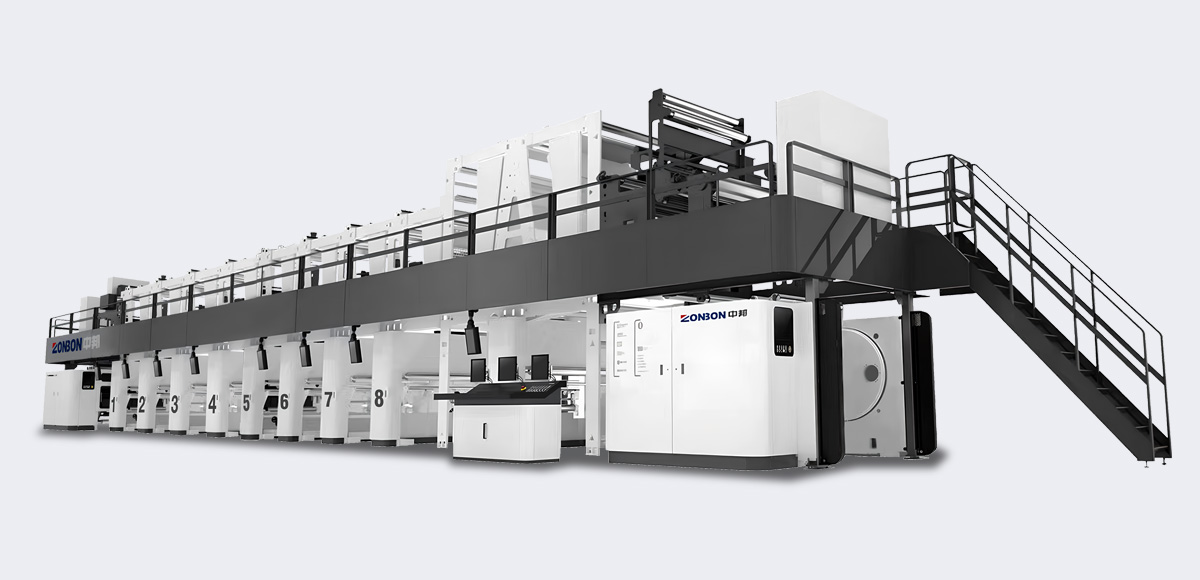
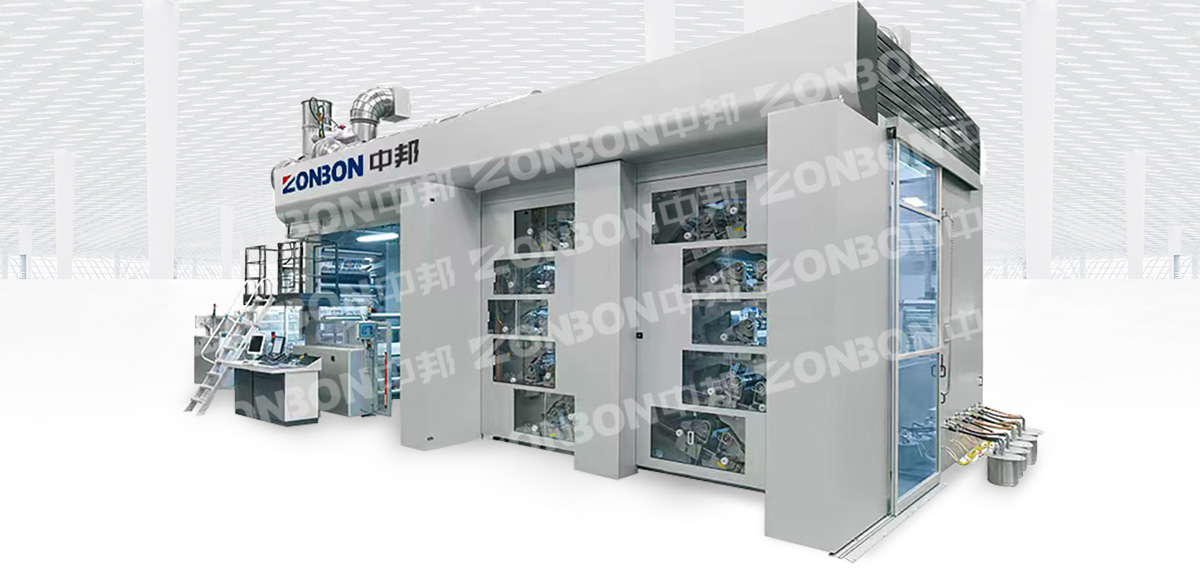
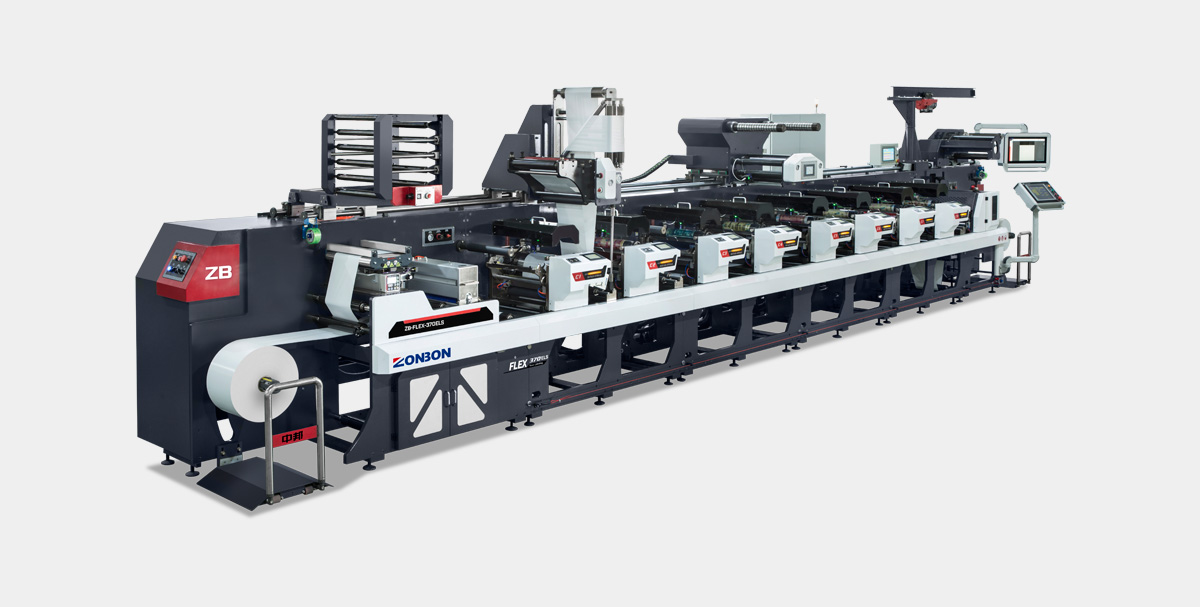
Gravure printing machines have progressed from mechanical shafts to electronic shafts, from traditional gravure to digital printing, and even to the integration of various printing methods today. Gravure, flexo (relief), screen (porous), offset (litho), digital, inkjet, thermal transfer, cold foil stamping, etc., are increasingly appearing in the flexible packaging industry, along with combinations and integrations of various processes, making the printing of flexible plastic films rich and diverse, no longer limited to single gravure printing.
Changes in printing methods have driven transformations in inks and materials. For example, temperature-change, light-change, thixotropic, digital, anti-counterfeiting, cold foil, hot foil, and other application processes originally used in packaging for cigarettes, alcohol, currency, anti-counterfeiting, etc., are also being applied in plastic flexible packaging. Flexible and diverse combination printing methods have created a situation where a hundred flowers bloom in the packaging and printing industry, while also promoting continuous integration and innovation within the packaging industry, providing an inexhaustible source of vitality for industry development.
The past 10-plus years have been the period of most rapid development for solventless lamination. Innate advantages such as no VOCs emissions, high production efficiency, and low usage costs have led to rapid, wildfire-like development of solventless lamination, from equipment to adhesives. If not for the new national standard GB-4806 suddenly imposing strict limits on primary aromatic amines, solventless lamination was poised to comprehensively replace dry lamination in a sweeping trend.
Of course, traditional dry lamination has also improved significantly under external pressure. High-solid-content, low-viscosity adhesives have become the mainstream direction for dry lamination. High-line-screen anilox rollers, high-concentration adhesive application, and flexographic lamination have gained industrypursue and admire, becoming hot topics.
The production efficiency of dry lamination has also greatly increased, from around 100 m/min to generally over 200 m/min, with some reaching 300 m/min.
Bag making and forming technologies have developed to be more rich and varied, and the trend towards automated packaging is becoming increasingly evident. Changes in bag types are also endless. In recent years, packaging has increasingly been considered from the consumer's perspective, continuously leading to changes in bag types and packaging methods. More elements are being integrated into bag making. From traditional three-side seal and back (center) seal bag types to current variations like stand-up, zipper, window, irregular-shaped, eight-side seal, and others, this has driven the integration of various related elements such as foil stamping, die-cutting, spouts, handles, windows, zippers, laser easy-tear, etc.
Bag making machines have integrated more automation and intelligence elements beyond traditional mechanics. Improvements in aspects like bag type, machine adjustment, automatic control, bag collection, and boxing are also very noticeable.
The trend of integrating equipment automation and digitalization is becoming increasingly apparent. From island-type ERP systems to the integration of equipment digital middle platforms, a high degree of integration between production equipment, manufacturing processes, and process control is formed. Product packaging achieves full lifecycle digital management, from design to production, warehousing and distribution, logistics supply, packaging application, and customer service. A digital chain has been realized, enabling information interconnection between management elements and production factors, forming a real-time, dynamic, intelligent, and highly efficient management system.
With the increasing level of industry automation, digitalization, and intelligence, the industry has gradually transitioned into the era of intelligent manufacturing. More and more enterprises are creating business formats that integrate upstream and downstream industry chains. Some enterprises have already formed supply-production-market ecosystems, creating their own unique closed-loop ecological models with strong market competitiveness.
The rapid development of flexible packaging, the continuous improvement of overall industry capacity and efficiency, and the intensifying competitive landscape have naturally led to so-called involution. Coupled with uncertainties in the internal and external macro-environment and increasingly stringent policy requirements for environmental protection and safety, industry reshuffling is accelerating, and some backward production capacity is gradually being phased out.
Especially the restriction on PAA in the new national standard will inevitably bring new reshuffling for flexible packaging peers accustomed to the low cost and high efficiency of solventless lamination. Production methods and factors will be affected, inevitably leading to some corresponding changes.
Traditional aromatic solventless adhesives, particularly A-component adhesives with high usage, low molecular weight, and high free monomer content, find it difficult to avoid PAA during the cross-linking and curing process. For aliphatic polyurethane adhesives, many adhesive manufacturers lack sufficient technical reserves, and the stability of these adhesives requires extensive market validation. Coupled with significant cost increases, this brings uncertainty to the use of such adhesive systems.
With the implementation of the new national standard, some food companies explicitly require that packaging bags must not be laminated using solventless methods and can only use dry lamination to control PAA at the source. This has boosted the previously lukewarm flexographic lamination.
It can be said that the hottest topic in the industry currently is flexographic coating. The entire industry is buzzing that flexographic coating is a "high-efficiency, cost-saving, low-carbon" lamination method.
However, due to the previously narrow application scope and limited technical reserves of flexography, specialized interpretations of the specific principles and current status of flexographic lamination, including the supporting application technology of flexographic lamination machines and adhesives, are not too abundant.
There are currently not many manufacturers mass-producing and actually putting flexographic lamination machines into normal use. Bobst, as an industry leader, introduced flexographic lamination machines in China 7-8 years ago, but significant sales only occurred in the last 2-3 years. Domestically, many equipment manufacturers claim to be able to produce flexographic lamination machines, but most are still in the R&D and imitation stage. Only a few, such as Beiren and Lida, have actually applied their machines in the market.
Because of the popularity of flexography, some adhesive factories have opportunistically promoted the concept of "adhesives specially for flexography," which is purely conceptual speculation. It can be said that all dry lamination adhesives can be used for flexographic lamination, but the transfer rates of different adhesives vary, significantly impacting lamination machine speed and coating effect. Similar to anilox roller coating, high-solid-content, low-viscosity adhesives are undoubtedly the mainstream for flexographic coating.
pre: -
next: -
Zonbon, The Most Professional Flexible Printing and Packaging Converting Machines Manufacturer Around You.
© 2011-2025 Zonbon Printing & Packaging Machinery Co., Ltd. All Rights Reserved

