





Technical Specifications
| Model | ZBFL-320A | ZBFL-450A |
| Printing Speed | 80–100 m/min | |
| Printing Colors | 5 Colors | |
| Maximum Web Width | 320 mm | 450 mm |
| Maximum Printing Width | 310 mm | 440 mm |
| Maximum Unwinding Diameter | 600 mm | |
| Maximum Rewinding Diameter | 600 mm | |
| Printing Repeat Length | 175–355 mm | |
| Registration Accuracy | ±0.10 mm | |
| Overall Dimensions (L × W × H) | 2000 × 1100 × 2600 mm | 2000 × 1100 × 2600 mm |
| Machine Weight | Approx. 2200 kg | Approx. 3350 kg |
Stack Flexographic Printing Press for Cost-Effective Label Production
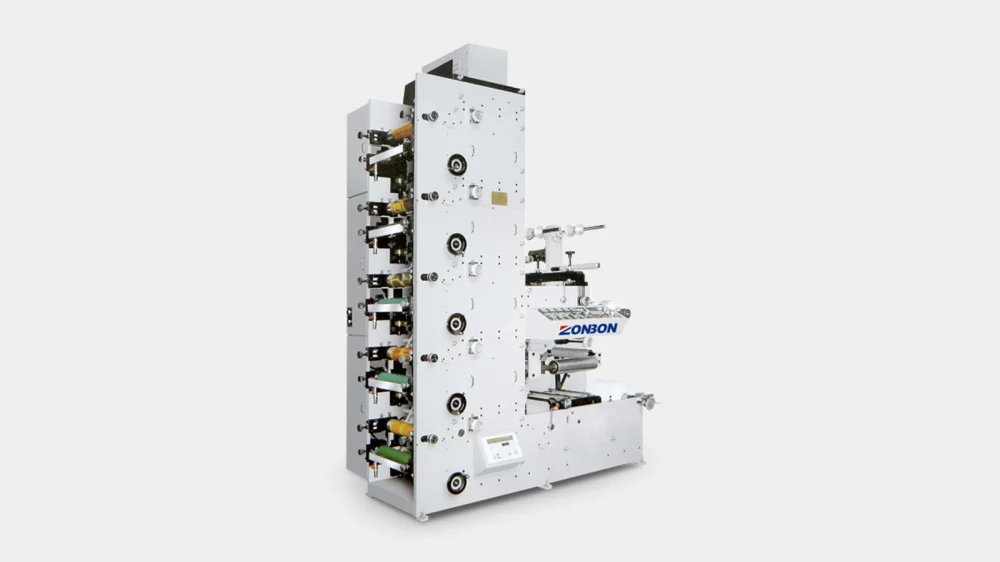
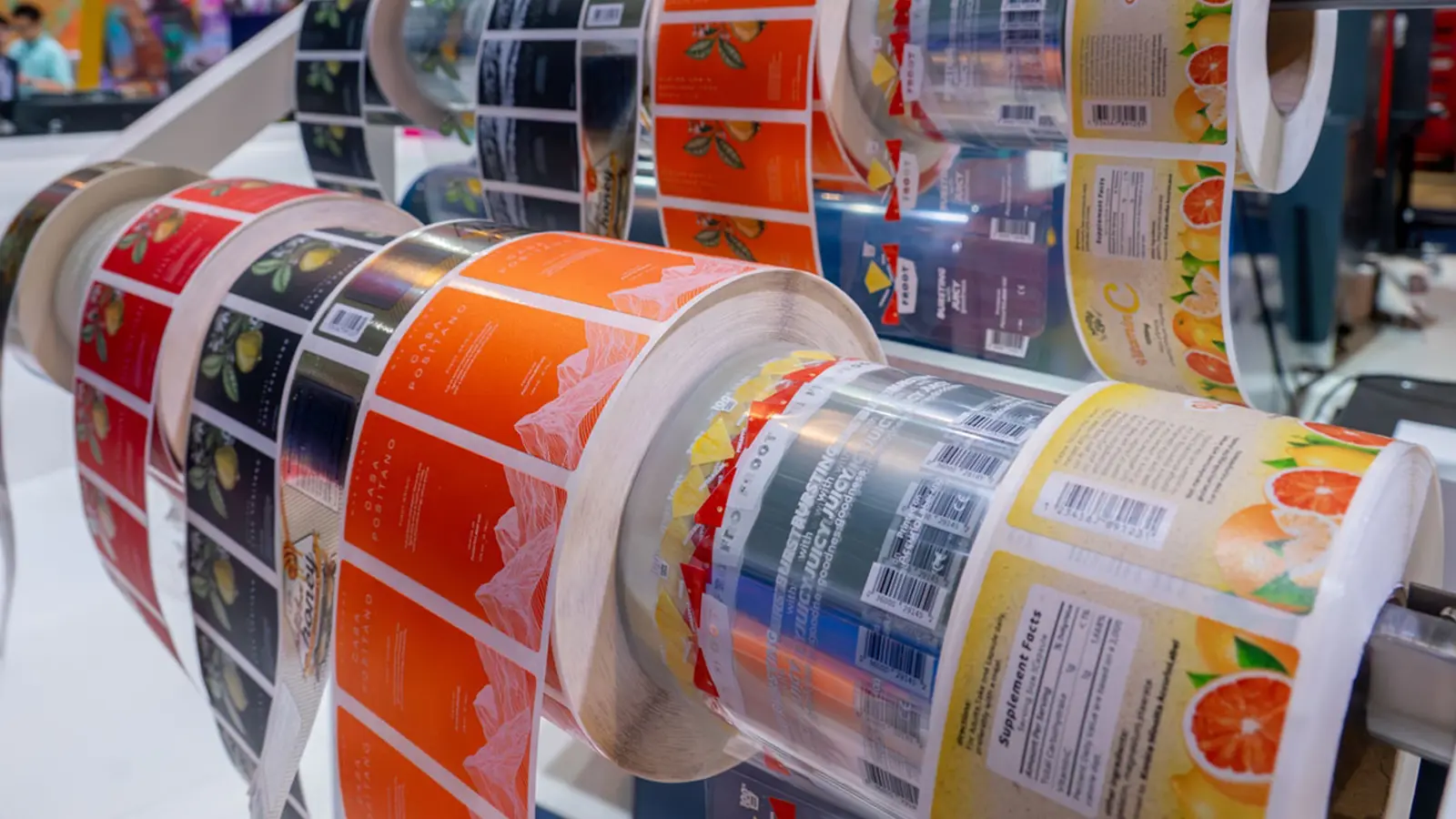
The Stack Flexographic Printing Press is designed for manufacturers producing self-adhesive labels, barcode labels, cosmetic labels, food labels, and other narrow web printed products. Combining reliable print quality with a compact footprint, it offers an economical solution for businesses entering or expanding the label printing market.
Unlike more complex inline production systems, this stack flexo printing machine focuses on stable printing performance, simple operation, and lower investment costs. It is particularly suitable for small and medium-sized label converters, regional printing companies, and equipment distributors serving customers who require professional label printing without the cost of a fully integrated converting line.
With five printing units, web widths of 320 mm and 450 mm, and registration accuracy of ±0.10 mm, the machine delivers consistent print quality across a wide range of self-adhesive label materials. Its compact mechanical structure also simplifies installation, maintenance, and operator training.
The press supports paper labels, PET, PP, PE films, synthetic papers, and other commonly used narrow web substrates, making it suitable for beverage, cosmetics, pharmaceutical, logistics, retail, and industrial labeling applications.
For buyers looking for a reliable self-adhesive label printing machine or an affordable stack flexographic printing press, the ZBFL Series provides an excellent balance of printing quality, operating efficiency, and investment value.
Typical Customer Scenarios & How to Recommend the Right Machine
Many of our customers are distributors, machinery dealers, or purchasing managers rather than printing engineers. They often receive a label sample or production request from their own customer but are unsure which machine configuration to recommend. The following scenarios can help you quickly identify customer needs and choose the most suitable stack flexographic printing solution.
| Customer Scenario | Recommended Solution | Why This Machine? |
|---|---|---|
| A customer is starting a self-adhesive label printing business with a limited investment budget. | ZBFL-320A | Compact footprint, lower investment cost, easy operation, and ideal for small to medium production volumes. |
| The customer mainly prints barcode labels, price labels, and logistics labels. | ZBFL-320A | The 320 mm web width is sufficient for most narrow label applications while keeping production costs under control. |
| The customer produces larger cosmetic, food, or beverage labels. | ZBFL-450A | A wider printing width provides greater flexibility for larger label formats and multiple-up layouts. |
| The customer is replacing an old letterpress or entry-level flexographic press. | ZBFL-450A | Improves print quality, registration accuracy, and production efficiency without the investment required for a fully inline converting line. |
| A distributor receives a label sample but is unsure which machine to recommend. | Contact ZONBON Engineering Team | Our engineers evaluate the label size, substrate, colors, production volume, and future expansion requirements before recommending the most suitable configuration. |
| The customer plans to expand production in the future. | Select a configurable Stack Flexographic Printing Press | The modular design allows future upgrades such as UV curing, lamination, die cutting, slitting, inspection systems, and other finishing units. |
Not Sure Which Machine Your Customer Really Needs?
You don't need to make the decision alone. Simply send us your customer's label sample, material specifications, production requirements, or artwork. Our engineering team will analyze the project and recommend the most suitable Stack Flexographic Printing Press, helping you communicate with your customer more confidently and reducing project risks.
Maximize Your ROI & Prepare for an Accurate Machine Recommendation
Investing in a Stack Flexographic Printing Press is not simply purchasing a printing machine—it's an investment in long-term production efficiency, product quality, and business growth. Choosing the right configuration from the beginning helps reduce unnecessary costs while ensuring your equipment continues to support future production expansion.
| Your Business Goal | How the Stack Flexographic Printing Press Helps |
|---|---|
| Reduce Initial Investment | Compact machine design and lower investment cost compared with large inline production lines while maintaining professional label printing quality. |
| Increase Production Efficiency | Stable web handling, accurate color registration, and quick job setup reduce downtime and improve daily production output. |
| Reduce Material Waste | High registration accuracy (±0.10 mm) minimizes startup waste and improves material utilization. |
| Expand Product Portfolio | Suitable for self-adhesive labels, cosmetic labels, food labels, barcode labels, pharmaceutical labels, and many other narrow web applications. |
| Support Future Business Growth | Optional upgrades such as UV curing, lamination, die cutting, slitting, inspection systems, and rewinding can be integrated as production requirements increase. |
| Lower Operating Costs | Reliable mechanical structure, simple operation, and easy maintenance help reduce long-term operating expenses. |
Before Requesting a Quotation
To recommend the most suitable Stack Flexographic Printing Press, our engineering team does not simply match a machine model—we evaluate your production requirements, materials, and future expansion plans. Preparing the following information allows us to provide a faster and more accurate recommendation.
| Information to Prepare | Why It Matters |
|---|---|
| Label Sample or Artwork | Helps us evaluate printing quality, colors, graphics, and finishing requirements. |
| Label Dimensions | Determines the most suitable printing width and repeat length. |
| Printing Material | Different substrates such as paper, PET, PP, PE, or synthetic films may require different printing configurations. |
| Number of Printing Colors | Determines the required number of printing units and future upgrade options. |
| Expected Production Volume | Allows us to recommend the appropriate machine speed and production capacity. |
| Future Expansion Plans | If you plan to add die cutting, lamination, slitting, UV curing, or inspection systems later, we can recommend a scalable configuration from the beginning. |
Not Sure About the Technical Details?
That's completely normal. Many of our customers are distributors, purchasing managers, or brand owners rather than printing engineers. If you only have a label sample, product photo, or packaging drawing, simply send it to us. Our engineering team will analyze your application and recommend the most suitable Stack Flexographic Printing Press based on your production goals, helping you reduce project risks and communicate more confidently with your own customers.
Typical Printing Materials Supported
The ZBFL Stack Flexographic Printing Press is designed for high-quality narrow web label printing on a wide variety of pressure-sensitive and film-based materials. Whether you produce food labels, cosmetic labels, logistics labels, or industrial identification labels, our engineering team can recommend the most suitable printing configuration based on your substrate, ink system, and application requirements.
| Printing Material | Typical Applications | Why It Is Suitable |
|---|---|---|
| Self-Adhesive Paper | Food labels, retail labels, barcode labels | Excellent printability, cost-effective, and widely used for pressure-sensitive labels. |
| Coated Paper | Product labels, promotional stickers | Provides smooth surfaces for sharp graphics and vibrant color reproduction. |
| PET Film | Cosmetic labels, beverage labels, durable labels | Offers excellent dimensional stability, water resistance, and premium appearance. |
| BOPP Film | Food packaging labels, household products | Good transparency, chemical resistance, and excellent durability. |
| PP Film | Personal care labels, pharmaceutical labels | Lightweight substrate with excellent flexibility and moisture resistance. |
| PE Film | Squeezable bottles, detergent labels | Flexible material that conforms well to curved and squeezable containers. |
| Transparent Film | No-label-look beverage and cosmetic labels | Creates a premium "clear label" appearance for high-end packaging. |
| Synthetic Paper | Industrial labels, chemical labels, outdoor labels | Highly durable with excellent resistance to moisture, tearing, and chemicals. |
| Metallized Film | Wine labels, luxury packaging, premium cosmetics | Enhances shelf appeal with metallic finishes and premium visual effects. |
| Thermal Label Stock | Shipping labels, logistics labels, warehouse labels | Suitable for variable information labels used in logistics and retail industries. |
Not sure whether your customer's material is suitable for flexographic printing? Simply send us the label sample or substrate specification. Our engineers will evaluate the material characteristics, printing process, ink compatibility, and production requirements before recommending the most suitable stack flexographic printing press for your project.
Stack Flexographic Printing Press Frequently Asked Questions
What is a Stack Flexographic Printing Press?
A Stack Flexographic Printing Press is a narrow web printing machine in which each printing unit is arranged vertically in a stacked configuration. It is widely used for printing self-adhesive labels, barcode labels, cosmetic labels, food labels, pharmaceutical labels, and other pressure-sensitive label products. Its compact structure, reliable performance, and lower investment cost make it an excellent choice for small and medium-sized label converters.
What is the difference between a Stack Flexographic Printing Press and an Inline Flexo Printing Press?
A stack flexographic press focuses on cost-effective label printing with a compact machine structure and simple operation, making it ideal for businesses entering the label printing market. An inline flexo printing press is designed for larger production lines and can integrate additional converting functions such as die cutting, slitting, rewinding, lamination, and cold foil in one pass. The best choice depends on your production volume, investment budget, and future expansion plans.
What types of labels can this machine print?
This machine is suitable for a wide range of narrow web label applications, including self-adhesive labels, barcode labels, food labels, beverage labels, cosmetic labels, pharmaceutical labels, logistics labels, promotional stickers, product identification labels, and many other pressure-sensitive label products.
Which printing materials are supported?
The Stack Flexographic Printing Press can print on self-adhesive paper, coated paper, PET film, BOPP film, PP film, PE film, transparent film, synthetic paper, metallized film, thermal label stock, and other commonly used narrow web label materials.
How do I choose between the 320 mm and 450 mm models?
The 320 mm model is ideal for standard-size labels, barcode labels, and smaller product labels. The 450 mm model provides a wider printing width for larger label formats, multiple-up layouts, and customers planning future production growth. If you're unsure which model best fits your project, simply send us your label sample or production requirements, and our engineering team will recommend the most suitable solution.
Is this machine suitable for distributors and machinery dealers?
Yes. Many of our customers are machinery distributors and trading companies. We provide machine selection guidance, technical documentation, production recommendations, and after-sales support to help distributors confidently recommend the right solution to their own customers.
Can the machine be upgraded in the future?
Yes. Depending on your production requirements, the machine can be configured or upgraded with optional systems such as UV drying, corona treatment, web guiding, inspection systems, lamination, rewinding, and other auxiliary equipment to support future business expansion.
I don't know much about flexographic printing. Can ZONBON Machinery help me choose the right machine?
Absolutely. Many of our customers are purchasing managers, distributors, or business owners rather than printing engineers. You don't need to know every technical detail before contacting us. Simply send us your label sample, artwork, material specifications, or production requirements, and our engineering team will recommend the most suitable Stack Flexographic Printing Press based on your application, budget, and future production plans.