





How to Choose a Slitting Machine for Flexible Packaging
Why Choosing the Right Slitting Machine Matters for Flexible Packaging
Flexible packaging production requires stable material handling, accurate slitting, clean roll edges, and consistent rewinding quality. A slitting machine is not only used to cut wide film rolls into narrower rolls; it also affects the quality of downstream printing, laminating, bag making, pouch making, and packaging conversion.
For manufacturers processing BOPP, PET, CPP, PE, laminated films, or aluminum foil laminates, choosing the wrong slitting machine may lead to wrinkles, uneven roll tension, poor edge quality, telescoping rolls, and higher material waste. These problems can reduce production efficiency and increase long-term operating cost.
This guide explains how to choose the right slitting machine for flexible packaging applications, including material compatibility, slitting methods, tension control, rewinding systems, machine speed, and key buying factors.
What Materials Need Slitting in Flexible Packaging?
Flexible packaging uses many different roll materials. Each material has different tension behavior, thickness range, surface friction, and cutting requirements. Before selecting equipment, buyers should first confirm what materials they need to process.
BOPP Film
BOPP film is widely used for food packaging, snack packaging, labels, and laminated structures. It requires stable tension control and clean slitting edges because film stretching or wrinkle formation can affect later printing and sealing performance.
PET Film
PET film is commonly used in high-strength packaging, laminated pouches, labels, and industrial packaging. Compared with some softer films, PET usually requires higher cutting precision and stable web control during high-speed production.
CPP Film
CPP film is often used for heat-sealing layers in flexible packaging. When slitting CPP or laminated structures containing CPP, the machine should maintain stable rewinding tension to avoid roll deformation.
PE Film
PE film is flexible and stretch-sensitive. For PE-based packaging materials, tension control is especially important because excessive tension may cause film elongation, wrinkles, or unstable roll formation.
Laminated Films
Laminated films may combine PET, BOPP, PE, CPP, aluminum foil, paper, or barrier layers. Because laminated materials often have different stiffness and thickness, the slitting machine should be configured based on material structure and final roll requirements.
Types of Slitting Machines Used for Flexible Packaging
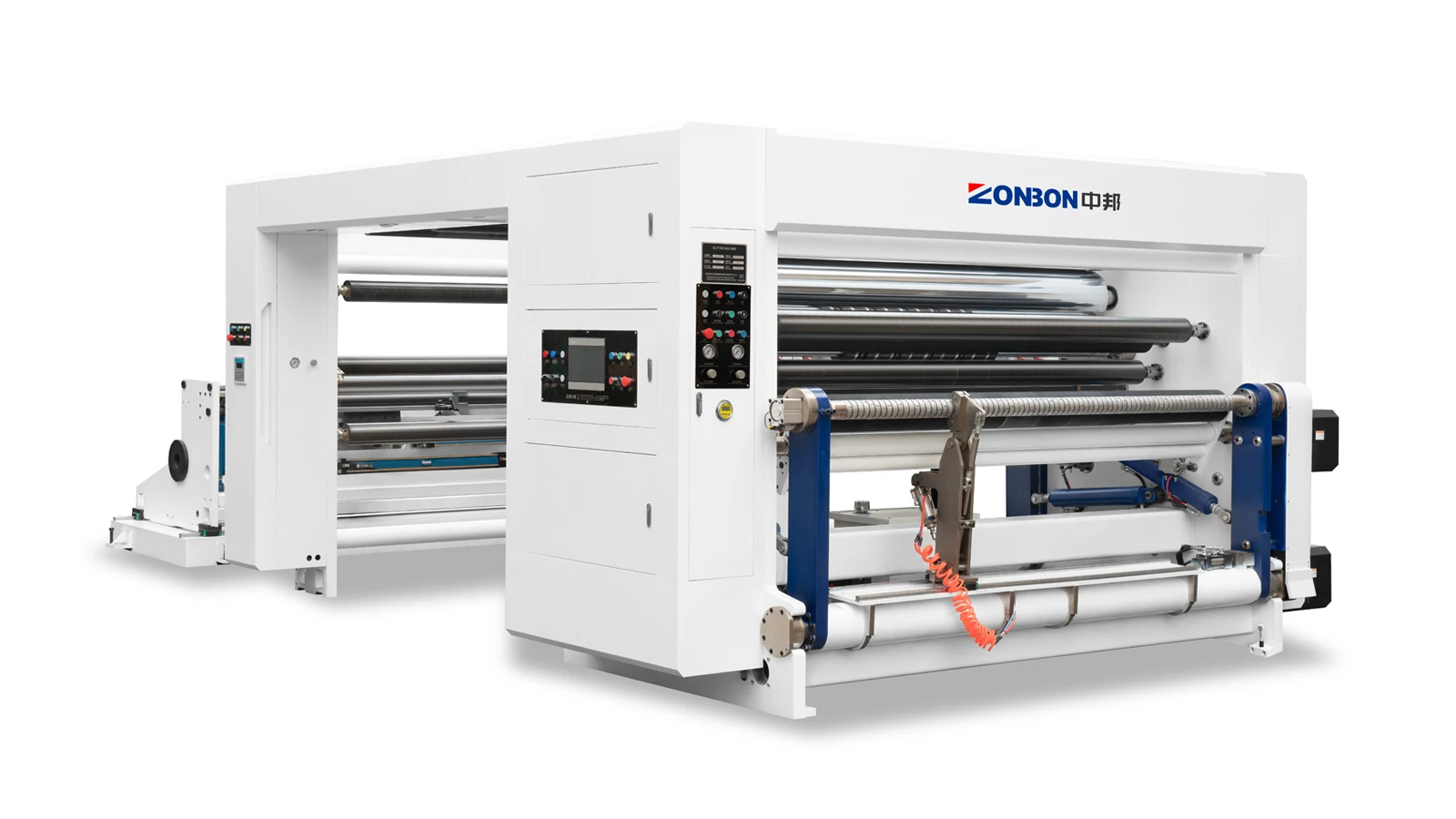
Different production needs require different slitting machine configurations. For most flexible packaging converters, the most common choice is a film slitting and rewinding machine designed for plastic films and laminated roll materials.
Film Slitting Machines
Film slitting machines are designed for BOPP, PET, CPP, PE, laminated films, and other flexible packaging materials. They are commonly used after printing, laminating, coating, or film production to convert jumbo rolls into smaller finished rolls.
Duplex Slitter Rewinders
Duplex slitter rewinders are suitable for many flexible packaging applications where stable rewinding and good roll separation are required. They are widely used by converters that need efficient roll-to-roll processing.
Center Surface Slitting Machines
Center surface rewinding systems help improve roll quality when processing materials that require better tension stability and smoother roll formation. This configuration is often used for higher-quality flexible packaging film rolls.
High-Speed Automatic Slitters
High-speed automatic slitting machines are suitable for factories with larger production volumes. They may include automatic tension control, web guiding, meter counting, automatic stop functions, and optional inspection systems.
Key Factors When Choosing a Flexible Packaging Slitting Machine
Material Type and Thickness
The first step is to confirm your material type, thickness range, roll width, and roll diameter. A machine used for thin PE film may require different tension and rewinding settings than a machine used for PET laminated film or aluminum foil composite materials.
Slitting Speed
Machine speed should match your real production demand. Higher speed is useful for large-volume factories, but speed alone does not guarantee better performance. For flexible packaging, stable tension, clean edges, and roll quality are often more important than maximum speed.
Tension Control System
Tension control is one of the most important factors in film slitting. Poor tension control may cause wrinkles, stretching, unstable roll hardness, or telescoping rolls. For stretch-sensitive films such as PE or thin laminated structures, automatic tension control is highly recommended.
Web Guiding System
An EPC web guiding system helps keep the material aligned during unwinding and slitting. This is especially important for printed films, laminated packaging materials, and applications requiring accurate roll edge alignment.
Slitting Accuracy
Slitting accuracy affects finished roll width and downstream production stability. Buyers should confirm the required slit width tolerance based on their packaging application, customer requirements, and later converting process.
Knife Type
Different materials require different slitting methods. Thin films may use razor slitting, while thicker laminated materials may require shear slitting for cleaner edges. The right knife system can reduce burrs, dust, edge damage, and material waste.
Rewinding Quality
Rewinding quality directly affects finished roll usability. Good rewinding should produce stable roll hardness, neat edges, and consistent roll tension. Poor rewinding can cause roll deformation, edge misalignment, and problems in later production.
Razor vs Shear Slitting for Flexible Packaging
Razor slitting and shear slitting are two common cutting methods used in flexible packaging conversion. The best choice depends on material type, thickness, production speed, and edge quality requirements.
| Slitting Method | Best For | Main Advantage |
|---|---|---|
| Razor Slitting | Thin films, BOPP, PE, light packaging films | Simple structure and efficient cutting for thin materials |
| Shear Slitting | PET film, laminated films, thicker materials | Cleaner edges and better cutting stability |
| Score Slitting | Some paper-based or specialty materials | Suitable for selected materials with pressure cutting needs |
For flexible packaging film, razor slitting is often suitable for thinner films, while shear slitting is preferred when edge quality and cutting stability are more important.
Common Slitting Problems in Flexible Packaging
Many slitting problems are caused by incorrect machine configuration, poor tension control, unsuitable knife selection, or unstable rewinding. Understanding these problems can help buyers evaluate machine quality more accurately.
- Wrinkles: Often caused by unstable tension, poor web guiding, or uneven material feeding.
- Telescoping rolls: Usually caused by poor rewinding tension or unstable roll hardness.
- Burr edges: May result from unsuitable knives, dull blades, or incorrect slitting pressure.
- Film stretching: Common in PE and thin films when tension is too high.
- Uneven rewinding: Can affect downstream printing, laminating, or bag making.
How Much Does a Flexible Packaging Slitting Machine Cost?
The cost of a flexible packaging slitting machine depends on machine width, speed, automation level, rewinding structure, tension control system, and optional functions.
| Machine Level | Typical Application | Buyer Focus |
|---|---|---|
| Entry-Level Slitter | Small batches and simple film rolls | Basic slitting function and lower investment |
| Mid-Speed Slitter | Flexible packaging converters | Stable tension, better rewinding, wider material range |
| High-Speed Automatic Slitter | Large-scale packaging production | High efficiency, automation, lower waste, consistent quality |
Buyers should not evaluate equipment only by initial price. A machine with better tension control, cleaner cutting, and more stable rewinding can reduce material waste and improve long-term return on investment.
How to Choose the Right Manufacturer
Choosing a reliable manufacturer is as important as choosing the machine model. A good supplier should understand flexible packaging materials, recommend suitable configurations, and provide long-term technical support.
Before purchasing, buyers should ask:
- Can the machine process my actual film materials?
- What is the recommended slitting method for my material?
- Can the tension control system handle thin or stretch-sensitive films?
- What is the maximum unwind and rewind diameter?
- Can the machine be customized for my production width?
- Is operator training available?
- How are spare parts and after-sales support handled?
If you are still comparing different suppliers, this slitting machine manufacturer guide can help you evaluate manufacturer capability, support, pricing, and long-term production value.
Why ZONBON Machinery
ZONBON Machinery provides converting equipment for flexible packaging, labels, paper, foil, adhesive materials, and industrial roll materials. For flexible packaging applications, ZONBON offers slitting machines designed to support stable film processing, accurate slitting, and reliable rewinding performance.
Depending on customer requirements, machine configurations can be adjusted for different film types, roll widths, slitting accuracy, rewinding methods, and production speeds. This helps packaging manufacturers choose equipment that matches both current production needs and future capacity growth.
FAQ: Flexible Packaging Slitting Machine
What is the best slitting machine for flexible packaging?
The best machine depends on your material type, roll width, thickness, production speed, and required slit accuracy. For most flexible packaging films, a film slitting machine with stable tension control and reliable rewinding is recommended.
Can one slitting machine process BOPP, PET, CPP, and PE film?
Yes, some machines can process multiple film types, but the configuration must match the material characteristics. PE film may require more careful tension control, while PET and laminated films may need stronger cutting stability.
Is razor slitting or shear slitting better for packaging film?
Razor slitting is often suitable for thin films, while shear slitting provides cleaner edges for thicker or laminated materials. The best choice depends on film structure and edge quality requirements.
Why is tension control important in film slitting?
Tension control helps prevent wrinkles, stretching, telescoping rolls, and uneven rewinding. It is especially important for thin, flexible, or laminated packaging films.
What should I check before buying a slitting machine?
Buyers should check material compatibility, machine width, slitting speed, knife system, tension control, rewinding quality, customization options, and manufacturer support.