





How to Choose the Right Slitting Machine for Your Material
Why Material Type Should Be Your First Consideration
One of the most common mistakes buyers make when selecting a slitting machine is focusing on machine speed or price before considering the material being processed.
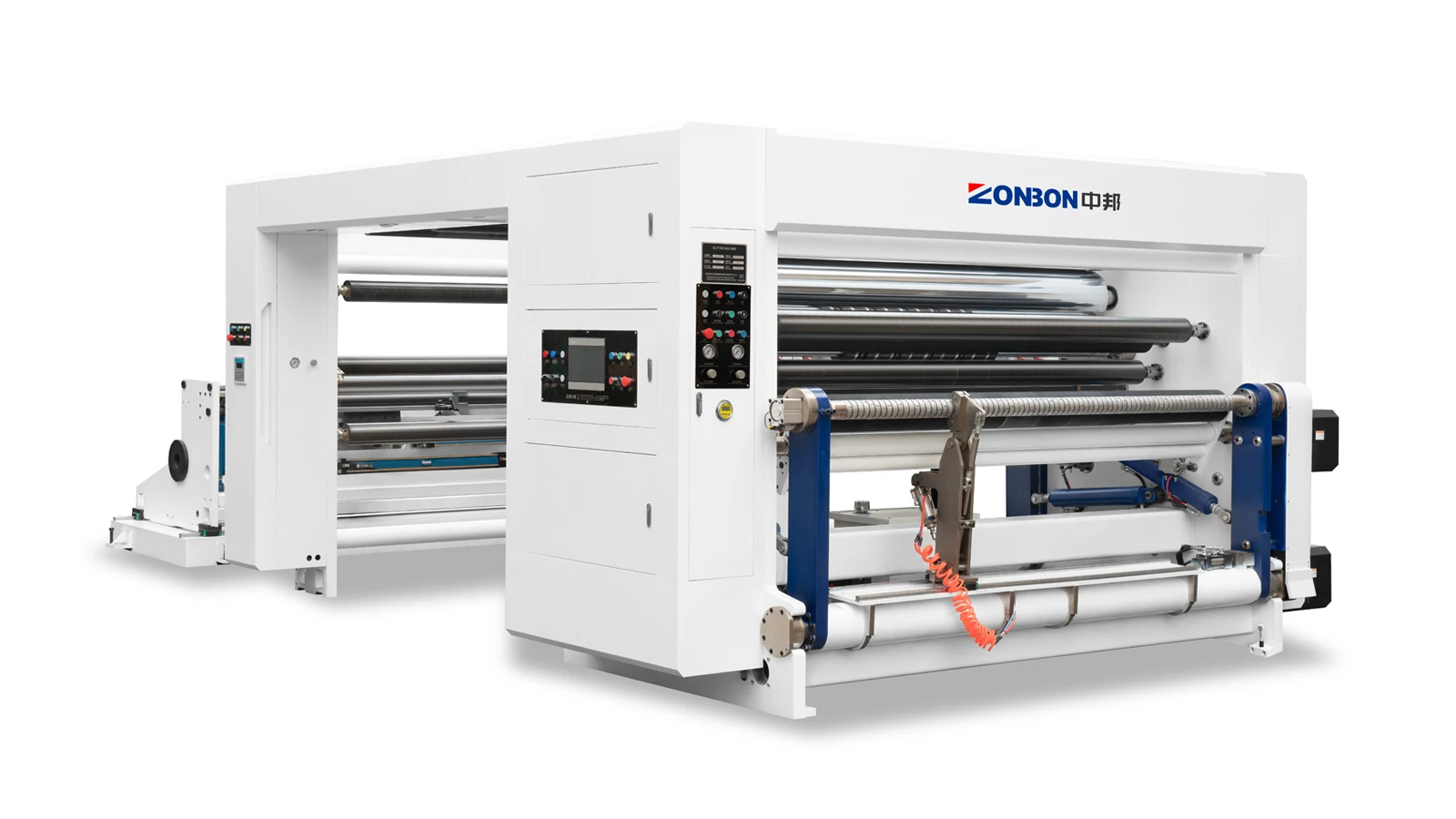
Different materials behave very differently during slitting and rewinding. A machine that performs well for BOPP film may not be suitable for aluminum foil, thermal paper, or self-adhesive label stock. Material thickness, stiffness, surface properties, stretch characteristics, and rewinding requirements all influence machine configuration.
Before comparing machine specifications, buyers should first identify the primary material they intend to process. This approach helps avoid overpaying for unnecessary features while ensuring stable production quality.
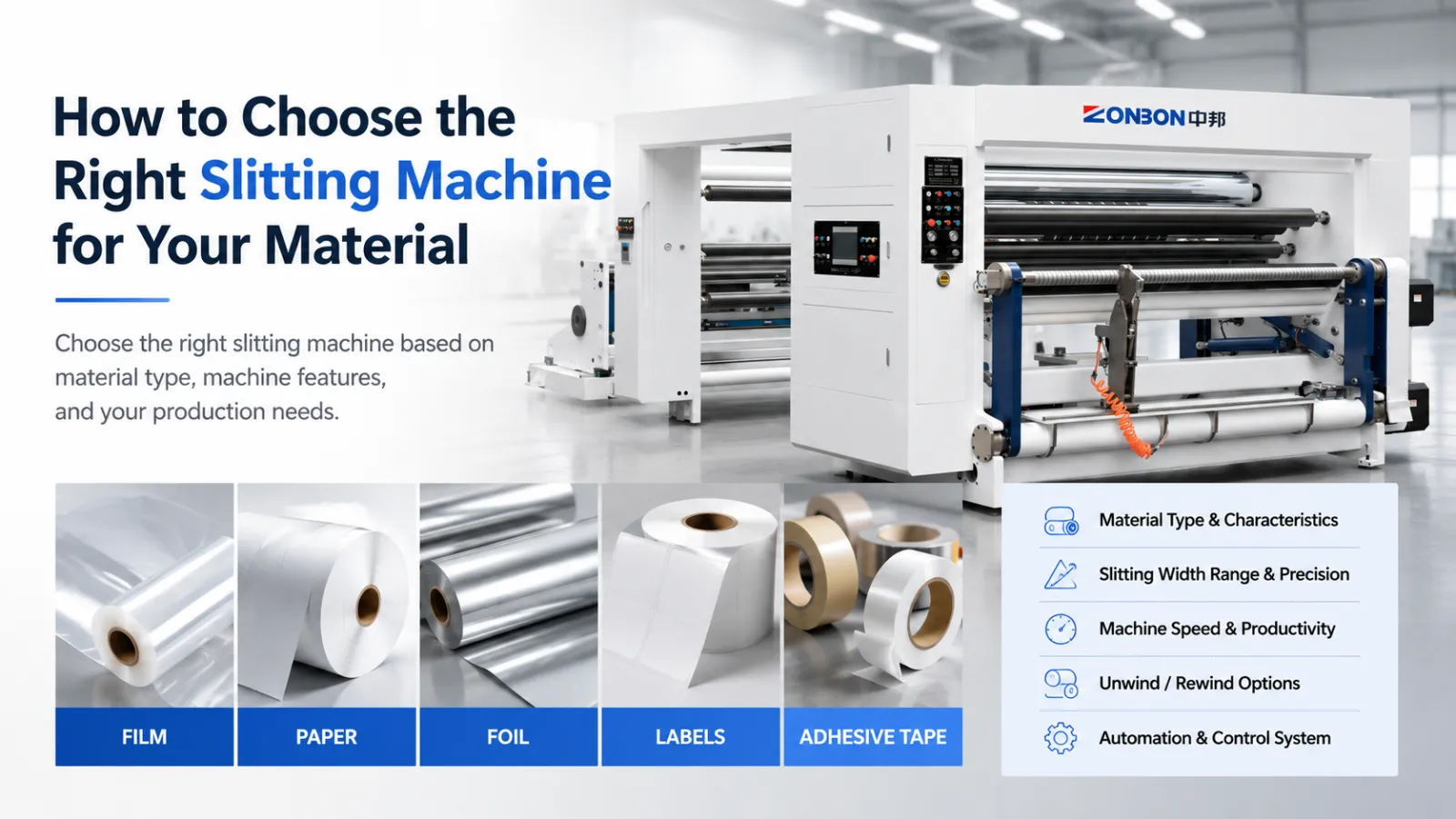
Step 1: Identify Your Material Category
Most slitting applications fall into one of the following categories:
- Flexible packaging films
- Paper materials
- Aluminum foil and foil laminates
- Self-adhesive label stock
- Adhesive tape materials
- Nonwoven and specialty materials
Each category requires different slitting methods, tension control strategies, and rewinding systems.
Choosing a Slitting Machine for Flexible Packaging Films
Flexible packaging films are among the most common materials processed by slitter rewinders. Typical materials include:
- BOPP film
- PET film
- PE film
- CPP film
- Laminated packaging films
These materials are highly sensitive to web tension and rewinding stability. Poor tension control can create wrinkles, stretching, telescoping rolls, and uneven roll hardness.
Recommended Features
- Automatic tension control
- EPC web guiding system
- Stable duplex rewinding
- High-precision slitting system
- Suitable razor or shear slitting configuration
Buyers processing flexible packaging materials should also review our Film Slitting Machine Guide for BOPP, PET, PE and CPP Films.
Choosing a Slitting Machine for Paper Materials
Paper converting applications require a different approach. Common materials include:
- Kraft paper
- Thermal paper
- Release paper
- Coated paper
- Packaging paper
Unlike films, paper materials often create dust during cutting and require excellent slit width accuracy and rewinding consistency.
Recommended Features
- Dust-reduction design
- Stable rewind tension control
- High slit width accuracy
- Suitable shear or crush slitting systems
- Consistent roll hardness control
For paper converters, specialized paper slitting machines often provide better performance than general-purpose systems.
Choosing a Slitting Machine for Aluminum Foil Materials
Aluminum foil presents unique challenges because it is wrinkle-sensitive and less elastic than most plastic films.
Common applications include:
- Food packaging foil
- Pharmaceutical foil
- Coffee packaging laminates
- Retort pouch structures
Even small tension variations can create wrinkles, burr edges, or foil cracking.
Recommended Features
- High-precision tension control
- Stable rewinding systems
- Shear slitting configuration
- Low-vibration machine structure
- Accurate web alignment systems
Buyers processing foil materials should prioritize production stability over maximum machine speed.
Choosing a Slitting Machine for Self-Adhesive Labels
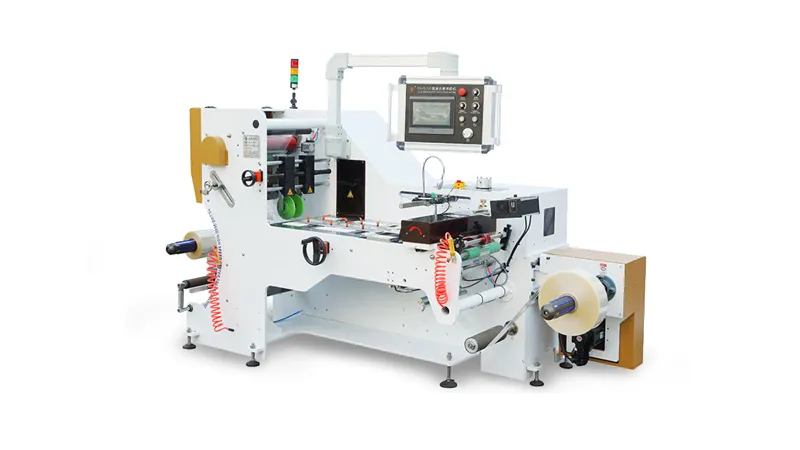
Label stock converting often requires tighter width tolerances than many other slitting applications.
Common materials include:
- Paper labels
- PP labels
- PET labels
- Thermal labels
- BOPP label materials
Since slit rolls may later enter die-cutting, printing, or inspection processes, edge quality and width consistency become critical.
Recommended Features
- High slit width accuracy
- Precise web guiding
- Consistent rewinding quality
- Low-defect edge cutting
- Servo-controlled systems
Choosing a Slitting Machine for Adhesive Tape Materials
Adhesive tape materials require additional consideration because adhesive transfer may affect knife systems and rewinding performance.
Common products include:
- BOPP packing tape
- Stationery tape
- Industrial tape
- Double-sided tape
Recommended Features
- Stable rewind tension
- Clean edge cutting
- Anti-adhesive contamination design
- Accurate core positioning systems
- High roll consistency
Tape manufacturers can also review our guide to BOPP Tape Slitting and Rewinding Production Line.
How Material Thickness Affects Machine Selection
Material thickness influences knife selection, tension requirements, and rewinding performance.
| Material Condition | Key Requirement |
|---|---|
| Very Thin Materials | Precise tension control |
| Medium Thickness Materials | Balanced slitting and rewinding |
| Heavy Materials | Stronger machine structure and rewinding system |
Always verify both current and future material specifications before selecting equipment.
How Production Volume Influences Machine Choice
Buyers should also evaluate expected production volume.
- Small converters may prioritize flexibility and lower investment.
- Growing businesses may require scalable automation.
- Large manufacturers often prioritize speed, consistency, and automation.
Choosing equipment that supports future growth can reduce replacement costs later.
Questions to Ask Before Making a Final Decision
- What materials will I process most frequently?
- What are my width tolerance requirements?
- How important is rewinding consistency?
- Will I process multiple materials?
- Do I need future production expansion capability?
- What level of automation is appropriate for my business?
These questions often reveal the most suitable machine configuration more effectively than comparing specifications alone.
Choosing the Right Configuration for Long-Term Success
There is no universal slitting machine that works perfectly for every material. The best machine depends on the combination of material properties, production volume, quality requirements, and future business goals.
Buyers who start with material characteristics rather than machine price usually make better long-term investment decisions and achieve more stable production results.
When evaluating available options, it is helpful to compare different slitting machines based on actual production requirements instead of focusing only on maximum speed or initial cost.
FAQ: Choosing a Slitting Machine by Material
Why is material type important when choosing a slitting machine?
Different materials require different tension control systems, slitting methods, and rewinding configurations to achieve stable production quality.
Which materials are most sensitive to tension control?
PE films, laminated structures, aluminum foil, and thin flexible packaging materials are often highly sensitive to tension variations.
Can one slitting machine process multiple materials?
Yes. Many modern slitter rewinders can process different materials, but machine configuration must match the most demanding applications.
What is the best slitting method for foil materials?
Shear slitting is commonly preferred because it typically produces cleaner edges and better cutting precision.
Should I choose a machine based on speed alone?
No. Production stability, rewinding quality, material compatibility, and long-term operating performance are often more important than maximum speed specifications.