





Film Slitting Machine Guide for BOPP, PET, PE and CPP Films
Why Film Slitting Matters in Flexible Packaging Production
Film slitting is a critical process in flexible packaging production. After printing, laminating, coating, or film extrusion, large jumbo rolls must be slit into smaller finished rolls with accurate widths and stable rewinding quality for downstream converting.
Whether producing snack packaging, frozen food bags, stand-up pouches, hygiene packaging, labels, or industrial films, poor slitting performance can lead to wrinkles, uneven roll hardness, poor edge quality, telescoping rolls, and material waste.
Choosing the right film slitting machine is important because different film materials behave differently during slitting. BOPP, PET, PE, and CPP films each have unique tension characteristics, surface properties, thickness ranges, and cutting requirements.
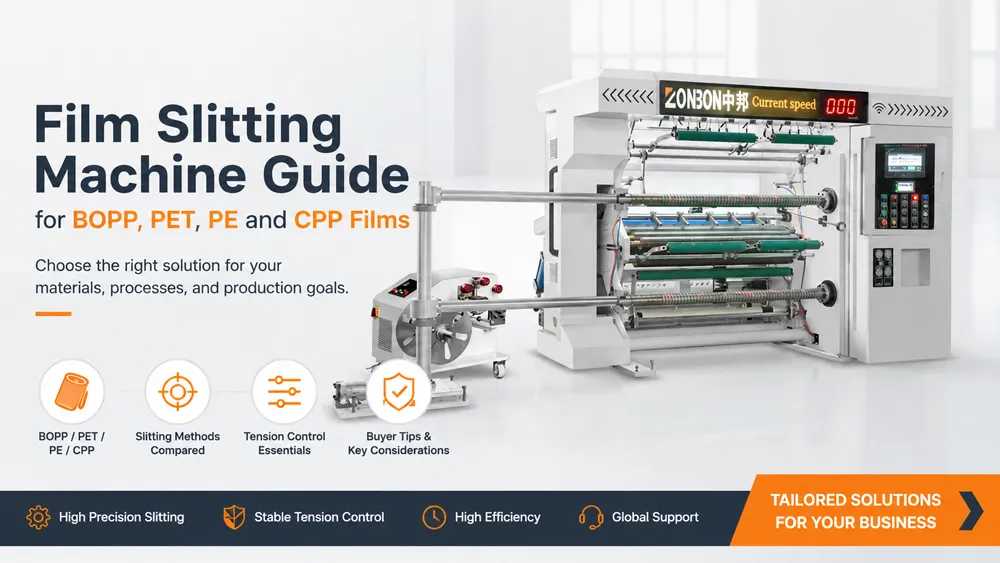
This guide explains how to choose the right film slitting machine for common packaging films and what buyers should consider before investing in equipment.
Common Film Materials Used in Slitting
Before choosing equipment, buyers should first understand the characteristics of the film materials they process. Different films require different tension settings, knife systems, and rewinding methods.
BOPP Film
BOPP (Biaxially Oriented Polypropylene) film is one of the most widely used flexible packaging materials for snack packaging, food bags, labels, overwrap films, and laminated structures.
BOPP film generally offers good stiffness and high clarity, but stable slitting tension is still necessary to prevent wrinkles and uneven rewinding during high-speed production.
For BOPP film, buyers often prioritize:
- Stable high-speed slitting
- Clean slit edges
- Consistent rewinding hardness
- Wrinkle prevention
PET Film
PET film is commonly used for high-strength packaging, retort pouches, laminated films, industrial materials, and premium flexible packaging applications.
Compared with PE or CPP, PET film has stronger stiffness and higher tensile strength. Because of this, accurate web control and precise slitting methods become more important, especially for thinner PET materials.
PET film slitting usually requires:
- High slitting precision
- Stable tension control
- Better edge quality
- Reliable rewinding consistency
PE Film
PE (Polyethylene) film is widely used for frozen food packaging, hygiene packaging, courier bags, medical packaging, and industrial flexible packaging.
Compared with PET and BOPP, PE film is softer and more stretch-sensitive. Excessive tension may cause elongation, wrinkles, roll deformation, or unstable roll formation.
For PE film applications, buyers should pay special attention to:
- Automatic tension control
- Stable rewinding systems
- Low-tension slitting capability
- Film stretch prevention
CPP Film
CPP (Cast Polypropylene) film is often used as a heat-sealing layer in food packaging, retort packaging, and laminated flexible packaging structures.
CPP film is softer than BOPP and generally requires stable roll formation and controlled tension to avoid blocking, wrinkles, and poor rewinding.
What Is a Film Slitting Machine?
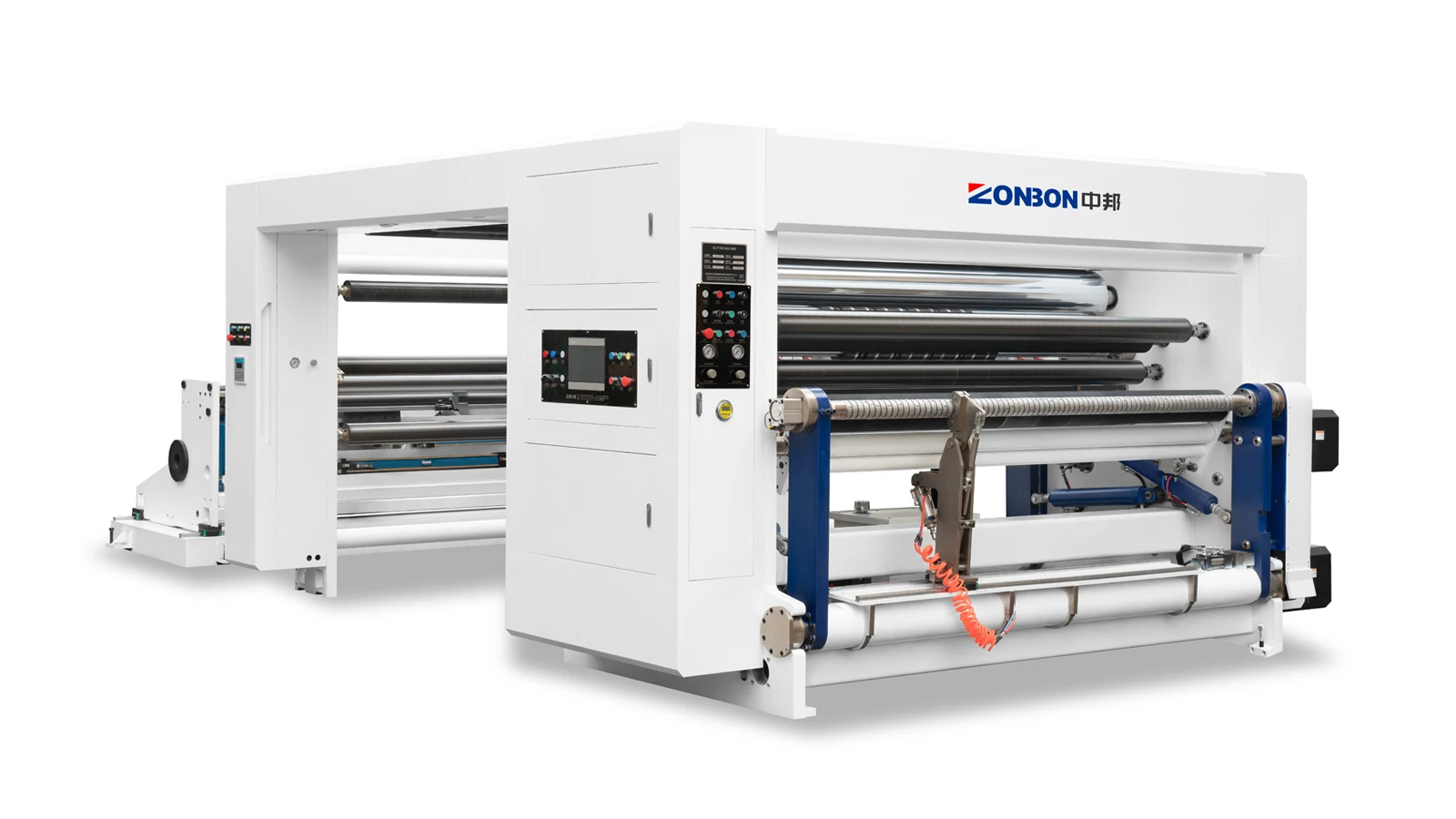
A film slitting machine is specialized converting equipment used to cut large rolls of plastic film into narrower rolls with precise widths and consistent rewinding quality.
The slitting process usually includes:
- Unwinding: Feeding jumbo film rolls into the machine.
- Web Guiding: Keeping film aligned during processing.
- Slitting: Cutting film into required widths.
- Rewinding: Rewinding finished rolls with controlled tension.
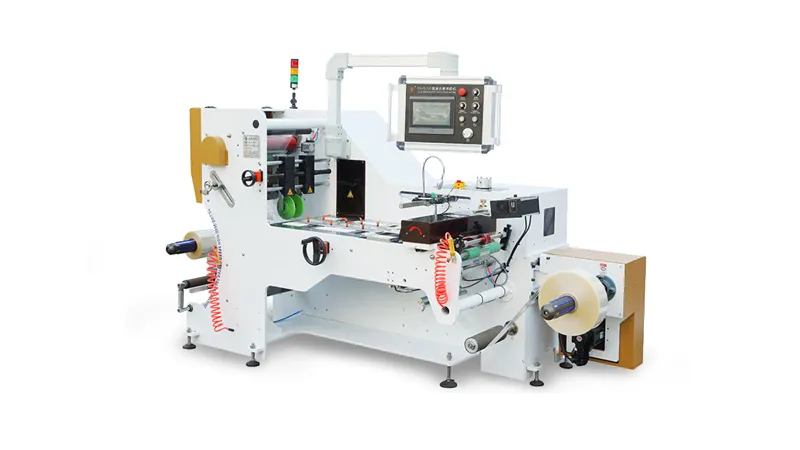
Modern film slitting machines are commonly used in flexible packaging, label production, medical packaging, industrial films, and laminated material converting.
Key Challenges When Slitting Different Films
Film slitting may look simple, but many packaging factories experience quality problems due to unsuitable machine configuration or unstable production control.
Tension Sensitivity
Film materials respond differently to tension. PE and CPP films are softer and more stretch-sensitive, while PET films require more controlled slitting precision.
Unstable tension can lead to:
- Wrinkles
- Stretching
- Telescoping rolls
- Inconsistent roll hardness
Edge Quality
Poor slitting quality may create burr edges, uneven cutting, or dust. This can negatively affect printing, laminating, sealing, and bag-making performance.
Wrinkles and Film Stretching
Thin PE films and laminated structures are more likely to experience wrinkles during high-speed slitting if tension settings are not properly adjusted.
Roll Hardness Consistency
Uneven rewinding can create rolls that are either too loose or too tight. This often creates problems during pouch making, laminating, or printing processes.
How to Choose the Right Film Slitting Machine
Material Thickness
Buyers should confirm film thickness range before choosing equipment. Thin films may require more sensitive tension control, while thicker laminated films may need stronger rewinding systems.
Slitting Speed
Higher speed is useful for large-volume production, but stability is more important than speed alone. A machine with stable slitting quality and less waste may create better long-term production efficiency.
Razor vs Shear Slitting
Different film materials may require different knife systems.
| Slitting Method | Suitable Materials | Main Benefit |
|---|---|---|
| Razor Slitting | BOPP, PE, thin films | Simple setup and efficient cutting |
| Shear Slitting | PET, laminated films | Cleaner edges and better precision |
In many flexible packaging applications, razor slitting works well for thinner films, while shear slitting is often preferred for PET and laminated materials requiring cleaner slit edges.
Tension Control System
Stable tension control is one of the most important features in film slitting. Buyers processing stretch-sensitive films such as PE and CPP should prioritize automatic tension systems.
Rewinding Stability
Good rewinding quality helps maintain stable roll hardness, neat edges, and smoother downstream processing.
EPC Web Guiding
An EPC web guiding system helps maintain alignment during slitting, which improves finished roll consistency and cutting accuracy.
Common Slitting Problems for BOPP, PET, PE and CPP Films
Understanding common slitting defects helps buyers identify which machine features matter most.
- Wrinkles: Usually caused by unstable tension or improper rewinding.
- Stretching: Common in PE film when tension is too high.
- Uneven slit edges: Often caused by poor knife settings.
- Telescoping rolls: Usually related to inconsistent roll hardness.
- Poor rewinding: Can affect pouch making, printing, and laminating performance.
Why Film Slitting Machine Quality Matters
A stable film slitting machine improves roll consistency, reduces waste, lowers downtime, and helps improve production efficiency. Poor-quality slitting can increase material loss and create problems in downstream converting.
For many packaging factories, investing in stable slitting performance often creates better long-term ROI than simply choosing the lowest machine price.
If your production mainly focuses on flexible packaging, this guide about how to choose a slitting machine for flexible packaging may also help compare machine configurations and buyer considerations.
Why ZONBON Machinery
ZONBON Machinery provides converting solutions for flexible packaging, labels, paper, foil, adhesive materials, and industrial roll materials.
For BOPP, PET, PE, CPP, and laminated film applications, ZONBON offers customized film slitting machines designed for stable web handling, accurate slitting, and reliable rewinding performance.
Depending on production requirements, machine configurations can be customized for different film structures, roll widths, slit widths, rewinding methods, and production speeds.
FAQ: Film Slitting Machine
What is the best slitting machine for BOPP film?
BOPP film generally works well with film slitting machines using stable tension control and razor slitting systems for efficient high-speed cutting.
Can one machine slit PET, PE, BOPP, and CPP films?
Yes. Many film slitting machines can process multiple film materials, but the machine configuration should match thickness range, tension sensitivity, and edge quality requirements.
Why is PE film harder to slit?
PE film is softer and more stretch-sensitive than PET or BOPP. Excessive tension can easily cause wrinkles, stretching, and unstable rewinding.
Which slitting method is best for PET film?
Shear slitting is commonly preferred for PET film because it usually provides cleaner slit edges and better cutting precision.
Why is tension control important in film slitting?
Stable tension helps prevent wrinkles, roll deformation, telescoping rolls, and inconsistent rewinding quality during production.