





Pharmaceutical Packaging Gravure Printing Machine Guide
Pharmaceutical packaging is one of the most demanding segments in the packaging industry. Unlike many consumer packaging applications, pharmaceutical packaging requires strict control over print quality, registration accuracy, traceability, material compatibility, and production consistency.
As a result, selecting a gravure printing machine for pharmaceutical packaging involves much more than comparing speed, width, or color stations. Buyers must evaluate whether the equipment can support long-term compliance, stable production, and future business growth.
This guide explains the key considerations behind pharmaceutical packaging gravure printing and helps packaging manufacturers, distributors, and project investors make better equipment decisions.
What Is Pharmaceutical Packaging Gravure Printing?
Pharmaceutical packaging gravure printing refers to the use of rotogravure printing technology to produce printed materials used in pharmaceutical and healthcare packaging.
Typical pharmaceutical packaging products include:
- PTP aluminum blister foil
- Cold-form pharmaceutical foil
- Strip packaging materials
- Medical sachets
- Pharmaceutical pouches
- Medical device packaging materials
These products often require precise printing, consistent color control, and reliable readability of critical information such as dosage instructions, batch numbers, expiration dates, and regulatory markings.
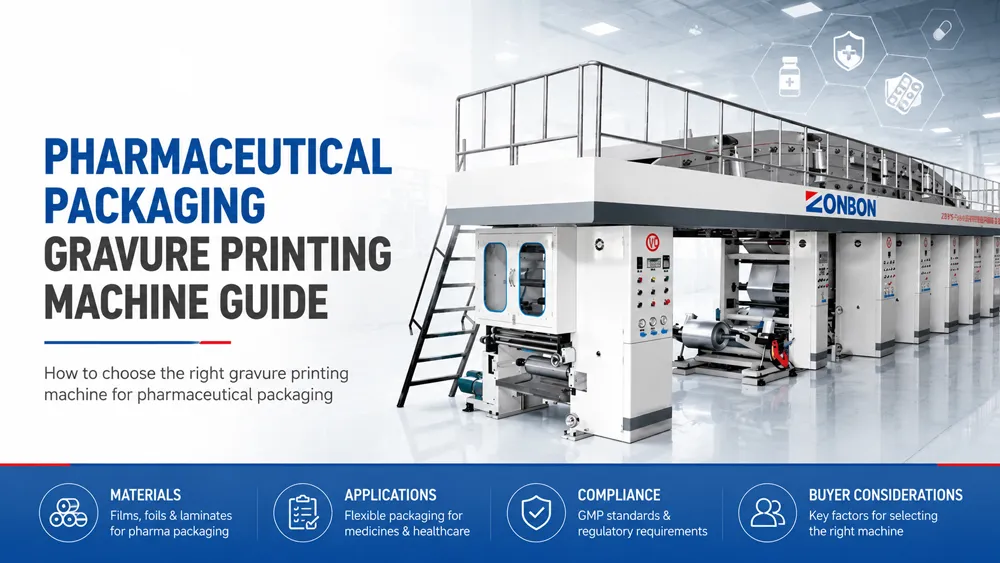
Why Is Gravure Printing Widely Used for Pharmaceutical Packaging?
Gravure printing remains one of the preferred solutions for many pharmaceutical packaging applications because it provides stable print consistency, fine-detail reproduction, and reliable long-run performance.
- Excellent print consistency
- Stable long-run production
- High-speed manufacturing capability
- Superior fine-detail reproduction
- Reliable color repeatability
Pharmaceutical packaging often contains small text, warning symbols, regulatory information, and machine-readable codes. Gravure printing helps maintain clarity and consistency across large production volumes.
Common Pharmaceutical Packaging Products and Their Requirements
PTP Aluminum Blister Foil
PTP aluminum blister foil is widely used for tablets and capsules. It requires accurate printing, stable coating performance, and reliable material handling.
Strip Packaging
Pharmaceutical strip packaging often contains high-density text and dosage information. Consistent print quality is critical to avoid production waste and compliance concerns.
Medical Sachets
Sachets used for powders, medical products, and healthcare applications require reliable printing on flexible materials while maintaining package integrity.
Medical Device Packaging
Medical device packaging frequently includes traceability information, instructions, and regulatory markings that require stable print quality throughout production.
Materials Used in Pharmaceutical Packaging Printing
| Material | Typical Application | Production Consideration |
|---|---|---|
| PTP Aluminum Foil | Blister packaging | Requires stable printing and coating control |
| Cold Form Foil | High-barrier pharmaceutical packaging | Requires careful web handling |
| PET Film | Laminated pharmaceutical structures | Requires stable drying and adhesion |
| BOPP Film | Flexible medical packaging | Requires accurate tension control |
| Laminated Materials | Medical pouches and sachets | Requires process compatibility evaluation |
What Makes Pharmaceutical Packaging Different from Food Packaging?
One of the most common mistakes among first-time buyers is assuming pharmaceutical packaging requirements are similar to food packaging.
While both industries may use flexible packaging materials, pharmaceutical packaging generally demands stricter control over:
- Registration accuracy
- Traceability information
- Print consistency
- Defect management
- Production documentation
- Material compatibility
Even minor print defects that may be acceptable in some general packaging applications can become serious concerns in pharmaceutical production.
Key Machine Requirements for Pharmaceutical Packaging Production
Registration Accuracy
Small text, symbols, and pharmaceutical information require accurate color-to-color alignment. Automatic registration systems help maintain print consistency throughout long production runs.
Learn more in our article on How Automatic Registration Improves Gravure Printing Accuracy .
Drying Performance
Stable drying helps reduce smearing, improve adhesion, and support high-speed production. Drying performance becomes especially important when printing pharmaceutical foils and laminated materials.
You can explore this topic further in How Drying Systems Affect Rotogravure Printing Efficiency .
Web Handling Stability
Stable tension control helps maintain registration accuracy and consistent material movement during production, especially when processing thin foils and laminated structures.
Coating and Process Compatibility
Some pharmaceutical aluminum foil applications require both printing and coating processes. Buyers should confirm whether the selected equipment can support the required material structure, coating method, drying conditions, and production workflow.
Inspection and Quality Control
Many pharmaceutical packaging projects require enhanced inspection capability to reduce the risk of defective products entering the supply chain.
The Biggest Challenges for Global Buyers and Distributors
Many equipment distributors and project consultants face a common challenge: understanding what the end customer actually needs.
Buyers frequently say, “We need a pharmaceutical packaging printing machine.” However, this information alone is rarely enough for correct equipment selection.
Important questions include:
- What pharmaceutical packaging product will be produced?
- Is the application blister foil, strip packaging, sachet, or pouch material?
- Which materials will be printed or coated?
- How many colors are required?
- Is coating required after printing?
- What production speed is expected?
- Are future capacity expansions planned?
Without understanding these details, buyers risk selecting equipment that does not match the real production requirement.
Common Buyer Mistakes When Purchasing a Pharmaceutical Packaging Press
Focusing Only on Machine Speed
High speed is valuable, but stability, drying performance, coating consistency, and quality control are often more important in pharmaceutical packaging production.
Choosing Color Stations Before Understanding Artwork Requirements
Buyers often ask whether they need 8 colors or 10 colors before evaluating actual package designs. Artwork complexity should guide machine configuration decisions.
Ignoring Coating Requirements
Some pharmaceutical aluminum foil applications require coating after printing. If coating requirements are ignored during machine selection, the production line may not match the final packaging process.
Overlooking Future Expansion Plans
Production requirements often increase over time. Selecting equipment that supports future growth can reduce long-term reinvestment risk.
Questions Buyers Should Ask Before Choosing a Supplier
- What pharmaceutical packaging applications has the supplier supported?
- Can the machine support both printing and coating requirements?
- What registration accuracy can the machine achieve?
- How is drying performance validated?
- What materials can be processed reliably?
- Can the machine support future production upgrades?
- How is quality consistency maintained during long production runs?
These questions help buyers evaluate both machine capability and supplier experience.
How to Choose the Right Pharmaceutical Packaging Gravure Printing Machine
The best machine depends on the product, material, production volume, coating requirement, and long-term business objectives.
Rather than starting with machine specifications, buyers should first define:
- End-use pharmaceutical packaging application
- Material structure
- Printing and coating requirements
- Artwork complexity
- Production targets
- Future expansion plans
Once these factors are clear, selecting the appropriate pharmaceutical packaging printing machine becomes significantly easier and more reliable.
Conclusion
Pharmaceutical packaging gravure printing requires a higher level of production control than many other packaging applications.
Registration accuracy, drying performance, coating compatibility, material handling, and long-term production stability all play important roles in achieving reliable packaging quality.
For manufacturers, distributors, and project investors, understanding the final product requirements before selecting equipment is often the most effective way to reduce risk and ensure successful production.
Planning a Pharmaceutical Packaging Printing Project?
Share your packaging structure, material specifications, printing and coating requirements, and production goals. Our engineering team can help evaluate suitable solutions based on your actual application requirements.
Talk to Our EngineersFAQ: Pharmaceutical Packaging Gravure Printing Machine Guide
Why is gravure printing used for pharmaceutical packaging?
Gravure printing offers stable long-run quality, excellent registration accuracy, and reliable reproduction of small text, symbols, and regulatory information commonly found on pharmaceutical packaging.
What materials are commonly used in pharmaceutical packaging printing?
Common materials include PTP aluminum foil, cold-form foil, PET film, BOPP film, and various laminated structures used for pharmaceutical pouches, sachets, and blister packaging.
Is coating required for pharmaceutical aluminum foil packaging?
Some pharmaceutical aluminum foil applications require coating after printing, depending on the final packaging structure and sealing requirements. Buyers should confirm coating needs before choosing equipment.
How accurate does pharmaceutical packaging printing need to be?
Pharmaceutical packaging often requires highly accurate registration because it contains dosage information, batch numbers, warnings, and traceability markings that must remain clear and readable.
Is pharmaceutical packaging printing different from food packaging printing?
Yes. Pharmaceutical packaging generally requires stricter control over registration accuracy, traceability, defect management, coating compatibility, and production consistency.
How many colors are typically required for pharmaceutical packaging?
The required number of colors depends on the packaging design. Buyers should evaluate artwork requirements before deciding on machine configuration.
What should distributors ask customers before recommending a machine?
Distributors should understand the final product type, material structure, printing requirement, coating requirement, production volume, and future expansion plans before recommending equipment.
What are the biggest mistakes when purchasing a pharmaceutical packaging printing machine?
Common mistakes include focusing only on machine speed, selecting color stations without reviewing artwork, ignoring coating requirements, and overlooking registration and drying performance.
How do I choose the right machine for pharmaceutical packaging printing?
Start by defining the packaging application, material structure, printing and coating requirements, artwork complexity, and production targets. Then evaluate machine capability based on actual production requirements rather than specifications alone.