





Bag Making Machine Manufacturer: Complete Buyer Guide (2026)
Why Choosing the Right Bag Making Machine Manufacturer Matters
Choosing the right bag making machine manufacturer directly affects production efficiency, product quality, labor cost, and long-term profitability. Buyers often compare machine speed, automation level, sealing quality, supported materials, and after-sales support before making an investment.
Whether you produce food packaging bags, courier bags, garbage bags, medical packaging bags, woven sacks, or retail shopping bags, selecting the right equipment partner can reduce waste, improve consistency, and support future factory expansion.
In this buyer guide, we explain the different types of bag making machines, common production materials, machine features, pricing considerations, and how to evaluate manufacturers before purchasing.
What Is a Bag Making Machine?
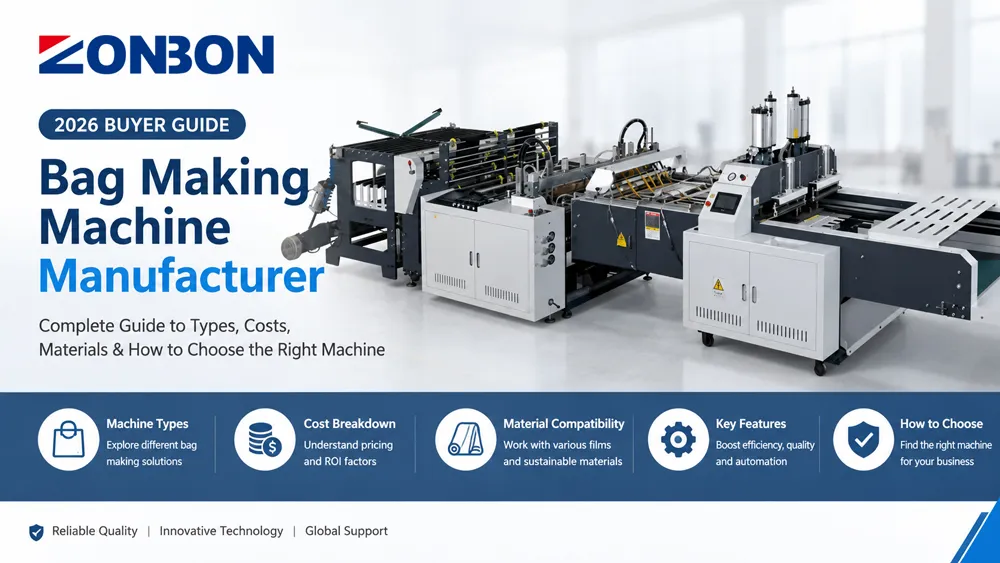
A bag making machine is industrial converting equipment designed to produce finished bags from plastic film, laminated material, woven fabric, medical packaging material, or tissue packaging rolls. Depending on the product type, the machine performs processes such as sealing, cutting, punching, zipper insertion, handle attachment, folding, perforation, and rewinding.
Modern bag making machines are widely used in packaging manufacturing for industries such as:
- Food packaging
- E-commerce and courier packaging
- Retail shopping bags
- Medical and pharmaceutical packaging
- Hygiene product packaging
- Industrial and agricultural packaging
- Tissue and sanitary packaging
For large-scale production, manufacturers increasingly prefer fully automatic bag making machines because they improve production speed, reduce labor dependency, and maintain stable bag quality.
Types of Bag Making Machines
Different packaging products require different machine structures and production technologies. Understanding the differences helps buyers choose equipment suitable for their target market and material type.
Food Packaging Bag Making Machines
Food packaging bag making machines are designed for snack bags, frozen food bags, stand-up pouches, bread packaging, vacuum bags, and laminated food packaging applications.
These machines typically support multi-layer laminated films such as PET, PE, CPP, aluminum foil laminates, and barrier packaging materials. Buyers often prioritize sealing quality, hygiene standards, and production consistency.
Explore more: Food Packaging Bag Making Machines
Roll Bag Making Machines
Roll bag making machines are mainly used for supermarket produce bags, garbage bags on rolls, and perforated packaging rolls. The machine can automatically rewind bags into rolls for convenient retail dispensing.
Important considerations include rewinding stability, perforation accuracy, and high-speed continuous production.
T Shirt Bag Making Machines
T-shirt bag making machines are used to produce supermarket shopping bags with handle cut-outs. Buyers often focus on production speed, punching accuracy, and material compatibility with HDPE and LDPE films.
Modern systems can integrate inline punching and automatic stacking to improve productivity.
Ziplock Bag Making Machines
Ziplock bag making machines produce resealable bags for food storage, cosmetics, pharmaceuticals, and industrial packaging.
Key buyer concerns usually include zipper alignment precision, sealing strength, leak prevention, and stable operation at high speed.
Garbage Bag Making Machines
Garbage bag making machines are commonly used for star-sealed garbage bags, flat bags, drawstring bags, and roll bags.
For high-volume manufacturers, automation and material-saving performance are important purchasing factors because garbage bag production is highly cost-sensitive.
Express Bag Making Machines
Express bag making machines are widely used for e-commerce courier bags and logistics packaging.
With the rapid growth of online shopping, demand for tamper-resistant and durable mailing bags continues to increase. Buyers typically prioritize sealing reliability, adhesive systems, and production efficiency.
Soft Loop Handle Bag Making Machines
Soft loop handle bag making machines are mainly used for premium retail packaging and shopping bags.
These machines combine sealing, cutting, and handle attachment processes to create high-value bags for fashion, luxury retail, and promotional packaging.
Woven Bag Making Machines
Woven bag making machines are suitable for PP woven bags used in agriculture, chemicals, cement, pet food, fertilizer, and industrial packaging.
Buyers usually focus on load-bearing strength, sealing durability, and bag dimensional consistency.
Tissue Packaging Bag Making Machines
Tissue packaging bag making machines are designed for facial tissue, napkin, wet wipe, and household paper packaging.
Manufacturers often prioritize sealing appearance, packaging accuracy, and compatibility with high-speed tissue production lines.
Diaper Packaging Bag Making Machines
Diaper packaging bag making machines are used for baby diaper and hygiene product packaging.
These machines generally support laminated film structures and require strong sealing performance to protect product hygiene during transportation and storage.
Medical Packaging Bagging Machines
Medical packaging bagging machines are designed for sterile packaging applications, including medical disposables, diagnostic products, and pharmaceutical packaging.
Buyers in this sector usually pay close attention to sealing precision, contamination prevention, and packaging consistency to meet strict regulatory requirements.
Common Materials Used in Bag Production
Material compatibility is one of the most important factors when selecting a bag making machine. Different materials require different sealing temperatures, tension systems, and machine configurations.
- PE Film (LDPE / HDPE)
- BOPP Film
- CPP Film
- PET Laminated Film
- Aluminum Foil Laminates
- Kraft Paper Laminates
- PP Woven Material
- Biodegradable Films
- Medical Packaging Materials
Before equipment selection, many manufacturers evaluate material specifications to ensure stable production and sealing performance.
Learn more about production material evaluation: Material Consultation
Key Features to Consider Before Buying
Not all bag making machines deliver the same productivity or automation level. When comparing suppliers, buyers usually focus on these critical features:
Automation Level
Fully automatic systems can reduce labor requirements while improving speed and production consistency.
Production Speed
Higher speed improves factory output, but machine stability is equally important for maintaining bag quality.
Material Compatibility
Choose a machine capable of processing your target materials without sealing defects or excessive waste.
Customization Capability
Reliable manufacturers often offer customized widths, bag sizes, sealing structures, punching systems, and optional automation modules.
After-Sales Support
Technical support, spare parts availability, installation guidance, and operator training all affect long-term equipment reliability.
How Much Does a Bag Making Machine Cost in 2026?
Bag making machine prices vary significantly depending on machine type, automation level, material compatibility, and production speed.
| Machine Type | Typical Investment Range |
|---|---|
| T-Shirt Bag Machines | Lower investment |
| Garbage Bag Machines | Medium investment |
| Ziplock Bag Machines | Medium to high investment |
| Medical Packaging Machines | High investment |
| Fully Automatic High-Speed Systems | Higher investment |
Besides machine price, buyers should also consider installation cost, spare parts, maintenance, labor savings, and long-term return on investment.
How to Choose the Right Bag Making Machine Manufacturer
Choosing a machine supplier involves more than comparing prices. Experienced buyers usually evaluate:
- Manufacturing experience
- Customization capability
- Machine quality and testing process
- Global installation support
- Technical training availability
- Spare parts support
- Customer case studies
Factory testing before shipment can also reduce production risks and ensure machine compatibility with your material and packaging requirements.
See how production testing supports stable delivery: Factory Testing
Why Many Buyers Prefer Manufacturer-Direct Solutions
Working directly with a bag making machine manufacturer often provides better customization, faster technical communication, and lower procurement cost compared with trading companies.
Manufacturer-direct cooperation can also simplify future production line upgrades and capacity expansion.
For growing packaging factories, scalable production planning becomes increasingly important.
Explore long-term production planning support: Production Line Expansion
Conclusion
Choosing the right bag making machine depends on your product type, material structure, automation needs, and future production goals.
Whether you manufacture food packaging bags, courier bags, tissue packaging, woven sacks, or medical packaging, working with an experienced manufacturer can help reduce production risks and improve long-term efficiency.
At ZONBON Machinery, we provide customized bag making machine solutions for various packaging industries, helping manufacturers improve productivity, sealing quality, and operational efficiency.
Explore our complete collection: Bag Making Machines
FAQ About Bag Making Machines
What industries use bag making machines?
Bag making machines are widely used in food packaging, retail, e-commerce logistics, hygiene products, pharmaceuticals, agriculture, and industrial packaging.
What materials can bag making machines process?
Most machines support PE, BOPP, CPP, PET laminates, woven materials, aluminum foil laminates, biodegradable films, and specialty packaging materials.
How do I choose the right bag making machine?
You should evaluate bag type, material structure, production speed requirements, automation level, sealing method, and future expansion plans.
Can bag making machines be customized?
Yes. Many manufacturers provide customization for bag size, machine width, sealing structures, punching systems, automation features, and material compatibility.