





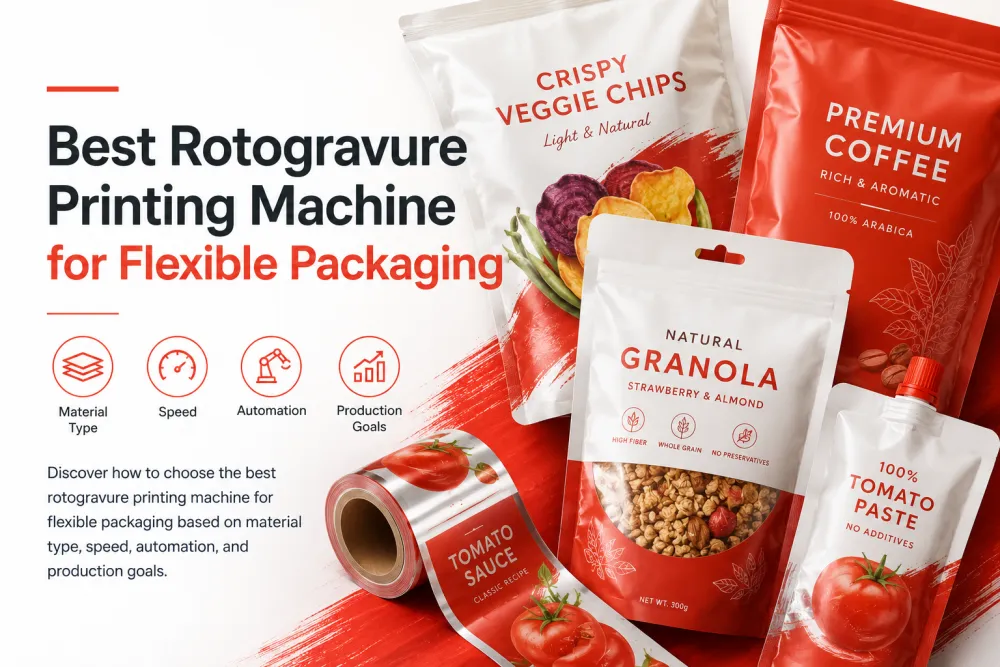
Best Rotogravure Printing Machine for Flexible Packaging
Flexible packaging manufacturers often ask the same question before investing in new equipment: What is the best rotogravure printing machine for flexible packaging?
The answer depends on your production materials, packaging application, speed requirements, automation goals, and long-term business plans. A machine that works perfectly for food packaging may not be ideal for pharmaceutical films or heavy laminated structures.
In our experience supporting flexible packaging manufacturers, the “best” gravure printing machine is not necessarily the most expensive or highest-speed system—it is the one that delivers stable performance, consistent print quality, and scalable production efficiency for your actual workflow.
Why Rotogravure Printing Is Widely Used for Flexible Packaging
Rotogravure printing remains one of the leading technologies for flexible packaging because it combines:
- High-speed production capability
- Stable print consistency
- Excellent color reproduction
- Strong performance on plastic films
- Reliable long-run efficiency
Flexible packaging production often involves large-volume repeat jobs where registration stability and consistent print quality directly influence product branding and manufacturing efficiency.
This is especially important for:
- Food packaging
- Frozen food bags
- Coffee packaging
- Snack packaging
- Pet food packaging
- Personal care packaging
- Medical and pharmaceutical packaging
What Makes a Rotogravure Printing Machine Suitable for Flexible Packaging?
Flexible packaging production places unique demands on printing equipment.
Thin substrates such as PET, BOPP, PE film, and laminated materials require stable web handling and consistent drying performance.
When evaluating equipment, we generally recommend focusing on the following areas.
1. Stable Registration Accuracy
Multi-color packaging printing requires precise registration control.
Even small misalignment can affect:
- Brand appearance
- Text readability
- Packaging quality perception
- Material waste
High-performance gravure systems often include automatic registration correction and servo synchronization to improve consistency during high-speed operation.
2. Strong Tension Control for Film Materials
Flexible packaging substrates are sensitive to tension fluctuation.
Poor tension management may cause:
- Wrinkles
- Stretching
- Registration instability
- Feeding inconsistency
The best gravure printing systems for packaging maintain stable web tension from unwinding to rewinding.
3. Efficient Drying Performance
Drying systems directly affect production speed and print quality.
Since packaging production usually involves multiple color stations, drying performance must support continuous operation without compromising material stability.
Efficient drying systems help:
- Reduce bottlenecks
- Improve ink adhesion
- Prevent smearing
- Increase production speed
For flexible packaging production, drying efficiency often becomes one of the most important machine selection factors.
4. Automation and Setup Efficiency
Modern packaging production increasingly depends on automation to reduce waste and improve repeatability.
Features commonly found in advanced gravure systems include:
- Electronic Line Shaft (ELS) synchronization
- Automatic registration adjustment
- Recipe memory systems
- Centralized HMI control
- Remote diagnostics
Faster setup becomes especially valuable for converters handling multiple SKUs or frequent packaging updates.
Best Rotogravure Printing Machine by Packaging Application
| Packaging Application | Recommended Focus |
|---|---|
| Food Packaging | Stable drying and high registration |
| Snack Packaging | High-speed production capability |
| Coffee Packaging | Premium graphics quality |
| Pet Food Packaging | Long-run production stability |
| Medical Packaging | High precision and consistency |
| Laminated Packaging | Strong tension control |
Instead of selecting a machine based only on speed or price, packaging manufacturers should evaluate which configuration best matches their specific application requirements.
How Material Type Affects Machine Selection
Material compatibility strongly affects gravure printing performance.
Common flexible packaging materials include:
- BOPP film
- PET film
- PE film
- CPP film
- Aluminum foil laminates
- Multi-layer packaging structures
Different materials respond differently to heat, tension, and drying conditions. Selecting a machine optimized for your production materials helps improve stability and reduce waste.
Should You Choose ELS or Traditional Mechanical Systems?
Flexible packaging manufacturers increasingly adopt servo-driven systems because they improve:
- Registration accuracy
- Setup efficiency
- Waste reduction
- Production flexibility
However, traditional mechanical systems may still provide good value for moderate-speed production environments depending on budget and workflow requirements.
What We Usually Recommend for Flexible Packaging Manufacturers
When customers ask us what the “best” gravure printing machine is, we usually begin with production requirements rather than machine models.
We generally recommend evaluating:
- Packaging application
- Material structure
- Production speed target
- Future factory growth
- Automation expectations
- Print quality requirements
In many cases, selecting a scalable and stable production system creates stronger long-term ROI than simply minimizing initial investment.
How Modern Rotogravure Printing Machines Support Flexible Packaging
Modern Rotogravure Printing Machines increasingly combine servo synchronization, intelligent tension control, high-efficiency drying systems, and automated registration to improve flexible packaging production efficiency.
These technologies help converters reduce waste, improve consistency, and support long-term production scalability across different packaging applications.
Conclusion
The best rotogravure printing machine for flexible packaging depends on how well the equipment matches your production materials, packaging type, output target, and future business goals.
Instead of selecting equipment based only on machine speed or price, flexible packaging manufacturers should focus on registration stability, drying performance, automation capability, and long-term production efficiency.
In practical manufacturing environments, the right machine is the one that supports stable output, lower waste, and scalable factory growth over time.
Looking for the Right Gravure Printing Machine for Flexible Packaging?
Share your packaging materials, production goals, and output requirements. Our engineering team can help recommend the most suitable gravure printing solution for your workflow.
FAQ: Best Rotogravure Printing Machine for Flexible Packaging
What is the best rotogravure printing machine for flexible packaging?
The best rotogravure printing machine depends on your packaging material, production speed, print quality requirements, and automation expectations. For high-volume flexible packaging, machines with stable registration, efficient drying systems, and servo synchronization are often preferred.
Which materials can rotogravure printing machines handle?
Rotogravure printing machines are commonly used for BOPP, PET, PE, CPP films, aluminum foil laminates, and other flexible packaging materials. The ideal machine configuration depends on material thickness, heat sensitivity, and tension control requirements.
Is rotogravure printing better than flexographic printing for flexible packaging?
Rotogravure printing is often preferred for long production runs, premium graphics, and highly consistent color reproduction. Flexographic printing may be more suitable for shorter runs or frequent design changes. The better option depends on production goals and packaging type.
What machine features are most important for flexible packaging production?
Buyers usually focus on registration accuracy, tension control, drying performance, automation level, production speed, and material compatibility. These factors directly influence print stability, waste reduction, and long-term operating efficiency.
How important is the drying system in flexible packaging gravure printing?
Drying systems are extremely important because they affect ink adhesion, production speed, print consistency, and material stability. Poor drying performance can limit output and increase defects during high-speed production.
Should I choose an Electronic Line Shaft (ELS) or Mechanical Line Shaft (MLS) system?
ELS systems generally provide higher registration precision, faster setup, and stronger automation capability, making them ideal for high-speed packaging production. MLS systems may still be suitable for standard production environments or budget-sensitive projects.
How many printing colors are typically needed for flexible packaging?
Flexible packaging production commonly uses 6–8 color configurations, while premium packaging may require 8–10 colors for complex graphics and brand consistency. The right choice depends on packaging design requirements.
How can I choose the right gravure printing machine for my packaging factory?
Start by evaluating your packaging application, material type, production speed target, print quality requirements, and future expansion plans. Working with an experienced manufacturer can help ensure the machine configuration matches your long-term production goals.