





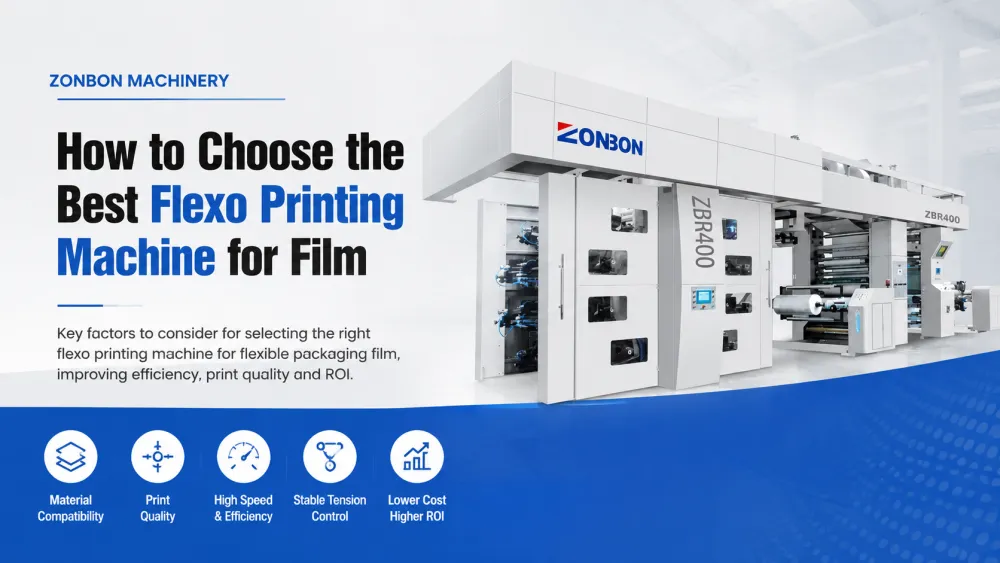
How to Choose the Best Flexo Printing Machine for Flexible Packaging Film
Why Choosing the Right Flexo Printing Machine Matters
Choosing the right flexo printing machine for flexible packaging film directly affects print quality, material waste, production efficiency, and long-term profitability.
For packaging manufacturers, film printing is often more challenging than printing on labels or thicker paper materials. Flexible films are lightweight, stretchable, and sensitive to tension changes during production. Poor machine selection may lead to registration issues, unstable ink transfer, excessive waste, and inconsistent packaging quality.
Whether you produce food packaging, frozen packaging, coffee pouches, hygiene packaging, courier bags, or laminated packaging materials, selecting the right printing system is an important long-term investment.
This guide explains how packaging manufacturers can evaluate flexographic printing solutions and choose the best machine for flexible packaging film production.
What Types of Flexible Packaging Films Need Printing?
Different packaging products use different film structures, and each material behaves differently during printing. Understanding your material requirements is one of the first steps when selecting a flexo printing machine.
BOPP Film
BOPP film is commonly used for snack packaging, food wrappers, labels, and consumer packaging because of its good printability and attractive surface finish.
PET Film
PET film offers stronger dimensional stability and barrier performance, making it suitable for premium food packaging and laminated structures.
PE Film
PE film is widely used for frozen food packaging, shopping bags, hygiene packaging, and courier bags. Because PE materials are softer and more stretchable, stable tension control becomes more important.
CPP Film
CPP film is often used for heat-sealable packaging and retort pouch applications that require stronger sealing performance.
Laminated Films
Multi-layer laminated films are widely used in premium flexible packaging where moisture barrier, durability, and product protection are important.
Metallized Films
Metalized film packaging often requires tighter registration and better print consistency because reflective surfaces make print defects more visible.
What Is the Best Flexo Printing Machine for Flexible Packaging Film?
For most flexible packaging film applications, CI flexo printing machines are widely considered one of the best solutions.
This is mainly because film materials are sensitive to web tension and registration movement during printing. A central impression (CI) structure helps stabilize the substrate while multiple colors print around one central drum.
Compared with other flexographic printing structures, CI flexo systems generally provide:
- Better registration accuracy.
- More stable web handling.
- Higher-speed printing capability.
- Improved consistency on thin films.
- Better performance for multi-color packaging jobs.
For manufacturers producing flexible packaging film, machine stability often matters more than simply choosing the fastest machine.
Why CI Flexo Printing Machines Are Commonly Used for Film Printing
CI flexographic printing machines are widely used for flexible packaging because of their ability to maintain stable production on thin and stretchable materials.
Better Registration Stability
Film materials can shift during high-speed production. The CI structure keeps the web more stable during printing, helping improve color registration consistency.
More Stable Tension Control
Thin films such as PE and laminated materials require better tension stability to avoid wrinkles, web movement, or inconsistent printing.
Higher Production Efficiency
Many flexible packaging factories run long production hours and large order volumes. Stable high-speed operation helps improve productivity while reducing waste.
Better Multi-Color Printing Performance
Food packaging, coffee pouches, personal care packaging, and premium flexible packaging often require multiple colors and detailed graphics.
Stable registration becomes increasingly important as printing complexity increases.
For packaging manufacturers evaluating film printing solutions, CI Flexo Printing Machines for Flexible Packaging & Film Printing are commonly used for various film structures and packaging applications.
Gearless vs Geared Flexo for Flexible Packaging Film
When selecting a flexographic printing system, buyers also need to decide whether a geared or gearless machine is more suitable for their production requirements.
Geared Flexo
Geared systems are often suitable for stable production jobs with longer runs and fewer SKU changes.
- Lower initial investment.
- Reliable production for standard jobs.
- Suitable for controlled budgets.
Gearless Flexo
Gearless systems use servo control for higher registration precision and greater production flexibility.
- Faster setup.
- Lower startup waste.
- Better high-speed stability.
- More suitable for premium packaging.
- Better for frequent design changes.
For factories handling complex graphics, premium laminated packaging, or frequent order changes, gearless systems may provide better long-term ROI.
Key Factors to Consider Before Choosing a Film Printing Machine
Selecting the best flexo printing machine depends on your production goals rather than only comparing machine specifications.
Film Type Compatibility
Make sure the machine supports your primary materials, including PE, PET, BOPP, CPP, laminated film, or metallized structures.
Printing Width
Machine width should match product dimensions and future production expansion plans.
Number of Colors
Simple packaging may require fewer colors, while premium flexible packaging often requires 6-color, 8-color, or more complex printing configurations.
Drying Performance
Drying systems affect print quality, speed, and energy efficiency, especially for high-speed film printing.
Automation Level
Automatic registration, tension control, inspection systems, and servo technology can improve efficiency and reduce waste.
Production Volume
Factories running high-volume packaging production often benefit from more stable and automated printing systems.
Common Buyer Mistakes When Choosing a Flexo Printing Machine
Many buyers focus heavily on machine speed or price without evaluating real production requirements.
Choosing Based Only on Price
A cheaper machine may cost more long-term if waste, downtime, and maintenance reduce overall productivity.
Ignoring Material Compatibility
Not all flexographic printing machines perform equally well on thin flexible films.
Overlooking Future Expansion
Factories planning production growth should consider future automation needs and higher-speed capability.
Underestimating Setup Waste
Poor registration control can increase startup waste and reduce profitability.
How to Choose the Right Flexo Printing Machine for Your Packaging Business
The best machine depends on your packaging application, material structure, order type, and production goals.
You may need a more stable and automated solution if your business involves:
- Premium food packaging.
- Multi-layer laminated films.
- Thin stretchable materials.
- Frequent design changes.
- High-volume production.
- Complex multi-color graphics.
Instead of simply comparing machine speed or price, packaging manufacturers should evaluate total production efficiency, material stability, waste reduction, and long-term operating cost.
FAQ About Flexo Printing Machines for Flexible Packaging Film
What is the best flexo printing machine for flexible packaging film?
CI flexo printing machines are commonly considered one of the best solutions for flexible packaging film because they provide better registration and tension stability on thin materials.
Can flexographic printing handle laminated films?
Yes. Many flexographic printing systems are designed for laminated structures used in food, medical, and premium packaging.
Is gearless flexo better for film printing?
For premium packaging, high-speed production, and frequent order changes, gearless flexo often provides better registration and lower waste.
What materials can a flexo printing machine print?
Common materials include BOPP, PET, PE, CPP films, laminated films, paper, and metallized films.
What should buyers consider before choosing a film printing machine?
Buyers should evaluate material compatibility, printing width, number of colors, drying system, automation level, production volume, and long-term ROI.