





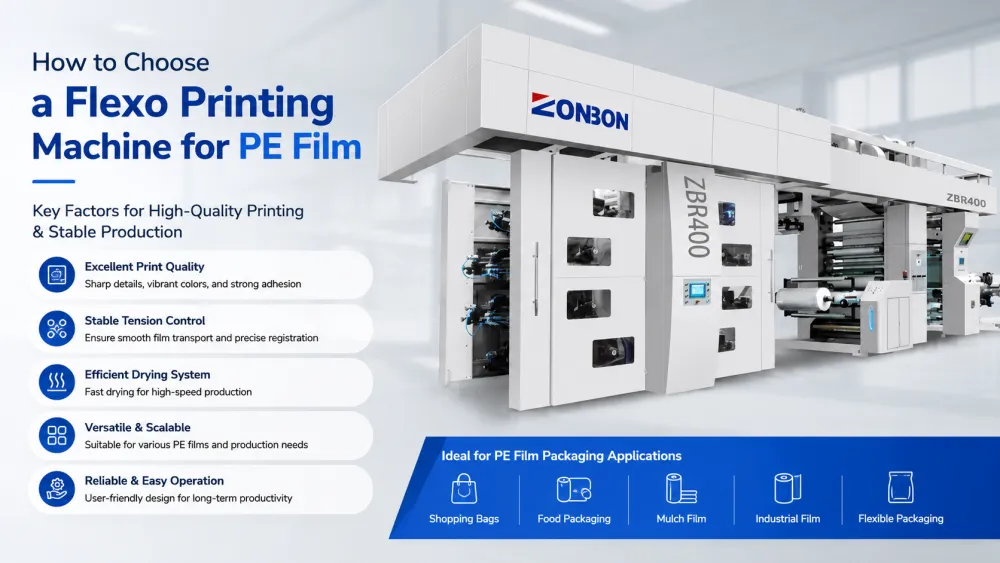
How to Choose a Flexo Printing Machine for PE Film
Why PE Film Packaging Requires Different Printing Considerations
PE film is widely used in flexible packaging because of its softness, flexibility, sealing performance, and cost efficiency. It is commonly found in frozen food packaging, hygiene products, courier bags, shopping bags, agricultural packaging, and industrial protective films.
However, printing on PE film is often more challenging than printing on paper or rigid substrates.
Because PE film is softer and more stretchable, poor web handling or unstable printing conditions may quickly lead to wrinkles, registration errors, inconsistent graphics, and higher material waste.
For packaging manufacturers, choosing the right flexo printing machine for PE film is not only about printing speed — it is about maintaining stable tension, clean graphics, and consistent production quality.
Common Applications of PE Film Packaging
Different PE film products may require different printing quality, machine configuration, and production speed.
Frozen Food Packaging
PE film is widely used for frozen vegetables, meat packaging, seafood bags, and ready-to-cook food packaging because of its moisture resistance and sealing properties.
These products often require consistent print quality and reliable ink adhesion under cold storage conditions.
Hygiene and Personal Care Packaging
Baby diaper packaging, tissue overwrap, sanitary product packaging, and hygiene bags often use PE film structures that require stable multi-color printing.
Courier Bags and Mailing Packaging
Express delivery bags and mailing pouches commonly use PE film because of durability and cost efficiency.
These products usually require logo printing, barcode areas, or branding information.
Shopping Bags and Retail Packaging
Retail shopping bags and promotional PE packaging often require decorative printing and stronger brand presentation.
Agricultural and Industrial Packaging
Agricultural film bags, fertilizer packaging, and industrial liners may also use PE film structures that require stable printing performance.
Why PE Film Is More Difficult to Print
Compared with paper or thicker substrates, PE film presents several production challenges during flexographic printing.
Material Stretching
PE film is soft and flexible. During printing, unstable tension may stretch the material, causing registration problems and repeat inconsistency.
Wrinkling and Web Movement
If web tension is not properly controlled, PE film can wrinkle or drift during production, affecting print quality and increasing waste.
Ink Adhesion Challenges
PE film is non-porous, meaning ink does not absorb into the material surface like paper. Proper surface treatment, ink selection, and drying performance are important for maintaining stable adhesion.
Registration Stability
Multi-color packaging graphics require stable registration. Even small material movement can create blurry graphics or misaligned colors.
These challenges make machine stability especially important when printing on PE film.
What Is the Best Flexo Printing Machine for PE Film Packaging?
For many PE film packaging applications, CI (Central Impression) flexo printing machines are commonly considered one of the most suitable options.
This is mainly because PE film is lightweight and sensitive to web movement during production.
A central impression structure helps stabilize the film while printing, reducing movement between color stations and improving print consistency.
Compared with other machine structures, CI flexo printing systems generally provide:
- Better registration accuracy on soft films.
- More stable web handling.
- Improved tension consistency.
- Higher production efficiency.
- Better performance for multi-color packaging.
- Reduced startup waste.
Why Tension Control Matters for PE Film Printing
Tension stability is one of the most important factors in PE film printing.
Because PE materials stretch more easily than PET or paper, unstable web tension may quickly lead to:
- Registration shifting.
- Wrinkled material.
- Repeat inconsistency.
- Film deformation.
- Higher reject rates.
Modern flexographic printing systems often include:
- Automatic tension control.
- Servo synchronization.
- Web guiding systems.
- Stable unwinding and rewinding control.
These functions help improve production consistency when printing thin PE film structures.
How Ink Selection Affects PE Film Printing
Because PE film is non-porous, ink selection plays an important role in print quality and adhesion performance.
For many PE film packaging applications, solvent-based inks are commonly used because of stronger adhesion and faster drying on film surfaces.
However, depending on production requirements and environmental regulations, some manufacturers may also evaluate water-based systems for selected applications.
Ink compatibility should always be evaluated together with:
- Film surface treatment.
- Drying system performance.
- Production speed.
- Packaging application.
Different Flexographic Printing Machines for Different Materials
Different packaging materials often require different machine structures depending on substrate behavior and production requirements.
- CI Flexo Printing Machines are widely used for flexible packaging films such as PE, BOPP, PET, and laminated materials where stable registration and better tension control are important.
- Stack Flexo Printing Machines are often more suitable for kraft paper, woven bags, shopping bags, and thicker packaging materials.
- Gearless CI Flexo Printing Machines are commonly preferred for premium packaging, high-speed film printing, and jobs requiring tighter registration accuracy.
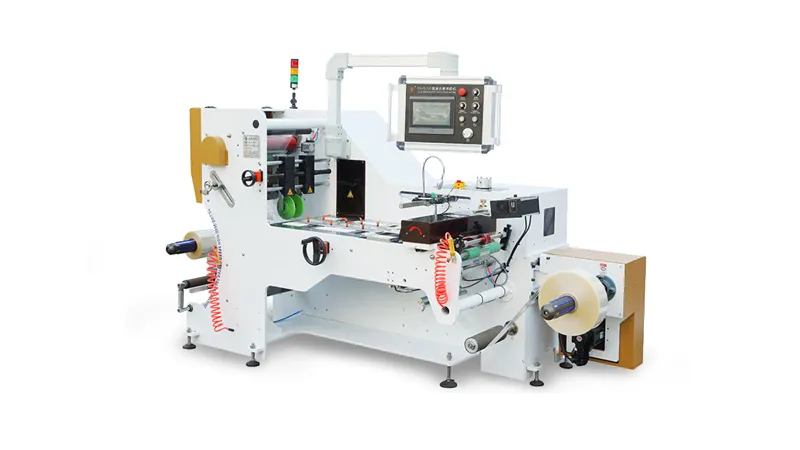
- Inline Flexo Printing Press systems are often used for labels and narrow web packaging applications requiring inline converting.
Selecting the right machine depends on material type, packaging product, production speed, print complexity, and long-term production goals.
Common Buyer Mistakes When Choosing a PE Film Printing Machine
- Choosing equipment based only on machine price.
- Ignoring PE film tension sensitivity.
- Overlooking ink adhesion requirements.
- Choosing speed over print stability.
- Not evaluating future packaging requirements.
For PE film packaging, stable production often creates better long-term profitability than simply selecting the fastest machine.
How to Choose the Right Flexo Printing Machine for PE Film Packaging
Before selecting equipment, buyers should evaluate:
- PE film thickness and material structure.
- Packaging application requirements.
- Number of printing colors.
- Production volume.
- Required print quality.
- Drying performance.
- Tension control capability.
- Future production expansion plans.
The best solution depends on your actual production environment rather than only comparing machine speed or price.
FAQ About Flexo Printing Machines for PE Film Packaging
What is the best flexo printing machine for PE film?
CI flexo printing machines are commonly preferred for PE film because they provide better registration stability and tension control for soft, stretchable materials.
Why is PE film difficult to print?
PE film is soft, flexible, and sensitive to tension changes, making registration and web handling more challenging.
Can flexographic printing be used for frozen food PE packaging?
Yes. Flexographic printing is widely used for frozen food bags, hygiene packaging, courier bags, and retail PE packaging.
What ink is commonly used for PE film printing?
Solvent-based inks are commonly used because of stronger adhesion and faster drying on non-porous PE surfaces.
What should buyers consider before choosing a PE film printing machine?
Buyers should evaluate material type, print quality, tension stability, ink compatibility, production speed, and long-term production goals.