





What Materials Are Used for Food Packaging Bag Making? (2026 Guide)
Why Material Selection Matters in Food Packaging Bag Making
Choosing the right material is one of the most important decisions in food packaging bag production. Material structure directly affects sealing quality, shelf life, product freshness, printing performance, puncture resistance, and overall packaging cost.
Different food products require different packaging properties. For example, frozen food packaging often requires strong moisture resistance, while snack packaging may require high oxygen barriers to preserve freshness. Coffee packaging frequently uses aluminum foil laminates for aroma protection, while bakery packaging may prioritize transparency and presentation.
For manufacturers, selecting compatible materials also helps ensure stable machine operation, reduced sealing defects, and lower production waste.
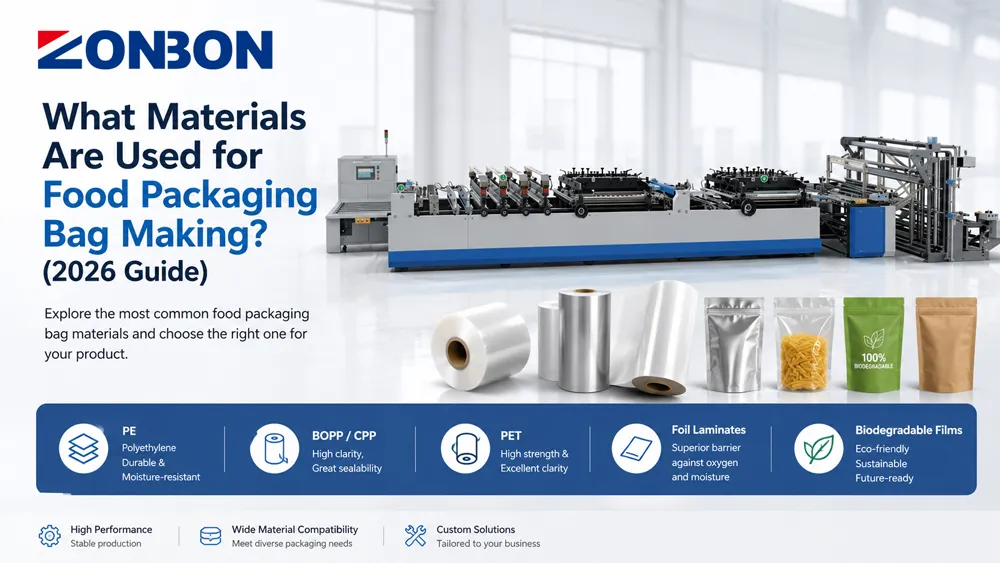
What Materials Are Commonly Used for Food Packaging Bags?
Modern food packaging bags are usually made from plastic films, laminated structures, paper composites, or specialty barrier materials. Below are the most commonly used options in food packaging production.
1. PE (Polyethylene) Film
PE film is one of the most widely used materials for food packaging bag making because of its flexibility, sealing performance, and affordability.
It is commonly divided into:
- LDPE (Low-Density Polyethylene): Flexible, soft, and suitable for lightweight packaging.
- HDPE (High-Density Polyethylene): Stronger, more rigid, and commonly used for shopping and food carry bags.
PE is widely used for:
- Frozen food bags
- Bread packaging
- Fresh produce bags
- Simple food storage bags
Advantages:
- Excellent heat sealing
- Cost-effective
- Good moisture resistance
- Easy processing
2. BOPP (Biaxially Oriented Polypropylene)
BOPP film is widely used in snack packaging because of its high transparency, excellent printability, and strong surface appearance.
It is commonly used for:
- Chips packaging
- Candy bags
- Bakery packaging
- Dry food packaging
Benefits include:
- High gloss appearance
- Strong print quality
- Good moisture resistance
- Excellent shelf presentation
However, BOPP alone often has limited heat sealing performance and is usually laminated with PE or CPP.
3. CPP (Cast Polypropylene)
CPP film is commonly used as an inner sealing layer in laminated food packaging structures.
Compared with BOPP, CPP provides stronger heat sealing properties and better puncture resistance.
Typical applications include:
- Retort food packaging
- Vacuum packaging
- Ready-to-eat meals
- Frozen food packaging
Advantages:
- Strong sealing strength
- Good oil resistance
- High temperature tolerance
- Better puncture resistance
4. PET (Polyethylene Terephthalate)
PET film is commonly used as an outer layer in laminated food packaging because of its excellent mechanical strength and printing performance.
PET is frequently combined with PE, CPP, or foil materials to improve barrier protection.
Typical uses:
- Coffee bags
- Snack packaging
- Frozen food bags
- Sauce packaging
Advantages:
- Strong durability
- Excellent printing surface
- Good temperature resistance
- Stable packaging structure
5. Aluminum Foil Laminates
Aluminum foil laminates are widely used when strong barrier protection is required.
These structures help block:
- Oxygen
- Moisture
- Light exposure
- Aroma loss
Common applications:
- Coffee packaging
- Pet food packaging
- High-barrier snack bags
- Pharmaceutical food packaging
Although foil laminates offer excellent protection, they typically cost more than standard film structures.
6. Kraft Paper Laminated Materials
Kraft paper laminated structures are increasingly used for premium food packaging because they create a natural, eco-friendly appearance.
These materials are often combined with PE or barrier films to maintain sealing performance.
Common applications include:
- Tea packaging
- Coffee bags
- Organic food packaging
- Bakery products
7. Biodegradable Packaging Films
As sustainability regulations continue to grow, many food packaging manufacturers are exploring biodegradable materials.
These materials aim to reduce plastic waste while supporting environmentally friendly packaging goals.
Common biodegradable options include:
- PLA (Polylactic Acid)
- PBAT-based films
- Compostable film structures
However, buyers should confirm material compatibility with sealing systems before production.
Single-Layer vs Laminated Food Packaging Materials
Food packaging bags can use either single-layer materials or laminated structures.
| Type | Typical Features | Common Uses |
|---|---|---|
| Single-Layer Film | Lower cost, simpler structure | Fresh produce, bread, lightweight food bags |
| Laminated Materials | Better barrier protection and durability | Snacks, coffee, frozen foods, pet food |
For products requiring longer shelf life and premium protection, laminated materials are generally preferred.
How to Choose the Right Material for Your Food Product
Material selection depends on several production factors:
- Product Type: Dry snacks, frozen food, liquids, bakery products, coffee, or ready meals.
- Shelf Life Requirements: Longer shelf life often requires stronger barrier properties.
- Sealing Method: Material must match sealing temperature and machine capability.
- Packaging Appearance: Transparency, gloss, matte finish, or premium paper look.
- Cost Target: Premium materials increase protection but also packaging cost.
Manufacturers often evaluate film structure and production requirements before recommending the most suitable material combination.
Learn more about packaging material compatibility: Material Consultation
How Materials Affect Food Packaging Bag Making Machines
Different materials require different sealing temperatures, tension control systems, and machine configurations.
For example:
- PE materials generally require stable heat sealing control.
- Laminated films often demand higher sealing precision.
- Foil laminates may require stronger tension management.
- Biodegradable materials often require specialized process settings.
This is why material compatibility should always be considered before choosing a machine.
Explore suitable equipment: Food Packaging Bag Making Machines
Common Mistakes Buyers Make
- Choosing material based only on cost
- Ignoring sealing compatibility
- Using weak barrier materials for long shelf-life products
- Overlooking printing requirements
- Not testing material performance before production
Small material mistakes can result in sealing failure, product spoilage, increased waste, and customer complaints.
Conclusion
Food packaging bag materials directly influence freshness protection, packaging appearance, sealing performance, and production efficiency.
PE, BOPP, CPP, PET, foil laminates, kraft paper structures, and biodegradable films each serve different packaging goals. Choosing the right material depends on product type, shelf-life requirements, sealing performance, and machine compatibility.
Working with an experienced packaging equipment manufacturer can help reduce production risks and improve long-term packaging performance.
Explore more packaging solutions: Bag Making Machines
FAQ About Food Packaging Bag Materials
What is the best material for food packaging bags?
The best material depends on the product. PE works well for simple food storage, while laminated PET or foil structures are preferred for snacks, coffee, and long shelf-life packaging.
Why are laminated materials commonly used?
Laminated materials provide better moisture, oxygen, aroma, and puncture protection than single-layer films.
Can biodegradable materials be used in food packaging?
Yes, but machine compatibility and sealing performance should be carefully tested before production.
Which material is commonly used for snack packaging?
Snack packaging often uses laminated BOPP, PET, CPP, or foil structures for strong barrier protection and attractive printing.