





How Long Does a Rotogravure Printing Machine Last?
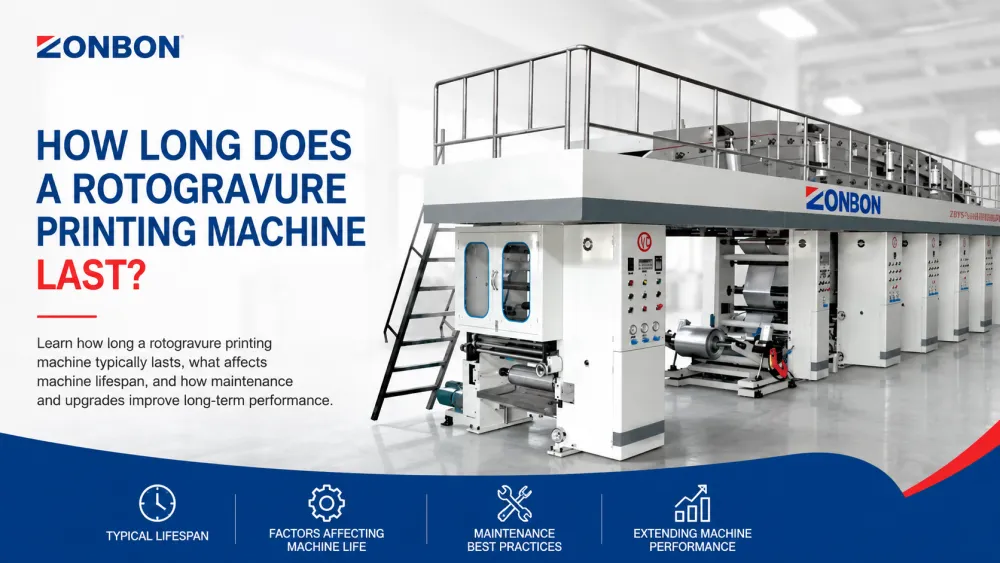
One of the most common concerns buyers have before investing in gravure equipment is simple: How long does a rotogravure printing machine last?
Since gravure presses are long-term industrial investments, understanding equipment lifespan helps packaging manufacturers estimate ROI, maintenance planning, upgrade timing, and production scalability.
In our experience working with flexible packaging manufacturers, a well-maintained rotogravure printing machine can remain productive for 15 to 30 years or more. However, actual lifespan depends on multiple factors including machine quality, operating environment, maintenance standards, material type, production intensity, and upgrade capability.
What Is the Average Lifespan of a Rotogravure Printing Machine?
Most industrial gravure printing machines are built for long-term production. Under proper operating conditions, many systems continue running reliably for decades.
| Machine Condition | Typical Lifespan |
|---|---|
| Basic production with limited maintenance | 10–15 years |
| Regular preventive maintenance | 15–25 years |
| Well-maintained industrial production system | 20–30+ years |
| Machines with upgrades and modernization | 30+ years in some cases |
In many packaging factories, machine replacement happens not because the equipment stops functioning, but because production requirements evolve faster than the original system design.
What Factors Affect Rotogravure Printing Machine Lifespan?
Machine lifespan is influenced by much more than age alone.
Below are the factors that most strongly determine long-term performance.
1. Manufacturing Quality and Engineering Design
The foundation of long-term reliability starts with machine engineering.
Gravure presses with stable frame structures, precise mechanical alignment, high-quality motors, and well-designed drying systems generally remain productive longer.
Strong engineering can reduce:
- Mechanical vibration
- Premature wear
- Registration instability
- Unexpected downtime
This is one reason many packaging converters prioritize manufacturers with long-term gravure specialization.
2. Daily Maintenance Practices
Maintenance quality has one of the biggest impacts on equipment lifespan.
Preventive maintenance often includes:
- Lubrication of moving components
- Doctor blade inspection
- Bearing replacement
- Tension system calibration
- Drying system cleaning
- Electrical inspection
Factories with structured maintenance procedures often achieve significantly longer equipment life compared to reactive repair-only environments.
3. Production Intensity
A machine operating one shift per day experiences very different wear compared to equipment running continuously in high-volume flexible packaging production.
Production intensity affects:
- Mechanical wear rate
- Motor lifespan
- Drying system durability
- Tension control stability
High-output factories typically require more frequent servicing but can still maintain long machine life through preventive care.
4. Material Type and Production Application
Different substrates place different demands on the equipment.
For example:
- Thin films require precise tension control
- Aluminum foil may affect wear patterns
- Laminated materials increase drying demand
- Abrasive materials may accelerate component wear
Material compatibility and process setup influence long-term machine stability more than many buyers initially expect.
5. Operator Skill and Production Management
Even high-end gravure presses can suffer from premature wear if operated incorrectly.
Operator training affects:
- Machine setup accuracy
- Material handling consistency
- Production stability
- Component protection
Proper operating procedures help reduce avoidable mechanical stress and unnecessary maintenance costs.
Why Some Gravure Printing Machines Last More Than 20 Years
We regularly see older gravure presses continue running efficiently long after their expected service life.
This usually happens because factories invest in:
- Preventive maintenance programs
- Periodic control system upgrades
- Servo modernization
- Drying system optimization
- Operator training
In many cases, improving machine performance through upgrades becomes more economical than full equipment replacement.
When Should You Replace a Rotogravure Printing Machine?
Replacement decisions are not always based on machine age.
Many converters upgrade equipment when:
- Production speed becomes insufficient
- Registration quality no longer meets market standards
- Energy consumption becomes too high
- Maintenance cost increases significantly
- Automation requirements evolve
- Factory production expands
Sometimes upgrading individual systems can extend equipment value, while other situations justify investing in a newer generation gravure press.
How Lifecycle Support Extends Machine Lifespan
Long-term equipment performance depends heavily on technical support after installation.
In our experience, factories achieve stronger ROI when machine support continues beyond delivery and commissioning.
At ZONBON Machinery, our Lifecycle Support helps customers improve long-term equipment reliability through maintenance guidance, technical troubleshooting, performance improvement, and operational support throughout the machine lifecycle.
Ongoing support can help reduce downtime, improve workflow stability, and extend production efficiency over many years of operation.
How to Maximize the Lifespan of a Gravure Printing Machine
Based on our production experience, we generally recommend focusing on five areas:
- Follow preventive maintenance schedules
- Use suitable materials and process settings
- Train operators regularly
- Upgrade outdated control systems when needed
- Monitor drying and tension performance consistently
Small operational improvements often create major long-term gains in machine reliability.
Does Buying a Higher-Quality Machine Improve Lifespan?
In many cases, yes.
Better-engineered gravure presses often deliver:
- More stable frame structure
- Reduced vibration
- Higher registration consistency
- Longer mechanical durability
- Easier maintenance access
Modern Rotogravure Printing Machines increasingly combine automation, servo synchronization, intelligent tension control, and energy-efficient systems designed to improve both production efficiency and long-term reliability.
Conclusion
A rotogravure printing machine can often remain productive for 15–30 years or more when supported by proper engineering, preventive maintenance, operator training, and periodic upgrades.
Machine lifespan depends not only on build quality but also on how effectively the equipment is maintained and optimized throughout daily production.
For flexible packaging manufacturers, long-term operational stability often matters far more than short-term equipment cost alone.
Want to Improve the Lifespan of Your Gravure Printing Machine?
Share your production challenges, equipment condition, and packaging applications. Our engineering team can help evaluate the best strategy for maintenance, optimization, or future upgrades.