





New vs Used Rotogravure Printing Machine: Which Is Better?
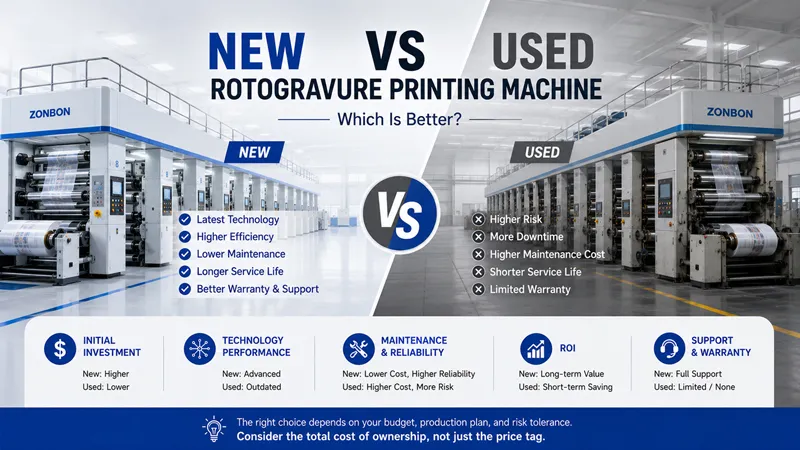
One of the most common questions we receive from packaging manufacturers is whether it is better to invest in a new rotogravure printing machine or purchase a used system to reduce upfront cost.
The answer depends on production goals, material requirements, budget planning, and long-term operational expectations. While used gravure presses may appear attractive because of lower initial pricing, the total production impact is often more complex than the purchase cost alone.
In our experience working with flexible packaging manufacturers, the decision should focus not only on equipment price, but also on efficiency, maintenance stability, automation capability, and long-term scalability.
Why Packaging Manufacturers Compare New and Used Gravure Machines
Rotogravure printing equipment represents a significant investment, especially for converters entering flexible packaging production or expanding capacity.
Buyers typically compare new and used equipment for several reasons:
- Reducing initial capital investment
- Expanding production capacity quickly
- Testing new packaging markets
- Replacing aging production equipment
- Balancing budget with automation requirements
However, the lowest purchase price does not always deliver the best production value over time.
Main Advantages of Buying a New Rotogravure Printing Machine
1. Higher Production Stability
New gravure presses are designed with modern control systems, improved machine structure, and more stable synchronization technology.
In high-speed flexible packaging production, stable tension control and registration consistency directly affect output quality and material waste.
Modern systems often include:
- Servo-driven synchronization
- Automatic registration control
- Energy-efficient drying systems
- Digital HMI operation
- Recipe memory for repeat jobs
These technologies improve both efficiency and operational consistency.
2. Better Automation Capability
Packaging production is becoming increasingly automated. Many older used machines lack the intelligent systems required for modern production environments.
New equipment can significantly reduce:
- Setup time
- Manual adjustment
- Registration correction time
- Operator dependency
For manufacturers handling multiple SKUs or frequent job changes, automation can generate major long-term productivity improvements.
3. Lower Maintenance Risk
One of the biggest hidden costs of used equipment is maintenance uncertainty.
Older gravure presses may involve:
- Worn transmission components
- Electrical aging issues
- Obsolete control systems
- Difficult spare parts sourcing
- Higher downtime risk
In contrast, new machines provide more predictable operating performance and easier long-term support.
4. Higher Energy Efficiency
Drying systems consume a large amount of energy in gravure printing.
Modern gravure presses increasingly use:
- Optimized airflow systems
- Heat recovery technology
- Improved insulation structure
- Intelligent drying control
Over several years of production, energy savings alone may offset a significant portion of the initial investment difference.
Advantages of Buying a Used Rotogravure Printing Machine
1. Lower Initial Investment
Used machines generally require lower upfront capital, making them attractive for smaller factories or companies entering gravure printing for the first time.
This may help reduce short-term financial pressure during early production expansion.
2. Faster Equipment Availability
Certain used machines may be available immediately, while new customized gravure presses often require manufacturing lead time.
For urgent production expansion, faster delivery can become an important advantage.
3. Suitable for Standard Production
In some production environments, older mechanical systems may still perform adequately for moderate-speed printing or less demanding packaging applications.
The Hidden Risks of Used Gravure Printing Machines
While used equipment can reduce purchase cost, buyers should carefully evaluate long-term operational risk.
Unknown Equipment Condition
Many used machines have already completed years of production cycles under different operating conditions.
Hidden wear may affect:
- Registration stability
- Tension consistency
- Mechanical vibration
- Drying performance
Limited Upgrade Capability
Older systems may not support modern automation upgrades or integration with intelligent production workflows.
This can limit future scalability as packaging production requirements evolve.
Higher Long-Term Operating Cost
Lower purchase price does not always mean lower ownership cost.
Used machines may generate:
- More setup waste
- Higher maintenance expense
- Longer downtime
- Lower production efficiency
How We Help Customers Evaluate Existing Gravure Equipment
In many cases, packaging manufacturers are not simply deciding between “new” or “used.” Instead, they are trying to determine whether their current production system can still be optimized effectively.
We often help customers improve existing equipment performance through production analysis, workflow adjustment, and machine optimization support.
Our Optimization Service focuses on improving production stability, reducing material waste, shortening setup time, and helping converters achieve better long-term efficiency from their current gravure printing systems.
In some situations, proper optimization can extend equipment usability significantly before a full replacement becomes necessary.
New vs Used Gravure Machine: Which Is Better for Flexible Packaging?
| Production Requirement | Recommended Choice |
|---|---|
| High-speed flexible packaging production | New Machine |
| Premium print quality requirements | New Machine |
| Limited startup budget | Used Machine |
| Short-term production expansion | Used Machine |
| Long-term automation strategy | New Machine |
| Lower maintenance risk | New Machine |
How to Make the Right Investment Decision
Before purchasing any gravure printing equipment, we always recommend evaluating:
- Current production volume
- Future business growth plans
- Required print quality level
- Labor and maintenance cost
- Energy consumption expectations
- Automation and scalability requirements
The right solution should support both immediate production goals and long-term operational stability.
Modern Rotogravure Printing Machines increasingly integrate servo synchronization, intelligent tension control, and automated registration systems to improve production efficiency while reducing waste and operator dependency.
Conclusion
Both new and used rotogravure printing machines have advantages depending on production strategy and investment goals.
Used equipment may reduce initial cost, but new gravure presses typically provide stronger long-term performance, higher automation capability, and lower operational risk.
In flexible packaging production, long-term efficiency often becomes more important than short-term savings. Evaluating total ownership cost, maintenance stability, and future scalability is essential before making a final decision.
Need Help Evaluating a New or Used Gravure Press?
Share your production materials, packaging applications, and output goals. Our engineering team can help you determine whether upgrading, optimizing, or investing in a new gravure system is the best solution for your factory.