





Tension Control Systems in Rotogravure Printing Machines
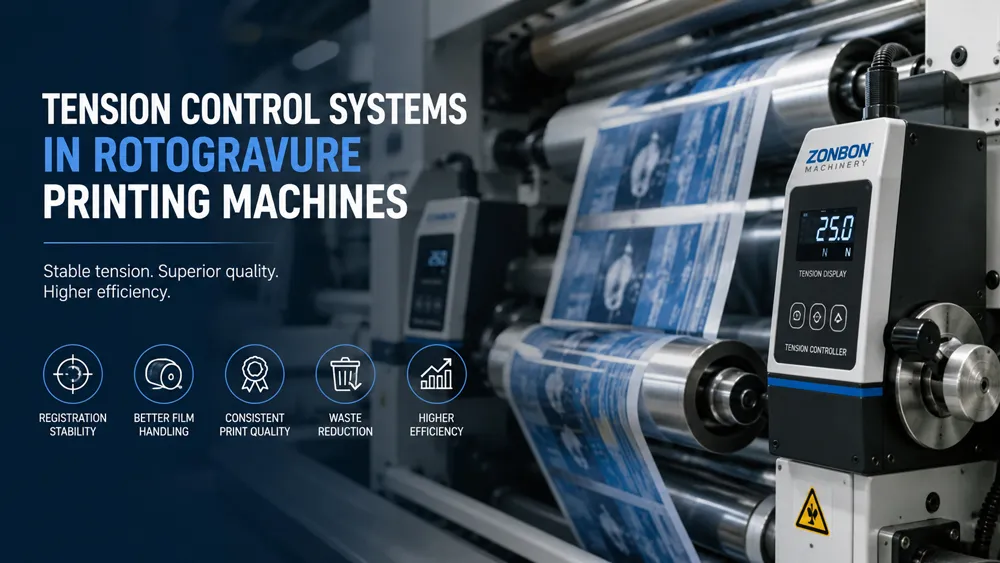
In rotogravure printing, stable web tension is one of the most important factors affecting print quality, registration accuracy, and production efficiency. Even if the printing cylinders, drying system, and automation are well designed, poor tension control can still lead to wrinkles, stretching, misregistration, and material waste.
For flexible packaging manufacturers, tension control is especially critical because materials such as BOPP, PET, PE, CPP, aluminum foil, and laminated films respond differently to speed changes, heat, and mechanical force.
In our experience, a well-designed tension control system helps a rotogravure printing machine run more smoothly, reduce startup waste, improve print consistency, and support stable high-speed production.
What Is Tension Control in Rotogravure Printing?
Tension control refers to the process of maintaining stable pulling force on the web material as it moves through the printing machine.
In a rotogravure printing machine, the substrate travels through several sections, including unwinding, printing, drying, cooling, and rewinding. Each section must maintain proper tension to prevent material deformation and print instability.
If tension is too high, thin film may stretch. If tension is too low, the material may wrinkle, shift, or run unevenly through the machine.
Why Tension Control Matters in Gravure Printing
Rotogravure printing often operates at high speed with multiple color stations. During this process, even small tension fluctuations can affect production quality.
Poor tension control may cause:
- Color registration errors
- Film stretching
- Wrinkles and web instability
- Uneven ink transfer
- Material waste during startup
- Poor rewinding quality
For packaging manufacturers, these problems increase production cost and reduce output reliability.
Main Tension Control Zones in a Gravure Printing Machine
A complete tension control system is usually divided into several functional zones.
1. Unwinding Tension Control
The unwinding section controls how material is released from the roll.
Stable unwinding prevents sudden tension changes caused by roll diameter variation, roll weight, or material friction.
2. Infeed Tension Control
The infeed section stabilizes material before it enters the first printing unit.
This helps prepare the web for accurate printing and reduces the risk of registration drift.
3. Printing Section Tension Control
During printing, tension must remain stable across all color stations.
This is especially important for multi-color gravure printing where accurate alignment is required between each printing unit.
4. Drying and Cooling Zone Control
Drying systems introduce heat, which may affect film expansion or shrinkage.
Proper tension control helps maintain material stability while the substrate passes through drying tunnels.
5. Rewinding Tension Control
Rewinding tension affects final roll quality.
Poor rewind control may cause loose rolls, telescoping, wrinkles, or uneven roll hardness.
How Tension Control Improves Registration Accuracy
Registration accuracy depends heavily on stable material movement.
If the web stretches or shifts between printing stations, each color may not align correctly. This can create visible misregistration, especially in fine text, brand graphics, and multi-color packaging designs.
A stable tension control system helps maintain consistent web length and position through each printing unit, improving color-to-color accuracy during high-speed operation.
How Servo Systems Support Better Tension Control
Modern gravure printing machines increasingly use servo-driven control systems to improve web handling accuracy.
Servo motors can respond quickly to tension changes and adjust machine sections independently. This helps reduce mechanical delay and improves stability during acceleration, deceleration, and continuous production.
If you want to understand how servo technology improves machine performance, you can read our article on How Servo Systems Improve Gravure Printing Performance .
Common Tension Control Problems in Gravure Printing
Film Stretching
Excessive tension may stretch thin films, causing registration errors and dimensional instability.
Wrinkling
Low or uneven tension can cause wrinkles, especially when printing thin or flexible materials.
Web Shifting
Unstable tension may cause the material to move sideways, affecting print position and edge alignment.
Poor Rewind Quality
Incorrect rewind tension can create loose rolls, hard edges, or uneven roll structure.
Startup Waste
If tension is unstable during setup, more material may be wasted before the machine reaches stable production.
Why Material Type Affects Tension Control
Different flexible packaging materials require different tension settings.
| Material | Tension Control Requirement |
|---|---|
| BOPP Film | Stable tension to prevent stretching and registration drift |
| PET Film | Good dimensional stability, but still requires precise control |
| PE Film | Sensitive to stretching and heat deformation |
| Aluminum Foil | Requires careful handling to avoid wrinkles or cracking |
| Laminated Film | Requires balanced tension for stable web movement |
Matching tension settings to material properties helps improve printing stability and reduce waste.
Tension Control and Drying System Interaction
Drying systems can affect material behavior because heat may cause film expansion, shrinkage, or deformation.
When tension control and drying performance are not properly balanced, the machine may experience registration drift or web instability.
This is why drying design and tension control must work together in high-speed gravure printing. You can learn more in our article on How Drying Systems Affect Rotogravure Printing Efficiency .
What Buyers Should Ask About Tension Control Before Purchasing
When evaluating a rotogravure printing machine, buyers should not only ask about speed and color quantity. Tension control design should also be reviewed carefully.
Important questions include:
- How many independent tension control zones does the machine have?
- Does the machine use closed-loop tension control?
- How does it handle thin film materials?
- How is tension stabilized during acceleration and deceleration?
- How does the system maintain stable rewinding quality?
These questions help buyers evaluate whether the machine can support stable long-term packaging production.
How Modern Rotogravure Printing Machines Improve Web Stability
Modern Rotogravure Printing Machines increasingly combine servo control, automatic registration, optimized drying, and intelligent tension systems to improve web stability.
These systems help packaging manufacturers reduce waste, improve print quality, and maintain stable operation across different flexible packaging materials.
Conclusion
Tension control is a core factor in rotogravure printing performance. It directly affects registration accuracy, material stability, drying interaction, rewinding quality, and overall production efficiency.
For flexible packaging manufacturers, a well-designed tension control system can reduce waste, improve print consistency, and support stable high-speed production.
When selecting a gravure printing machine, buyers should evaluate tension control as carefully as printing speed, drying system, and automation level.
Need a Stable Gravure Printing Solution for Flexible Packaging?
Share your material type, printing width, and production requirements. Our engineering team can help recommend a gravure printing machine designed for stable web handling and long-term production efficiency.
FAQ: Tension Control Systems in Rotogravure Printing Machines
What is tension control in a rotogravure printing machine?
Tension control maintains stable pulling force on the web material as it moves through unwinding, printing, drying, and rewinding sections. It helps prevent stretching, wrinkles, web shifting, and registration errors.
Why is tension control important for flexible packaging printing?
Flexible packaging materials such as BOPP, PET, PE, CPP, and laminated films are sensitive to tension changes. Stable tension helps maintain print accuracy, material stability, and consistent production quality.
What happens if tension is too high?
Excessive tension may stretch thin films, distort printed graphics, cause registration drift, or damage sensitive materials during high-speed printing.
What happens if tension is too low?
Low tension may cause wrinkles, loose web movement, poor tracking, unstable printing, and poor rewinding quality.
How does tension control affect registration accuracy?
Stable tension keeps the substrate moving consistently between printing stations. This helps each color align correctly and reduces misregistration during multi-color gravure printing.
Does the drying system affect web tension?
Yes. Heat from drying tunnels can affect film expansion, shrinkage, or deformation. Good tension control helps maintain material stability while the web passes through drying sections.
What materials require precise tension control?
Thin films, PE film, BOPP film, aluminum foil, and laminated packaging materials all require careful tension control to prevent deformation, wrinkles, or unstable printing.
What should buyers check about tension control before purchasing a machine?
Buyers should check the number of tension control zones, whether closed-loop control is used, how the machine handles thin films, and how stable the rewind system is during continuous production.