





What Is a CI Flexo Printing Machine? Buyer Guide (2026)
What Is a CI Flexo Printing Machine?
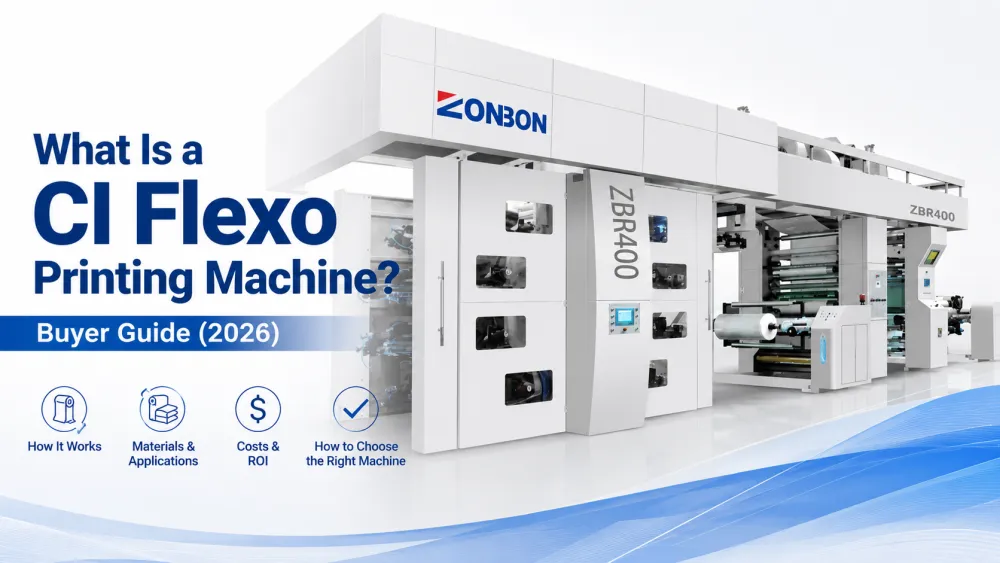
A CI flexo printing machine, also called a Central Impression Flexographic Printing Machine, is a high-speed printing system designed for flexible packaging materials such as plastic films, laminated materials, aluminum foil, and paper.
The term “CI” (Central Impression) refers to the large central drum that supports the substrate during printing. Unlike stack or inline flexographic presses, all printing stations are positioned around one shared impression cylinder, helping maintain stable web tension and accurate color registration.
Because of this structure, CI flexographic printing machines are widely used for food packaging, snack bags, frozen food packaging, personal care packaging, pharmaceutical packaging, courier bags, and industrial flexible packaging.
Today, CI flexo technology has become one of the most popular printing solutions for flexible packaging manufacturers seeking high-speed production, stable print quality, and lower operating costs compared with other printing methods.
How Does a CI Flexo Printing Machine Work?
A CI flexo printing machine transfers ink onto the substrate through flexible photopolymer plates mounted on printing cylinders. During operation, the film or material wraps around the central impression drum while multiple color stations print simultaneously.
The basic printing process usually includes:
- Unwinding: The film roll feeds into the printing system under controlled tension.
- Ink Transfer: An anilox roller transfers a precise amount of ink to the printing plate.
- Printing: Each color station prints onto the substrate while it stays attached to the central drum.
- Drying: Hot air, electric heating, or solvent recovery systems dry the ink between colors.
- Rewinding: The printed material rewinds for lamination, slitting, or bag-making processes.
Because the substrate remains stabilized around one drum during printing, CI flexo presses can maintain excellent print consistency even at high speeds.
Why Is CI Flexo Preferred for Flexible Packaging?
Flexible packaging materials such as PE, BOPP, PET, and laminated films are often thin and stretchable. Maintaining stable registration on these materials can be challenging, especially during high-speed production.
This is one of the main reasons many packaging manufacturers prefer CI flexographic printing technology.
- Better Registration Accuracy: The central drum helps reduce color shifting during multi-color printing.
- Stable Web Tension: Thin films remain more stable during high-speed production.
- Reduced Material Waste: Improved registration lowers startup waste and rejects.
- High Production Speed: Suitable for long production runs and industrial packaging demand.
- Wide Material Compatibility: Supports plastic films, laminated materials, foil, and paper.
- Lower Long-Term Operating Cost: Efficient ink transfer and high productivity improve ROI.
For flexible packaging manufacturers, these advantages often translate into more stable production and lower total operating cost.
CI Flexo vs Stack Flexo vs Inline Flexo: What Is the Difference?
Different flexographic printing structures are designed for different applications. Choosing the right machine depends on your product type, material, production speed, and print quality requirements.
| Machine Type | Best For | Main Advantage | Typical Limitation |
|---|---|---|---|
| CI Flexo Printing Machine | Flexible packaging films | High registration stability | Higher investment cost |
| Stack Flexo Printing Machine | Paper, woven bags | Flexible substrate handling | Less stable on stretchable films |
| Inline Flexo Printing Press | Labels and narrow web printing | Inline converting options | Less suitable for wide flexible films |
If your business mainly produces flexible packaging products, a CI flexographic press is often the preferred solution because of its superior performance on thin film materials.
You can also compare different machine structures through Stack Flexo Printing Machines and Inline Flexo Printing Press collections.
What Materials Can a CI Flexo Printing Machine Print?
Modern CI flexographic printing machines can process a wide variety of flexible packaging materials.
- BOPP Film: Snack packaging, candy wrappers, labels.
- PET Film: High-strength packaging with strong barrier performance.
- PE Film: Frozen food packaging, shopping bags, hygiene packaging.
- CPP Film: Heat-sealable and retort packaging.
- Laminated Films: Multi-layer flexible packaging materials.
- Paper: Food packaging paper and lightweight industrial packaging.
- Aluminum Foil Laminates: Medical packaging and high-barrier products.
Before selecting a machine, manufacturers should evaluate material thickness, roll width, printing speed requirements, drying conditions, and ink compatibility.
Common Applications of CI Flexo Printing Machines
CI flexographic presses are widely used in many flexible packaging industries.
Food Packaging
Snack bags, frozen food packaging, coffee bags, bakery packaging, dry food pouches, and candy wrappers often require stable high-speed printing on flexible films.
Personal Care Packaging
Wet wipes packaging, tissue packaging, shampoo sachets, cosmetic refill pouches, and hygiene packaging commonly use CI flexo printing.
Medical Packaging
Medical pouches and pharmaceutical packaging often require stable registration and clear print readability.
Industrial Packaging
Courier bags, industrial liners, agricultural packaging films, and protective packaging materials also commonly use flexographic printing technology.
How to Choose the Right CI Flexo Printing Machine
Choosing the right machine is not simply about selecting the fastest model. Packaging manufacturers should evaluate their production requirements carefully before investing.
Printing Width
Machine width should match product dimensions and future production expansion plans. Common configurations include 800mm, 1000mm, and 1200mm widths.
Color Configuration
Most flexible packaging products require 6-color or 8-color printing. Premium packaging may require 10-color configurations.
Drying System
Drying efficiency directly affects production speed and print quality. Buyers should evaluate hot air drying, electric heating, and solvent recovery systems.
Automation Level
Automatic registration, tension control, web guiding, inspection systems, and servo technology can significantly reduce waste and improve efficiency.
Material Compatibility
The machine should match your packaging material structure and production process.
If you are evaluating multiple configurations, you can explore available CI Flexo Printing Machines for different production requirements.
What Is a Gearless CI Flexo Printing Machine?
A gearless CI flexo printing machine uses independent servo motors instead of mechanical gears to synchronize printing units.
Compared with traditional geared systems, gearless technology offers:
- Higher registration precision.
- Faster job setup and changeover.
- Reduced mechanical wear.
- Lower maintenance requirements.
- Better performance at high speed.
For premium flexible packaging production, many manufacturers are increasingly investing in servo-driven systems.
You can learn more about available Gearless CI Flexo Printing Machines for advanced flexible packaging applications.
How Much Does a CI Flexo Printing Machine Cost?
CI flexo printing machine prices vary depending on machine width, number of colors, automation level, drying configuration, and production speed.
Instead of only comparing purchase price, buyers should evaluate:
- Production efficiency improvement.
- Material waste reduction.
- Labor savings.
- Maintenance cost.
- Long-term production stability.
In many cases, a higher-quality machine can generate better long-term ROI through reduced downtime and improved print consistency.
Why Work With an Experienced CI Flexo Printing Machine Manufacturer?
For flexible packaging manufacturers, choosing the right supplier is just as important as choosing the right machine.
A reliable manufacturer should provide:
- Customized machine configurations.
- Material compatibility recommendations.
- Factory testing before shipment.
- Installation and operator training.
- Technical after-sales support.
- Spare parts and long-term service.
ZONBON Machinery provides flexible packaging converting solutions with customizable configurations for different materials, printing widths, color numbers, and production capacities.
FAQ About CI Flexo Printing Machines
What does CI mean in flexographic printing?
CI stands for Central Impression, referring to the large drum that supports the material during printing for better registration stability.
What is a CI flexo printing machine used for?
CI flexographic presses are mainly used for flexible packaging, including food packaging, personal care packaging, medical packaging, and industrial films.
What materials can CI flexo printing machines print?
They commonly print BOPP, PET, PE, CPP films, laminated materials, paper, and aluminum foil laminates.
Is CI flexo better than stack flexo?
For flexible packaging films, CI flexo usually offers better registration accuracy and tension stability than stack flexo systems.
What is the difference between geared and gearless CI flexo?
Gearless systems use servo motors for synchronization, offering better precision, faster setup, and lower maintenance compared with traditional geared systems.