





How Much Does a Bag Making Machine Cost in 2026?
How Much Does a Bag Making Machine Cost in 2026?
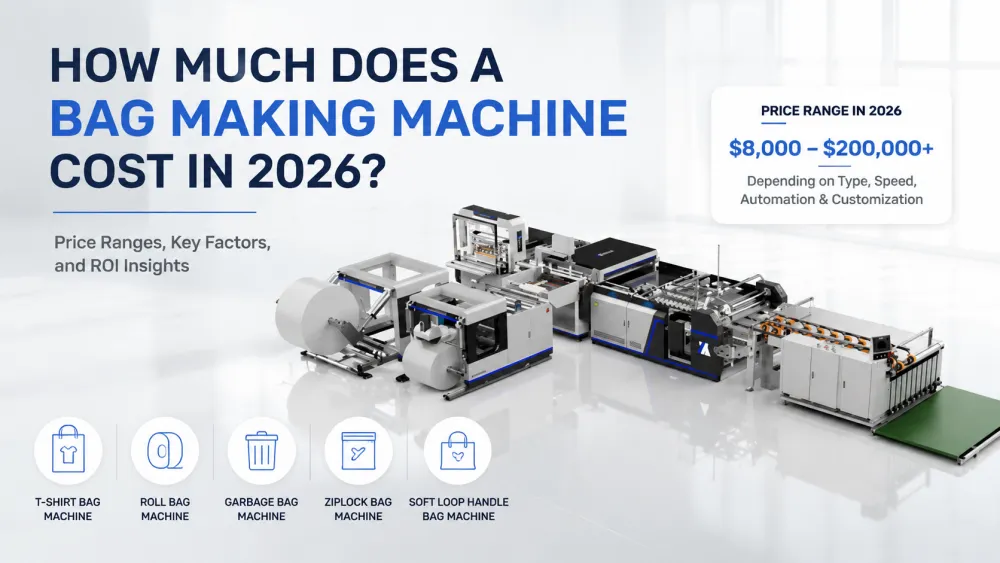
Investing in a bag making machine in 2026 requires understanding both the machine's base price and long-term production costs. The price varies depending on machine type, production speed, automation, material compatibility, and bag style.
Different types of machines serve different production purposes. Here's an overview of the main categories:
| Machine Type | Typical Price Range (USD) | Main Products |
|---|---|---|
| T-Shirt Bag Making Machine | $8,000 – $25,000 | Supermarket shopping bags, grocery bags |
| Roll Bag Making Machine | $12,000 – $35,000 | Produce bags, pet waste bags, garbage bags on rolls |
| Garbage Bag Making Machine | $15,000 – $50,000 | Star-sealed trash bags, heavy-duty bin liners |
| Ziplock Bag Making Machine | $20,000 – $60,000 | Food packaging bags, resealable ziplock bags |
| Soft Loop Handle Bag Making Machine | $30,000 – $80,000 | Premium retail shopping bags |
| Woven Bag Making Machine | $40,000 – $100,000+ | PP woven sacks, industrial bags, cement bags |
Factors Affecting Bag Making Machine Costs
- Automation Level: Fully automatic machines cost more but save labor and improve efficiency.
- Production Speed: High-speed machines generally have a higher price but increase ROI.
- Bag Type: Premium bags like soft loop handle or ziplock bags require more complex machines.
- Material Compatibility: Machines capable of processing multiple materials or thicker films are more expensive.
- Machine Brand & Manufacturer: Well-known manufacturers may charge more but provide reliable support, spare parts, and longer machine life.
Hidden Costs Buyers Often Overlook
Beyond the base price, several hidden costs can impact total investment:
- Shipping and import fees
- Installation and commissioning
- Operator training
- Spare parts and maintenance
- Material waste from testing or unstable production
- Energy consumption during operation
A low-priced machine with unstable output may result in higher waste, frequent downtime, and higher long-term costs.
How to Calculate ROI for a Bag Making Machine
Instead of focusing solely on price, experienced buyers calculate return on investment (ROI) based on production efficiency, labor savings, and material utilization.
| Factor | Impact on ROI |
|---|---|
| Production Speed | Higher output reduces per-unit cost |
| Automation | Reduces labor costs and errors |
| Material Waste Reduction | Improves profit margins |
| Machine Stability | Fewer downtime losses |
Tips to Avoid Overpaying
The most expensive machine is not always the best choice. Consider these factors before investing:
- Identify your target bag types and production volume
- Check material compatibility with your planned products
- Assess machine automation and labor requirements
- Consider long-term maintenance and spare part availability
- Compare multiple suppliers and request production testing
For further guidance, check: Bag Making Machine Manufacturer Buyer Guide
Conclusion
In 2026, bag making machine costs vary widely depending on machine type, automation, speed, and material compatibility. Entry-level T-shirt bag machines are affordable for startups, while industrial woven bag machines for PP sacks require higher investment. Evaluating long-term ROI, production efficiency, and material compatibility is crucial for a profitable purchase.
FAQ
How much does a bag making machine cost?
Prices range from $8,000 for entry-level T-shirt bag machines to over $100,000 for industrial woven bag machines, depending on type and automation.
Why do bag making machine prices vary so much?
Factors include machine type, production speed, automation level, bag complexity, material compatibility, and manufacturer brand.
Are cheaper machines worth buying?
Low-priced machines may suit smaller production volumes, but they may have lower stability, higher material waste, and limited bag types.
What hidden costs should buyers consider?
Shipping, installation, spare parts, operator training, energy consumption, and potential downtime all affect total investment.