





Flexo Printing Machine FAQ: 25 Questions Every Buyer Should Ask
Why So Many Buyers Choose the Wrong Flexo Printing Machine
Many global distributors and buyers face the same challenge: their customers know what packaging they want to produce, but they don't know which flexo printing machine they actually need.
As a result, distributors struggle to recommend the right solution, buyers compare quotations without understanding the technical differences, and projects sometimes fail before production even begins.
The problem is not a lack of machine options—it is a lack of the right questions. Before comparing prices or specifications, buyers should first understand the customer's packaging application, substrate, production goals, and future plans.
This guide brings together the 25 questions most frequently asked by packaging converters, distributors, importers, and factory owners before purchasing a flexo printing machine. More importantly, it explains why each question matters, helping you better understand your customer's needs and choose a solution with greater confidence.
Machine Selection
1. How do I choose the right flexo printing machine?
Start with your packaging application rather than the machine model. Consider the substrate, web width, number of colors, production speed, and future expansion plans before selecting equipment.
2. What is the difference between CI and Stack flexo printing machines?
CI flexo machines are generally preferred for flexible packaging films because they provide better registration and tension stability, while stack flexo machines are commonly used for paper packaging, woven bags, and thicker materials.
3. Should I choose a Gearless CI flexo machine?
Gearless CI presses are ideal for converters producing premium flexible packaging, frequent job changes, and high-speed multi-color printing where registration accuracy is critical.
4. How many colors do I really need?
The required number of colors depends on your packaging design. Four colors may be sufficient for simple graphics, while food packaging and consumer products often require six, eight, or more colors.
5. Can one machine print different packaging products?
Yes, provided the substrates and production requirements are compatible with the machine configuration.
Materials and Applications
6. What materials can a flexo printing machine print?
Modern flexo printing machines can print PE, BOPP, PET, CPP, laminated films, paper, nonwoven materials, aluminum foil laminates, and many other packaging substrates.
7. Which machine is best for flexible packaging film?
CI flexo printing machines are widely used for flexible packaging because the central impression drum helps maintain stable registration on lightweight films.
For a detailed selection guide, see: How to Choose the Best Flexo Printing Machine for Flexible Packaging Film.
8. Can flexo printing be used for food packaging?
Yes. Flexographic printing is widely used for snack packaging, frozen food bags, coffee pouches, dairy packaging, and many other food packaging applications.
9. Can flexo printing handle laminated packaging?
Yes. Many laminated packaging structures are printed by flexographic presses before the lamination process.
10. Is flexographic printing suitable for paper packaging?
Absolutely. Paper bags, shopping bags, wrapping paper, and many paper-based packaging products are printed using flexographic technology.
Printing Quality and Performance
11. Can flexo printing achieve high print quality?
Modern flexographic printing can achieve excellent print quality through high-definition plates, precision anilox rollers, servo control, and stable registration systems.
12. Why is registration accuracy important?
Accurate registration ensures colors align correctly and helps reduce waste, improve image quality, and maintain consistent production.
13. Does tension control affect print quality?
Yes. Stable web tension is essential for maintaining registration, especially when printing lightweight packaging films.
14. What role does the anilox roller play?
The anilox roller controls ink transfer, affecting color density, fine detail reproduction, and overall print consistency.
15. What are the most common flexo printing defects?
Common defects include registration drift, ghosting, uneven ink transfer, dot gain, poor adhesion, and wrinkling. Most can be prevented through proper machine setup and maintenance.
Machine Configuration
16. Should I choose servo control?
Servo-driven systems improve registration accuracy, reduce setup time, and increase automation, particularly for multi-color flexible packaging.
17. How important is the drying system?
Drying performance directly affects ink adhesion, production speed, and overall print quality.
18. Can the machine be upgraded later?
Many manufacturers offer optional upgrades such as inspection systems, automatic registration, corona treatment, and additional automation modules.
19. What production speed do I need?
The ideal speed depends on your daily production volume, packaging products, and order structure rather than simply choosing the fastest available machine.
20. Should I prepare for future expansion?
Yes. Choosing a machine with room for future growth often reduces long-term investment costs.
Manufacturer and Service
21. How do I choose a reliable flexo printing machine manufacturer?
Look beyond price. Evaluate the manufacturer's industry experience, application knowledge, engineering capabilities, technical support, and understanding of flexible packaging production.
If you are comparing suppliers, this guide may also help: Top 10 Flexographic Printing Machine Manufacturers.
22. Why is technical consultation important before purchasing?
Many buyers know the packaging product they want to produce but are unsure which machine configuration is most suitable. A knowledgeable supplier should help evaluate the project before recommending equipment.
23. What information should I prepare before requesting a quotation?
Prepare details about the substrate, packaging application, web width, print colors, production speed, annual output, and future expansion plans.
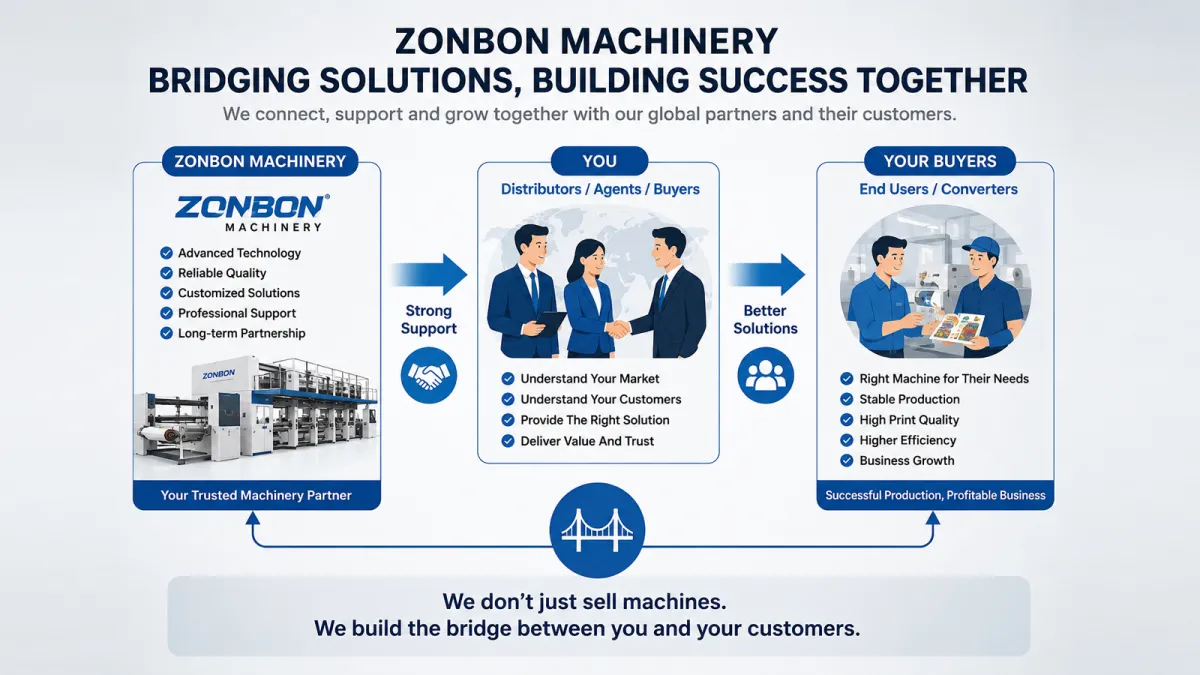
24. How does ZONBON Machinery support distributors and buyers?
Many distributors and procurement teams understand their markets very well but may not specialize in flexographic printing technology.
ZONBON Machinery helps bridge the gap between end users, distributors, and machine engineering by understanding the customer's packaging application first, then recommending the most appropriate technical solution rather than simply quoting a machine model.
This approach helps distributors communicate more effectively with their customers while reducing project risk and improving long-term satisfaction.
25. What is the biggest mistake buyers make?
The most common mistake is selecting equipment based only on price. The right machine should match the customer's packaging products, materials, production requirements, future business plans, and long-term return on investment.
Final Thoughts
Every packaging project is different, and there is no single flexo printing machine that fits every application.
The best investment begins with understanding your customer's production requirements, evaluating the appropriate machine configuration, and working with a manufacturer that can provide practical technical guidance throughout the decision-making process.