





Garbage Bag Making Machine Buyer Guide for Trash Bags & Bin Liners
What Is a Garbage Bag Making Machine?
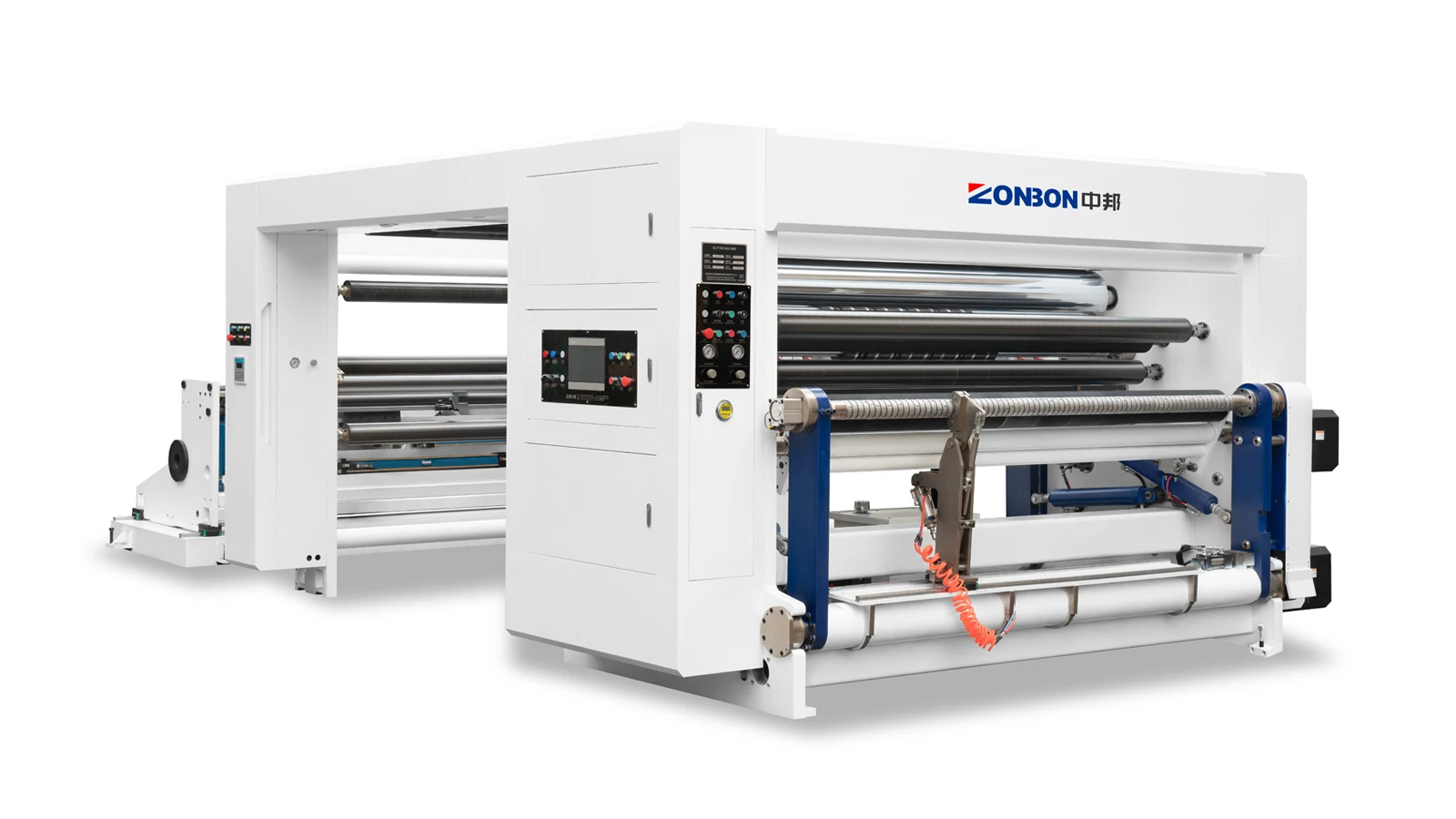
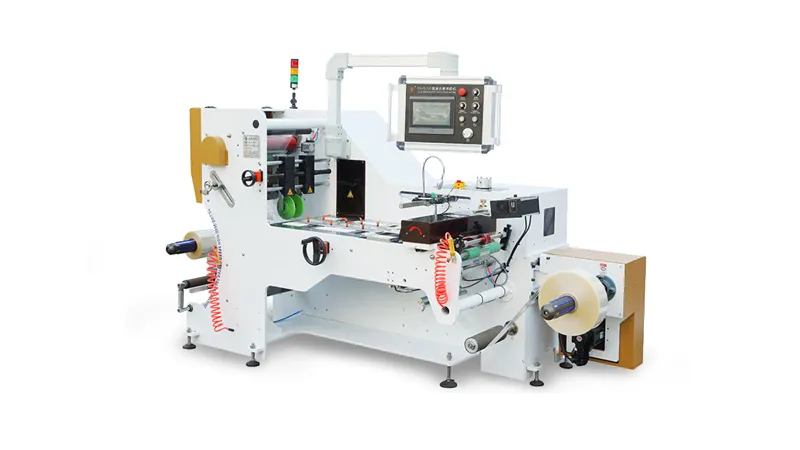
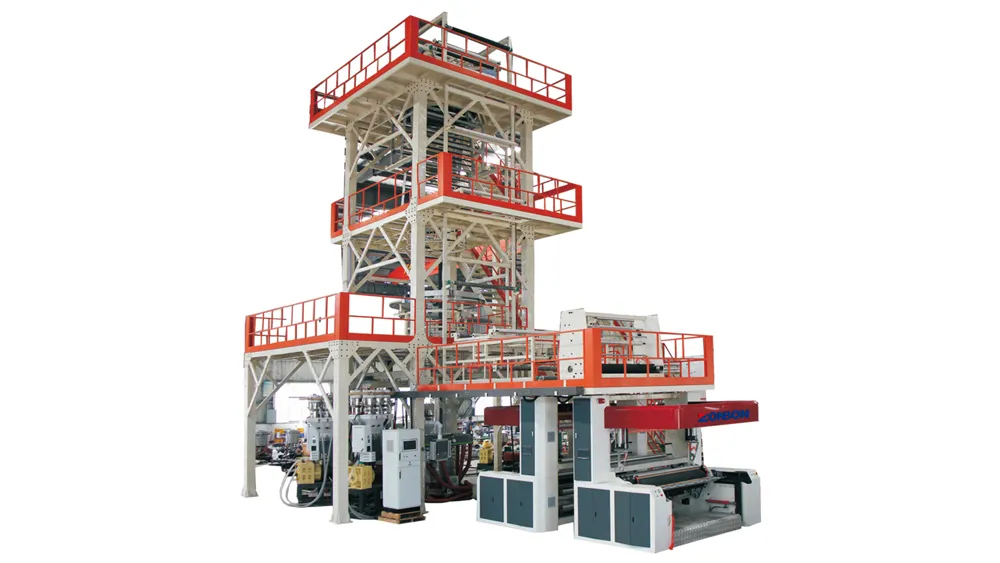
A garbage bag making machine is designed to produce trash bags, bin liners, garbage bags on rolls, star-sealed bags, and heavy-duty waste collection bags for residential, commercial, industrial, and municipal applications.
As waste management demand continues to grow worldwide, manufacturers increasingly invest in automatic garbage bag production systems to improve output efficiency, reduce labor costs, and support large-volume production.
Compared with simple flat bag production, garbage bag manufacturing often requires specialized sealing methods, perforation systems, rewinding technology, and stronger material compatibility.
In this buyer guide, we explain the different types of garbage bags, materials, machine configurations, and key factors buyers should evaluate before investing.

What Products Can a Garbage Bag Making Machine Produce?
Modern garbage bag making machines can produce multiple bag styles depending on sealing systems, rewinding configuration, and automation level.
| Bag Type | Typical Application | Production Complexity |
|---|---|---|
| Flat Trash Bags | Residential waste collection | Low |
| Garbage Bags on Rolls | Retail and supermarket use | Medium |
| Star-Sealed Garbage Bags | Leak-resistant waste bags | Medium–High |
| Drawstring Trash Bags | Premium household waste bags | High |
| Heavy-Duty Bin Liners | Commercial and industrial waste | Medium–High |
| Pet Waste Bags | Pet hygiene applications | Medium |
For manufacturers targeting multiple waste packaging markets, machine flexibility becomes an important investment consideration.
Materials Used for Trash Bags & Bin Liners
Material selection directly affects garbage bag durability, puncture resistance, sealing strength, and production cost.
| Material | Cost | Strength | Best For |
|---|---|---|---|
| HDPE | Lower | Good rigidity | Lightweight trash bags |
| LDPE | Medium | Higher flexibility | Heavy-duty bin liners |
| Recycled PE Film | Lower | Medium | Cost-sensitive production |
| Biodegradable Film | Higher | Medium | Eco-friendly trash bags |
HDPE is commonly used for lightweight trash bags because it provides cost efficiency and acceptable strength using thinner film.
LDPE is usually preferred for thicker garbage bags or heavy-duty bin liners requiring stronger puncture resistance and flexibility.
Growing environmental regulations are also increasing demand for biodegradable garbage bag materials.
Key Features Buyers Should Look For
Not all garbage bag making machines offer the same production capability. Machine configuration can significantly affect output efficiency, labor cost, and product quality.
Sealing System
Garbage bags require stable sealing performance to prevent tearing or leakage during use.
Common sealing structures include:
- Bottom sealing
- Star sealing
- Side sealing
Star sealing is increasingly popular for leak-resistant garbage bags because it distributes weight more evenly.
Perforation System
For garbage bags on rolls, accurate perforation ensures easy tearing without damaging the next bag.
Automatic Rewinding
Rewinding systems improve roll consistency and reduce manual handling requirements.
Double-Lane Production
Some machines support double-line or multi-line production to increase output significantly.
Material Compatibility
Machines should support multiple film types including HDPE, LDPE, recycled materials, and biodegradable films.
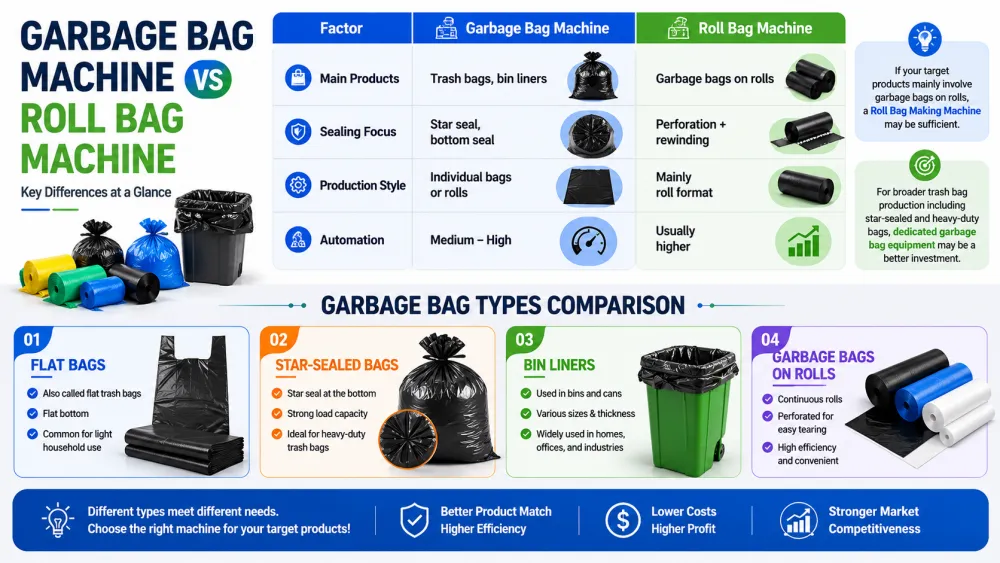
Garbage Bag Machine vs Roll Bag Machine
Many buyers compare garbage bag making machines and roll bag making machines because both may produce garbage bags.
| Factor | Garbage Bag Machine | Roll Bag Machine |
|---|---|---|
| Main Products | Trash bags, bin liners | Garbage bags on rolls |
| Sealing Focus | Star seal, bottom seal | Perforation + rewinding |
| Production Style | Individual bags or rolls | Mainly roll format |
| Automation | Medium–High | Usually higher |
If your target products mainly involve garbage bags on rolls, a Roll Bag Making Machine may be sufficient.
For broader trash bag production including star-sealed and heavy-duty bags, dedicated garbage bag equipment may be a better investment.
How to Choose the Right Garbage Bag Making Machine
Before investing, manufacturers should clearly define production goals.
- Bag Type: Flat bags, star-sealed bags, drawstring bags, or bin liners.
- Material Type: HDPE, LDPE, recycled film, or biodegradable materials.
- Bag Thickness: Thin supermarket trash bags or heavy-duty industrial liners.
- Output Requirements: Daily and monthly production targets.
- Automation Level: Manual collection, automatic counting, rewinding, or fully automatic production.
- Future Expansion: Whether the machine can support new bag styles later.
Choosing a flexible system can help manufacturers reduce future reinvestment risks.
Explore suitable equipment: Garbage Bag Making Machines
Cost & ROI Considerations
Machine investment should not be evaluated based only on purchase price.
Long-term profitability often depends on:
- Production speed
- Material waste reduction
- Labor savings
- Machine stability
- Maintenance cost
For high-volume trash bag manufacturers, automation and production consistency usually generate better ROI over time.
You may also read: How Much Does a Bag Making Machine Cost in 2026?
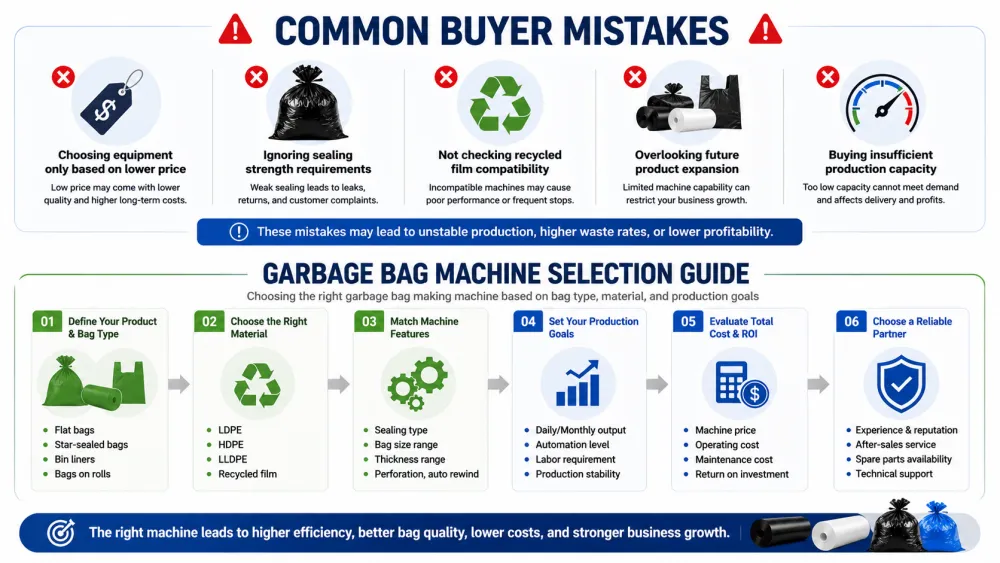
Common Buyer Mistakes
- Choosing equipment only based on lower price
- Ignoring sealing strength requirements
- Not checking recycled film compatibility
- Overlooking future product expansion
- Buying insufficient production capacity
These mistakes may lead to unstable production, higher waste rates, or lower profitability.
Conclusion
A garbage bag making machine can support production of trash bags, garbage bags on rolls, star-sealed bags, and heavy-duty bin liners for multiple markets.
The right equipment depends on material type, sealing structure, production volume, automation needs, and future expansion plans.
For manufacturers seeking stable production and better long-term ROI, machine flexibility and sealing consistency are often more important than initial purchase price.
For a complete machine buying framework, read: Bag Making Machine Manufacturer Buyer Guide
FAQ About Garbage Bag Making Machines
What products can a garbage bag making machine produce?
These machines can produce flat trash bags, garbage bags on rolls, star-sealed bags, drawstring bags, bin liners, and pet waste bags.
What materials are commonly used for garbage bags?
HDPE, LDPE, recycled PE film, and biodegradable materials are commonly used depending on cost and performance requirements.
What is the difference between garbage bag machines and roll bag machines?
Garbage bag machines support more sealing structures and bag styles, while roll bag machines mainly focus on perforated bags wound into rolls.
Can one machine produce different garbage bag sizes?
Yes. Many garbage bag machines support adjustable bag length and width ranges within machine specifications.