





Web Tension Control in Slitter Rewinder Machines
What Is Web Tension Control?
Web tension control refers to the process of maintaining stable tension on roll materials as they move through a slitter rewinder machine. Proper tension control helps keep the material stable during unwinding, slitting, and rewinding to ensure consistent roll quality and clean slit edges.
In slitting production, web materials such as BOPP film, PET film, PE film, paper, foil, and laminated structures continuously move through rollers and cutting systems. If tension becomes unstable, problems such as wrinkles, stretching, uneven rewinding, and poor edge quality may occur.
Because of this, web tension control is one of the most important factors affecting slitting performance, especially for flexible packaging and high-speed converting applications.
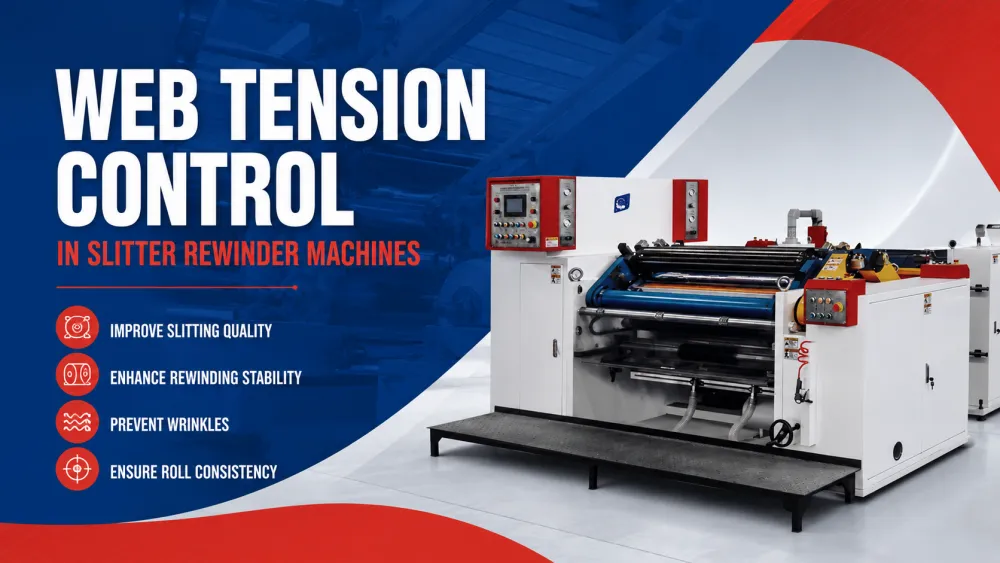
Why Web Tension Matters in Slitter Rewinder Machines
Stable web tension directly affects production quality, roll consistency, and downstream converting performance. Even a high-speed slitting machine may produce poor results if tension is not properly controlled.
Proper tension control helps:
- Reduce wrinkles and web instability
- Improve slit edge quality
- Maintain consistent roll hardness
- Prevent telescoping rolls
- Improve downstream printing and laminating consistency
- Reduce material waste
For many converters, poor tension control is one of the most common causes of slitting defects and unstable rewinding.
How Web Tension Control Works
In a slitter rewinder machine, tension control is usually managed across several zones. Each zone has different tension requirements depending on material type and machine configuration.
Unwind Tension
Unwind tension controls how the jumbo roll feeds into the machine. Stable unwinding helps prevent sudden material movement, roll jumping, or web instability.
If unwind tension is too low, the material may become loose and unstable. If it is too high, film stretching or web deformation may occur.
Infeed Tension
Infeed tension helps stabilize the material before entering the slitting zone. Consistent tension in this stage improves cutting accuracy and web tracking stability.
Slitting Zone Tension
During slitting, tension directly affects edge quality and cutting consistency. Improper tension may create burrs, unstable slit widths, or edge damage.
For thin films and laminated packaging materials, stable slitting tension becomes especially important.
Rewind Tension
Rewind tension affects finished roll hardness and roll structure. Uneven rewinding may create loose rolls, telescoping, wrinkles, or edge misalignment.
Good rewind tension helps produce finished rolls with consistent hardness and better downstream performance.
Why Poor Tension Control Causes Slitting Problems
Many slitting quality problems are directly related to unstable tension. Understanding these issues helps buyers evaluate machine capability more effectively.
Wrinkles
Wrinkles often happen when web tension becomes uneven or unstable during processing. Stretch-sensitive materials such as PE film are especially sensitive to tension changes.
Telescoping Rolls
Telescoping occurs when finished rolls shift sideways due to inconsistent winding pressure or unstable rewind tension.
This problem may affect downstream pouch making, laminating, or printing processes.
Uneven Rewinding
Poor tension control can create rolls that are either too loose or too tight. Uneven roll hardness may reduce production efficiency during later converting stages.
Film Stretching
Thin films such as PE and CPP may stretch if tension is too high. This can affect material dimensions and reduce product consistency.
Edge Quality Problems
Improper tension may create unstable cutting conditions, which can negatively affect slit edge cleanliness and roll appearance.
Tension Control for Different Materials
Different materials behave differently during slitting. Because of this, tension settings should be adjusted based on material structure and thickness.
BOPP Film
BOPP film usually supports relatively stable slitting performance, but proper tension is still necessary to prevent wrinkles and maintain clean rewinding at higher speeds.
PET Film
PET film has stronger stiffness and higher tensile strength. Stable web handling and controlled tension help improve slit edge consistency.
PE Film
PE film is more stretch-sensitive than PET or BOPP. Excessive tension may cause elongation, wrinkles, and unstable roll formation.
CPP Film
CPP film often requires stable rewinding control to prevent blocking and roll inconsistency.
Foil Materials
Foil laminates require more precise tension control because unstable web handling may increase the risk of wrinkles and edge damage.
Paper Materials
Paper materials usually require stable tension to prevent loose rewinding and uneven roll hardness while reducing dust generation during slitting.
Manual vs Automatic Tension Control
Slitter rewinder machines may use either manual tension systems or automatic tension control depending on machine level and production requirements.
| Feature | Manual Tension Control | Automatic Tension Control |
|---|---|---|
| Adjustment Method | Operator adjustment | Automatic system feedback |
| Production Stability | Basic | Higher consistency |
| Suitable Production | Smaller production runs | High-speed industrial production |
| Material Compatibility | Basic materials | More sensitive materials |
For stretch-sensitive materials and flexible packaging applications, automatic tension control often provides more stable slitting performance.
How to Improve Web Tension Stability
Buyers can improve slitting quality by focusing on both machine configuration and operating conditions.
- Choose suitable rewind structures
- Use automatic tension systems when needed
- Maintain stable web guiding
- Adjust tension according to material thickness
- Perform regular machine maintenance
- Use suitable slitting methods for the material
Understanding different cutting systems is also important. This comparison of razor slitting vs shear slitting vs crush slitting explains how knife configuration affects slitting quality.
Why Slitter Rewinder Configuration Matters
Tension performance depends not only on machine settings but also on the overall slitter rewinder design.
Features such as roller structure, rewind system, tension feedback systems, EPC web guiding, and machine stability all influence slitting consistency.
Buyers evaluating slitting machines should consider both machine specifications and long-term production stability.
For flexible packaging materials such as BOPP, PET, PE, and CPP films, specialized film slitting machines are often designed with better web handling and rewinding stability.
FAQ: Web Tension Control in Slitter Rewinder Machines
Why is web tension important in slitting?
Stable web tension helps prevent wrinkles, stretching, uneven rewinding, and poor slit edge quality while improving finished roll consistency.
What happens if tension is too high?
Excessive tension may stretch film materials, create wrinkles, and negatively affect finished roll quality.
Which materials are most sensitive to tension?
PE film, CPP film, and thin laminated materials are often more sensitive to tension changes than stiffer materials such as PET film.
Is automatic tension control worth it?
For high-speed production and stretch-sensitive materials, automatic tension control often improves consistency and reduces waste.
How can buyers improve slitting quality?
Stable tension control, suitable slitting methods, proper rewinding systems, and good machine maintenance all help improve slitting performance.