





Razor Slitting vs Shear Slitting vs Crush Slitting
What Are Slitting Methods?
Slitting is one of the most important converting processes for film, paper, foil, labels, adhesive materials, and flexible packaging production. Different materials require different cutting methods to achieve clean slit edges, stable rewinding, and consistent roll quality.
The three most common slitting methods are razor slitting, shear slitting, and crush slitting (also called score slitting). Each method works differently and is suitable for different materials and production requirements.
Choosing the wrong slitting method may lead to poor edge quality, wrinkles, dust generation, roll deformation, or unstable downstream processing. This guide compares razor slitting, shear slitting, and crush slitting to help buyers select the best option for their application.
What Is Razor Slitting?
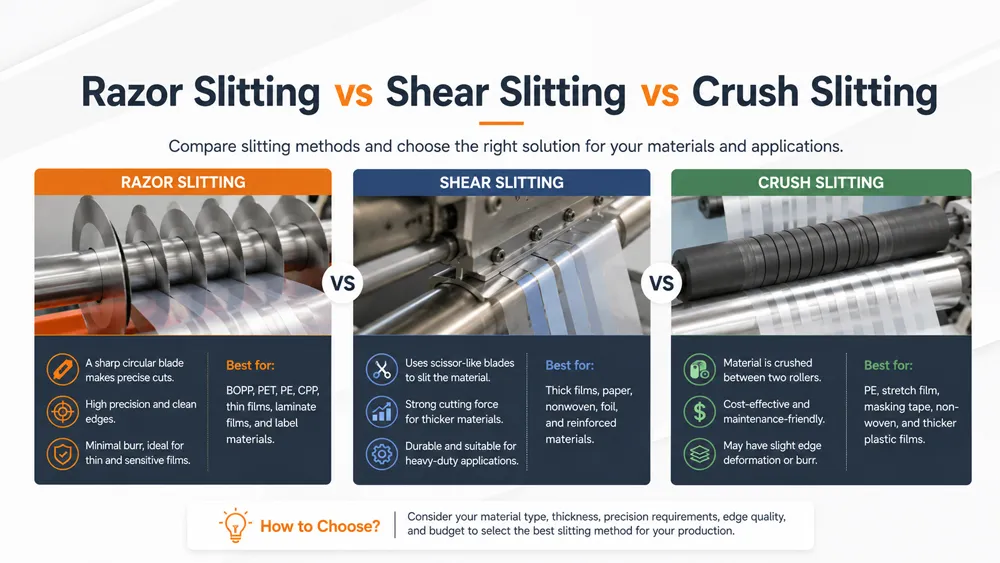
Razor slitting uses sharp razor blades to cut material as it moves through the machine. The blade directly contacts the material and cuts it with minimal pressure, making this method suitable for thin and flexible materials.
Razor slitting is widely used for plastic films because it offers a simple setup and high production efficiency.
How Razor Slitting Works
The material passes through stationary or rotating razor blades that slit the web into narrower rolls. Blade positioning is adjusted based on the required slit width.
Advantages of Razor Slitting
- Simple and cost-effective setup
- Suitable for high-speed slitting
- Efficient for thin films
- Easy blade replacement
Limitations of Razor Slitting
- Less suitable for thicker materials
- Blade wear can affect edge quality
- May not produce the cleanest edge on rigid materials
What Is Shear Slitting?
Shear slitting uses two circular knives working together like scissors. A male knife and female knife rotate together to create a cleaner and more controlled cut.
Compared with razor slitting, shear slitting is generally more precise and better suited for tougher or thicker materials.
How Shear Slitting Works
Two rotary knives overlap slightly and cut the material through a shearing action. This helps create smoother slit edges and reduces edge damage.
Advantages of Shear Slitting
- Cleaner slit edges
- Better cutting precision
- Suitable for thicker materials
- Improved roll consistency
Limitations of Shear Slitting
- More complex setup
- Higher maintenance requirements
- Requires accurate knife alignment
- Higher equipment cost
Best Materials for Shear Slitting
- PET film
- Laminated films
- Foil laminates
- Thicker packaging materials
- Paper materials requiring clean edges
For many packaging converters, shear slitting is preferred when edge quality and slitting precision are more important than maximum speed.
What Is Crush Slitting?
Crush slitting, also known as score slitting, uses circular blades pressed against a hardened anvil roller to crush and cut material through pressure.
This method is commonly used for certain paper products, nonwoven materials, tapes, and selected industrial materials.
How Crush Slitting Works
The blade presses material against a hardened roller to create a cut using compression force rather than a scissor-style cutting action.
Advantages of Crush Slitting
- Simple mechanical structure
- Lower setup complexity
- Suitable for some thicker materials
- Good for selected paper and tape products
Limitations of Crush Slitting
- Less precise than shear slitting
- May create rougher edges
- Not ideal for thin precision films
- Can generate dust in some materials
Best Materials for Crush Slitting
- Paper rolls
- Adhesive tapes
- Nonwoven materials
- Some industrial textiles
Razor Slitting vs Shear Slitting vs Crush Slitting
Choosing the right slitting method depends on material type, edge quality requirements, speed expectations, and downstream converting needs.
| Factor | Razor Slitting | Shear Slitting | Crush Slitting |
|---|---|---|---|
| Best For | Thin films | Thicker & precision materials | Paper & tapes |
| Cutting Quality | Good | Excellent | Moderate |
| Setup Complexity | Simple | Higher | Simple |
| Maintenance | Low | Moderate to High | Low |
| Production Speed | High | Moderate to High | Moderate |
| Edge Quality | Good | Cleaner | Less precise |
Which Slitting Method Is Best for Different Materials?
BOPP Film
Razor slitting is commonly used for BOPP film because it supports efficient high-speed cutting while maintaining acceptable edge quality for many flexible packaging applications.
PET Film
Shear slitting is usually preferred for PET film because cleaner slit edges help improve downstream laminating, pouch making, and printing consistency.
PE Film
Razor slitting often works well for PE film, but stable tension control is especially important because PE materials are stretch-sensitive.
CPP Film
CPP film commonly uses razor slitting because of its flexible structure and typical packaging applications.
Paper Materials
Crush slitting or shear slitting may both be suitable depending on paper thickness, edge quality requirements, and production speed.
Foil Materials
Shear slitting is often preferred for foil laminates because cleaner edges help reduce burr formation and improve roll quality.
Adhesive Materials
Some adhesive tapes and industrial adhesive materials may benefit from crush slitting due to simpler cutting requirements.
Common Slitting Problems Caused by the Wrong Method
Choosing the wrong slitting process may create production problems that affect quality and efficiency.
- Burr edges: Often caused by unsuitable knife selection.
- Wrinkles: Common when slitting method and tension are not optimized.
- Dust generation: May occur in paper applications with unsuitable cutting methods.
- Poor roll formation: Can affect downstream converting.
- Material stretching: Common in flexible films when cutting conditions are incorrect.
How to Choose the Right Slitting Method
Buyers should consider several factors before selecting a slitting process:
- Material type and thickness
- Required edge quality
- Production speed requirements
- Downstream production process
- Rewinding quality expectations
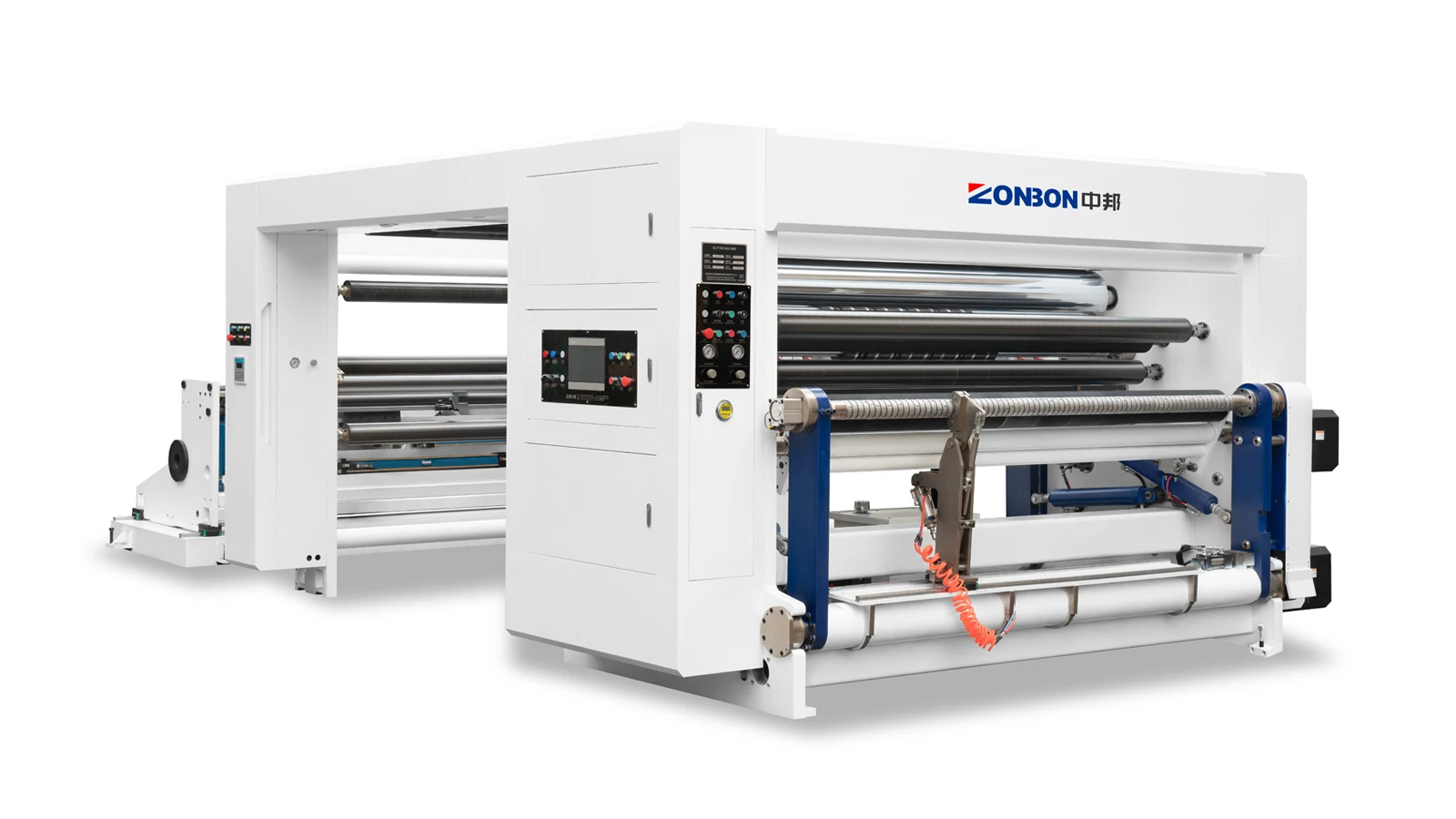
If your production mainly processes flexible packaging materials, this film slitting machine guide may help compare material requirements and machine configurations.
Why Slitting Machine Configuration Matters
Slitting performance depends not only on the knife system but also on tension control, web guiding, rewinding structure, and overall machine stability.
Buyers comparing suppliers may also benefit from this slitting machine manufacturer guide to evaluate technical support, customization capability, and long-term production value.
FAQ: Razor Slitting vs Shear Slitting vs Crush Slitting
Which slitting method is best for film materials?
Razor slitting is commonly used for thin films such as BOPP and PE, while shear slitting is often preferred for PET and laminated films requiring cleaner edges.
Why is shear slitting more expensive?
Shear slitting uses more precise knife systems and requires accurate alignment, which generally increases machine complexity and cost.
Is crush slitting suitable for flexible packaging film?
Crush slitting is generally less suitable for thin precision films because it may not provide the clean edge quality needed for packaging applications.
Can one slitting machine use multiple slitting methods?
Yes. Some slitting machines can support razor, shear, or crush slitting depending on material requirements and machine configuration.
How do I choose the right slitting method?
Buyers should evaluate material type, thickness, required edge quality, production speed, and downstream converting needs before selecting a slitting process.