





Woven Bag Making Machine Guide for PP Woven Sacks & Industrial Bags
What Is a Woven Bag Making Machine?
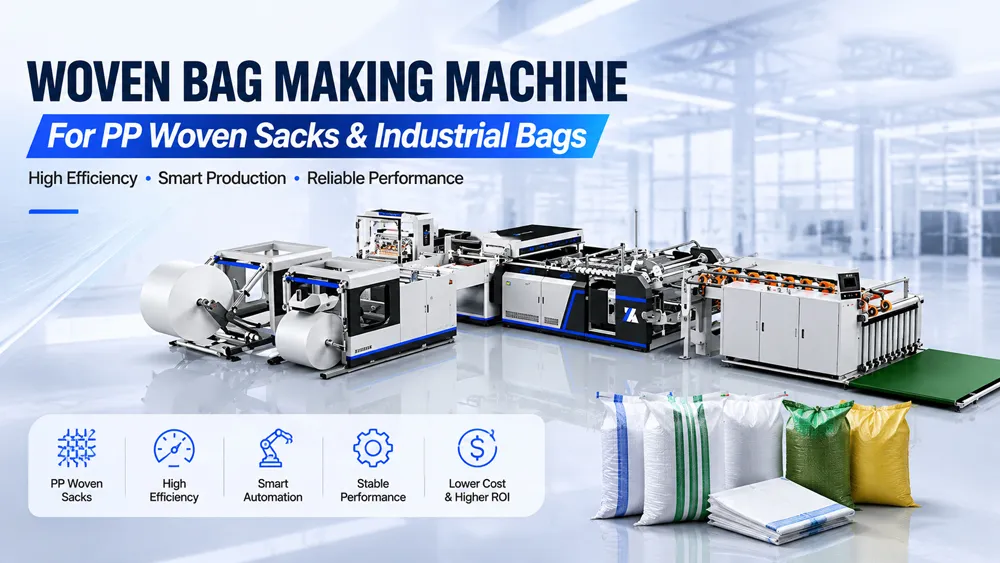
A woven bag making machine is designed to manufacture PP woven sacks, industrial packaging bags, fertilizer bags, cement bags, rice bags, feed bags, flour sacks, and chemical packaging bags used in bulk material transportation and storage.
Compared with standard plastic bags, woven sacks require stronger structure, higher load capacity, and better durability to withstand industrial handling and transportation.
Modern woven bag making machines can integrate cutting, folding, sewing, gusseting, printing compatibility, and valve bag formation to support large-scale industrial packaging production.
In this guide, we explain woven sack applications, materials, machine features, automation considerations, and how manufacturers can choose the right equipment for industrial bag production.
What Products Can a Woven Bag Making Machine Produce?
Woven bag making machines support multiple industrial bag formats depending on material structure, bag size, sewing requirements, and end-use industry.
| Bag Type | Typical Industry | Production Complexity |
|---|---|---|
| Rice Bags | Food & agriculture | Medium |
| Fertilizer Bags | Agriculture | Medium–High |
| Cement Bags | Construction | High |
| Feed Bags | Animal nutrition | Medium |
| Chemical Packaging Bags | Industrial chemicals | High |
| BOPP Laminated Woven Bags | Premium retail packaging | High |
| Valve Bags | Cement & powder products | High |
Because woven bags are often used for heavy products, durability and sealing consistency become critical production requirements.
What Is a PP Woven Sack?
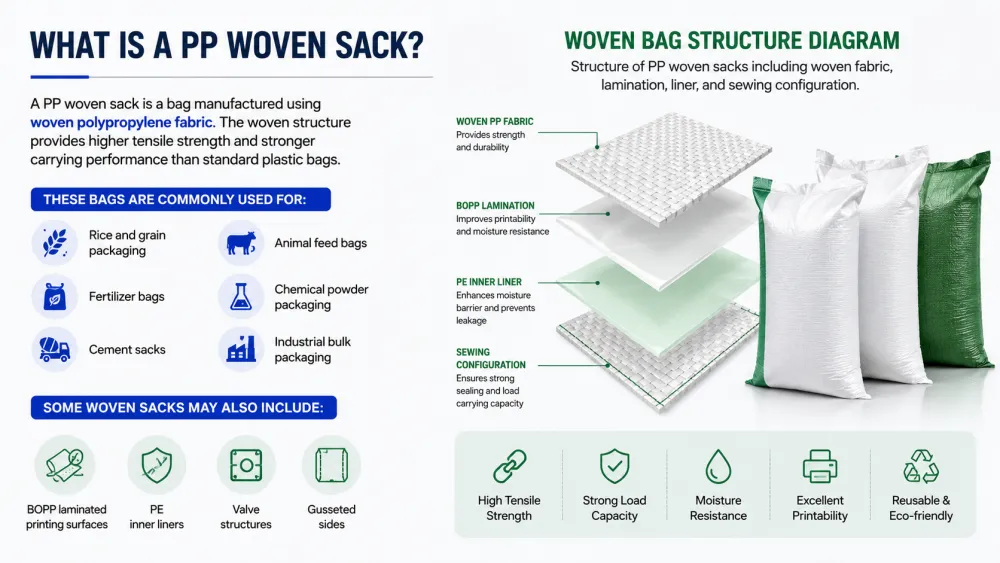
A PP woven sack is a bag manufactured using woven polypropylene fabric. The woven structure provides higher tensile strength and stronger carrying performance than standard plastic bags.
These bags are commonly used for:
- Rice and grain packaging
- Fertilizer bags
- Cement sacks
- Animal feed bags
- Chemical powder packaging
- Industrial bulk packaging
Some woven sacks may also include:
- BOPP laminated printing surfaces
- PE inner liners
- Valve structures
- Gusseted sides
Materials Used for PP Woven Sacks & Industrial Bags
Material selection affects load capacity, puncture resistance, moisture protection, and printing quality.
| Material | Strength | Best For |
|---|---|---|
| PP Woven Fabric | Very High | General industrial sacks |
| BOPP Laminated Woven Fabric | High | Premium printed bags |
| PE Inner Liner | Moisture protection | Powders & food products |
| Laminated Composite Material | High durability | Chemical packaging |
PP woven fabric remains the most common material because of its high strength, relatively low cost, and strong industrial durability.
BOPP laminated woven bags are increasingly used when stronger branding, premium printing, or retail presentation is required.
Key Features Buyers Should Look For
Not all woven bag making machines offer the same automation level or product flexibility.
Automatic Cutting System
Accurate cutting helps improve bag consistency and reduce material waste.
Sewing System
Reliable sewing quality directly affects bag strength and durability during transportation.
Gusseting Capability
Gusseting helps improve storage efficiency and carrying volume.
Valve Bag Formation
For cement and powder packaging, valve bag systems may improve filling efficiency.
Printing Compatibility
Many buyers require woven bag production compatible with flexographic or gravure printing for branding and product information.
Automation Level
Fully automatic woven bag systems may improve labor savings and production consistency.
How to Choose the Right Woven Bag Making Machine
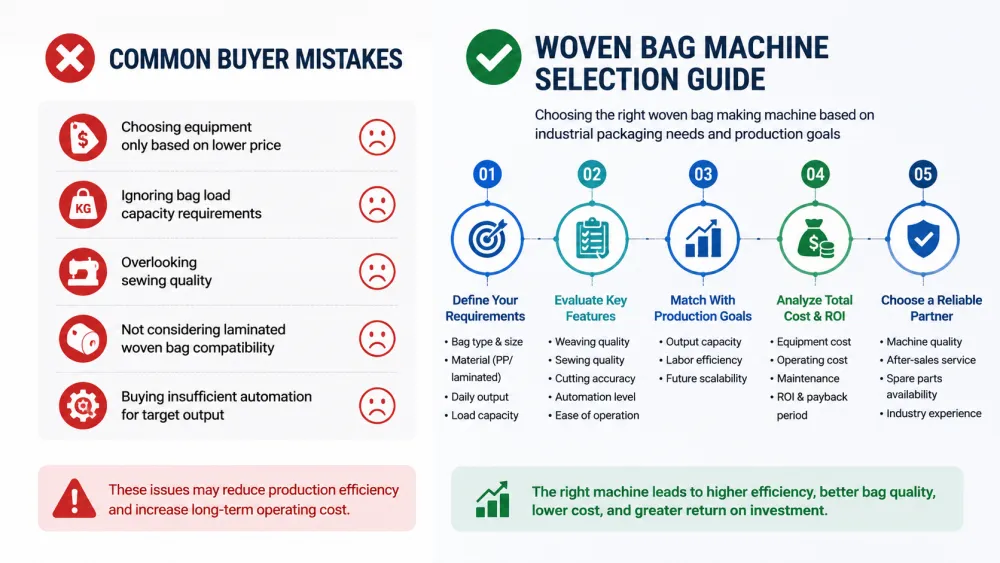
Before investing, manufacturers should evaluate:
- Bag Type: Rice bags, fertilizer bags, cement sacks, feed bags, or chemical bags.
- Material Structure: PP woven fabric, laminated woven material, or PE liner.
- Bag Size & Weight: Required carrying capacity and dimensions.
- Production Volume: Daily and monthly output requirements.
- Automation Requirements: Cutting, sewing, stacking, or full automation.
- Future Expansion: Whether the machine supports new bag formats later.
Choosing a flexible machine may help manufacturers expand into multiple industrial packaging markets.
Explore suitable equipment: Woven Bag Making Machines
Cost & ROI Considerations
Woven bag production often requires higher equipment investment compared with lightweight plastic shopping bags because of stronger material handling and sewing requirements.
However, industrial bags usually serve higher-value markets with stable long-term demand.
Long-term profitability often depends on:
- Production speed
- Bag strength consistency
- Material waste reduction
- Automation level
- Machine stability
For manufacturers serving agriculture, construction, or industrial sectors, production consistency often matters more than lower machine cost.
For cost planning, read: How Much Does a Bag Making Machine Cost in 2026?
Common Buyer Mistakes
- Choosing equipment only based on lower price
- Ignoring bag load capacity requirements
- Overlooking sewing quality
- Not considering laminated woven bag compatibility
- Buying insufficient automation for target output
These issues may reduce production efficiency and increase long-term operating cost.
Conclusion
A woven bag making machine is an important investment for manufacturers producing PP woven sacks and industrial packaging bags for agriculture, construction, chemicals, food products, and bulk transportation.
The right machine should support stable material handling, strong sewing quality, flexible bag configurations, and sufficient automation to meet production goals.
Before investing, manufacturers should evaluate material structure, bag type, production volume, and long-term ROI.
For a complete equipment buying framework, read: Bag Making Machine Manufacturer Buyer Guide
FAQ About Woven Bag Making Machines
What products can a woven bag making machine produce?
These machines can produce rice bags, fertilizer bags, cement sacks, feed bags, chemical packaging bags, BOPP laminated woven bags, and industrial bulk packaging.
What material is commonly used for PP woven sacks?
PP woven fabric is the most common material because it provides strong durability, high load capacity, and cost efficiency.
What industries use woven sacks?
Agriculture, food, construction, chemicals, feed, and industrial bulk packaging industries commonly use woven sacks.
Can woven bag machines support laminated woven bags?
Yes. Many woven bag making machines support laminated woven materials for premium printing and branding requirements.