





Common Slitting Defects and How to Fix Them
Why Slitting Defects Matter
Slitting quality directly affects production efficiency, material waste, and downstream converting performance. Whether processing film, paper, foil, adhesive materials, or laminated structures, poor slitting quality may increase scrap rates and reduce finished roll consistency.
Many production problems during slitting and rewinding are caused by unstable tension, unsuitable knife systems, poor rewinding, or incorrect machine settings. Understanding these defects helps converters improve production quality and reduce unnecessary downtime.
This guide explains common slitting defects, their causes, and practical ways to fix them.
Wrinkles
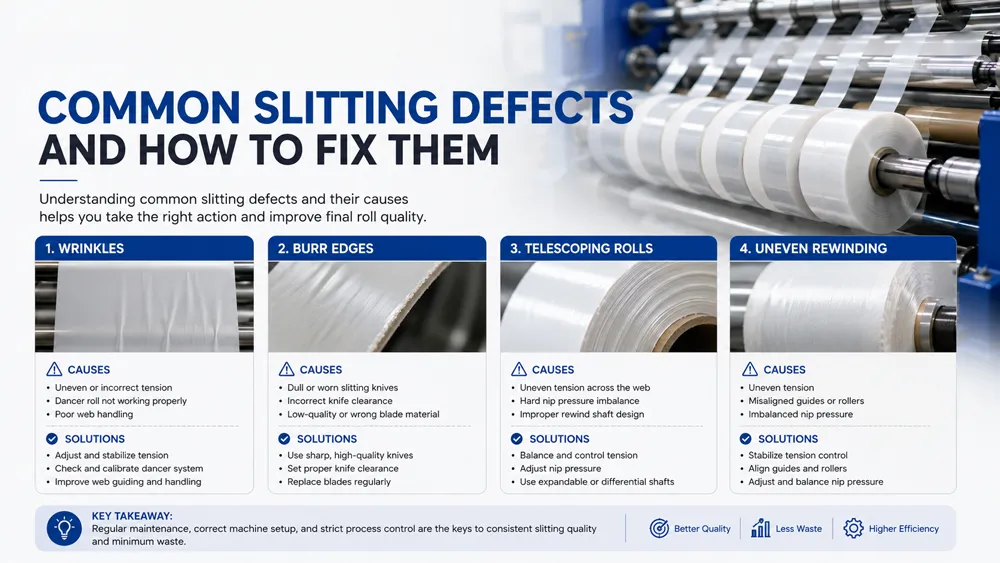
Wrinkles are one of the most common slitting defects, especially when processing thin films, PE materials, laminated structures, and aluminum foil.
Common Causes
- Unstable web tension
- Poor rewinding stability
- Incorrect web alignment
- Uneven roller pressure
How to Fix Wrinkles
- Improve tension consistency during rewinding
- Use suitable tension settings for sensitive materials
- Maintain proper web alignment
- Inspect rollers regularly
For stretch-sensitive films, understanding web tension control in slitter rewinder machines often helps improve slitting stability and reduce wrinkles.
Burr Edges
Burr edges refer to rough or uneven slit edges that negatively affect finished roll quality and downstream processing.
Common Causes
- Dull or worn blades
- Incorrect knife positioning
- Unsuitable slitting method
- Improper cutting pressure
How to Fix Burr Edges
- Replace worn knives regularly
- Adjust blade positioning correctly
- Choose a suitable slitting method for the material
- Improve machine stability during operation
Different materials may require different cutting systems. This comparison of razor slitting vs shear slitting vs crush slitting explains how knife configuration affects edge quality.
Telescoping Rolls
Telescoping happens when finished rolls shift sideways during rewinding, creating unstable roll structure and transport problems.
Common Causes
- Inconsistent rewind tension
- Poor roll hardness control
- Unstable winding pressure
- Machine vibration
How to Fix Telescoping Rolls
- Improve rewind tension consistency
- Use better roll hardness control
- Reduce vibration during production
- Optimize winding parameters
Telescoping rolls often affect downstream pouch making, laminating, printing, and packaging processes.
Uneven Rewinding
Uneven rewinding creates rolls that are too loose or too tight, reducing roll consistency and downstream converting efficiency.
Common Causes
- Poor rewind tension settings
- Incorrect machine speed
- Unstable material feeding
- Poor web handling
How to Fix Uneven Rewinding
- Adjust tension settings according to material type
- Maintain stable web handling
- Use automatic tension systems when necessary
- Check rewind shaft performance regularly
Material Stretching
Material stretching is common in thin films such as PE and CPP materials. Excessive stretching may affect finished dimensions and downstream product consistency.
Common Causes
- Excessive web tension
- High production speed
- Improper rewinding setup
How to Fix Material Stretching
- Reduce web tension
- Lower production speed if necessary
- Optimize rewinding parameters
Poor Slit Width Accuracy
Inaccurate slit width may affect downstream printing, die cutting, packaging, or sealing quality.
Common Causes
- Incorrect knife setup
- Machine instability
- Poor web guiding
How to Fix Slit Width Problems
- Calibrate knife positioning regularly
- Maintain web alignment
- Inspect machine rigidity and roller stability
Dust Generation
Dust generation commonly occurs in paper slitting and some adhesive material applications.
Common Causes
- Blade wear
- Unsuitable slitting method
- Poor blade condition
How to Reduce Dust
- Replace knives regularly
- Use suitable cutting methods
- Maintain clean machine conditions
How Web Tension Affects Slitting Quality
Web tension strongly affects wrinkles, rewinding consistency, slit width stability, and edge quality.
For PE films and laminated materials, unstable tension often creates wrinkles and roll deformation that later affect pouch-making and sealing quality.
Stable tension control usually improves roll consistency and reduces production defects.
How Slitting Method Affects Defects
Choosing the correct slitting method helps reduce defects and improve finished roll quality.
- Razor slitting: Often suitable for thin films.
- Shear slitting: Better for cleaner edges and PET or foil materials.
- Crush slitting: Common for selected paper and tape materials.
Preventive Maintenance Tips
Preventive maintenance helps reduce unexpected production problems and improve long-term slitting consistency.
- Inspect knife condition regularly
- Check roller alignment
- Maintain stable web guiding systems
- Monitor rewind tension performance
- Train operators regularly
Why Slitting Machine Stability Matters
Stable machine performance improves slit accuracy, rewinding quality, tension consistency, and overall production reliability.
Buyers evaluating slitting machines should focus on long-term production consistency instead of only machine price.
Choosing the Right Machine Configuration
Material type, thickness, slit width requirements, rewinding method, and production speed all affect machine configuration.
For converters processing multiple material types, stable tension control, suitable knife systems, and reliable rewinding performance often help reduce long-term production risks.
FAQ: Common Slitting Defects
What causes wrinkles during slitting?
Wrinkles are often caused by unstable web tension, poor rewinding, or improper web alignment.
Why do burr edges happen?
Burr edges usually result from dull blades, incorrect knife positioning, or unsuitable slitting methods.
What causes telescoping rolls?
Telescoping rolls are usually caused by unstable rewind tension and poor roll hardness consistency.
How can slitting defects be reduced?
Stable tension control, suitable knife systems, proper maintenance, and correct operator settings often help reduce defects.
Why does machine quality matter?
Stable machines generally improve rewinding consistency, slit accuracy, and long-term production reliability.