





Label Slitting Machine Guide for Self-Adhesive Labels
Why Label Slitting Quality Matters
Self-adhesive labels are used in almost every industry, including food packaging, beverages, cosmetics, pharmaceuticals, logistics, retail, and industrial products. Before labels reach end users, large master rolls must be converted into smaller rolls with precise widths and consistent rewinding quality.
Poor slitting quality can create edge defects, inconsistent roll diameters, telescoping rolls, rewinding problems, and difficulties during printing, inspection, dispensing, or die-cutting processes. For label converters, stable slitting performance directly affects productivity, waste levels, and customer satisfaction.
This guide explains how to choose the right label slitting machine for self-adhesive label production and what buyers should consider before investing in equipment.
What Is a Label Slitting Machine?
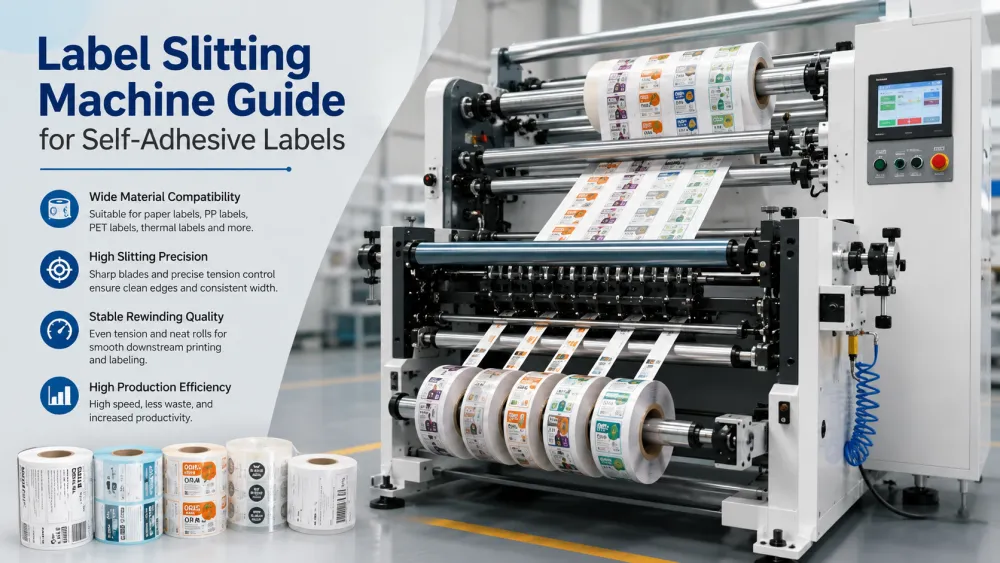
A label slitting machine is a slitter rewinder designed to convert large label master rolls into smaller finished rolls while maintaining accurate slit widths, stable web tension, and consistent rewinding quality.
The machine is typically used after label printing and before inspection, die-cutting, or final delivery to customers.
A typical label slitting process includes:
- Master roll unwinding
- Web guiding and alignment
- Label material slitting
- Rewinding into finished rolls
- Finished roll inspection and packaging
Common Self-Adhesive Label Materials
Different label materials require different slitting considerations. Understanding material properties is the first step in selecting the right machine configuration.
Paper Labels
Paper labels remain one of the most widely used label materials for food products, logistics labels, retail products, and barcode applications.
Key considerations include clean slit edges, dust reduction, and stable rewinding.
PP Labels
Polypropylene (PP) labels are commonly used for beverages, personal care products, and household chemicals.
PP materials require good tension control because excessive stretching may affect label appearance and registration accuracy.
PET Labels
PET labels offer excellent durability and moisture resistance. They are commonly used for premium labels, industrial labels, and chemical products.
PET materials often require high slitting precision and clean edge quality.
Thermal Labels
Thermal labels are widely used in logistics, warehousing, shipping, and retail applications.
Maintaining consistent roll quality is important because thermal labels often run through automatic printing and dispensing systems.
BOPP Labels
BOPP label materials are frequently used for food, beverage, and cosmetic packaging. Stable rewinding and accurate slit widths help ensure consistent downstream processing.
Key Challenges in Label Slitting
Slit Width Accuracy
Label converters often work with narrow widths and tight tolerances. Even small width variations may create problems during printing, die-cutting, and label application.
Edge Quality
Poor slit edges may affect label appearance and downstream converting performance.
Clean edges are especially important for high-quality product labels and automatic dispensing applications.
Roll Consistency
Uneven rewinding may create loose rolls, telescoping rolls, or inconsistent roll diameters that reduce production efficiency.
Web Tension Stability
Stable web tension helps maintain slit accuracy and rewinding quality throughout the production process.
Converters processing thin film label materials should pay particular attention to tension control performance.
How to Choose a Label Slitting Machine
Determine Your Label Materials
The first step is identifying the materials being processed. Paper labels, film labels, thermal labels, and specialty materials may require different machine configurations.
Evaluate Width Accuracy Requirements
Label production often requires tighter tolerances than general film or paper converting. Buyers should verify the machine's slit width accuracy and repeatability.
Assess Rewinding Quality
Finished label rolls must maintain consistent tension and roll hardness to perform reliably during printing, inspection, and dispensing.
Choose Suitable Slitting Technology
Different materials may benefit from different cutting methods.
For many label applications, shear slitting is preferred because it provides cleaner edges and higher precision.
Buyers comparing cutting methods can review Razor Slitting vs Shear Slitting vs Crush Slitting for a detailed comparison.
Consider Future Production Growth
Many converters initially purchase equipment based on current production requirements. However, future expansion plans should also be considered when selecting machine speed, automation level, and roll handling capabilities.
Common Label Slitting Problems
Telescoping Rolls
Usually caused by poor tension control or inconsistent rewinding pressure.
Uneven Roll Hardness
Often caused by unstable rewinding conditions or improper machine settings.
Edge Defects
Typically caused by worn knives, poor knife setup, or unsuitable cutting methods.
Width Variation
May result from inaccurate knife positioning or poor web alignment.
Wrinkles
Often caused by unstable web tension, especially when processing film label materials.
Why Tension Control Is Critical for Label Converting
Consistent web tension helps maintain registration accuracy, roll consistency, and slit quality.
Poor tension control may create wrinkles, width variation, telescoping rolls, and production waste.
Buyers seeking better label production consistency should understand the role of web tension control in slitter rewinder machines.
Choosing the Right Configuration for Label Production
The ideal label slitting machine depends on material type, roll width, production volume, slit width requirements, and downstream processing requirements.
For converters producing self-adhesive labels, the most important factors are often slit accuracy, rewinding quality, web tension stability, and long-term production reliability rather than simply maximum machine speed.
Buyers comparing different solutions may also review available slitting machines to better understand machine configurations for label converting applications.
FAQ: Label Slitting Machine for Self-Adhesive Labels
What is a label slitting machine used for?
A label slitting machine converts large self-adhesive label rolls into smaller finished rolls for printing, die-cutting, inspection, and dispensing applications.
Which label materials can be processed?
Most machines can process paper labels, PP labels, PET labels, thermal labels, BOPP labels, and other self-adhesive materials.
Why is slit width accuracy important for labels?
Accurate slit widths help ensure reliable performance during printing, die-cutting, and automatic label application.
What causes telescoping rolls in label production?
Telescoping rolls are usually caused by unstable tension control or inconsistent rewinding conditions.
What should buyers focus on when selecting a label slitting machine?
Buyers should evaluate slit width accuracy, rewinding quality, tension control, material compatibility, automation level, and long-term production stability.