





How to Reduce Waste in Slitting and Rewinding
Why Waste Happens in Slitting and Rewinding
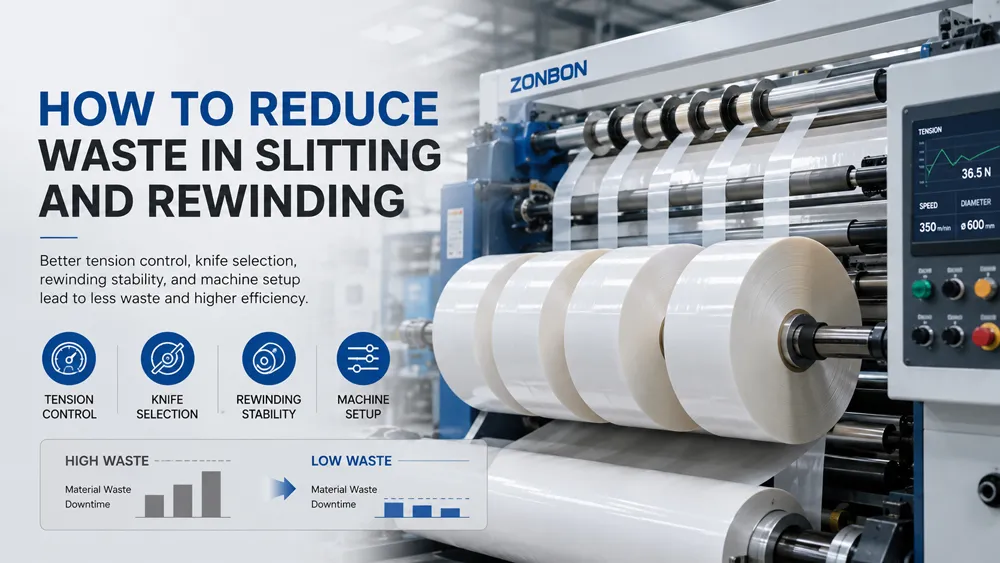
Material waste is one of the biggest hidden costs in slitting and rewinding production. Whether processing film, paper, foil, adhesive tape, or laminated materials, excessive waste directly affects profitability, production efficiency, and long-term operating cost.
Many converters focus only on machine speed or initial investment, but unstable slitting performance often creates higher material loss over time. Wrinkles, uneven rewinding, burr edges, telescoping rolls, and incorrect slit widths can all increase scrap rates and reduce production consistency.
Reducing waste in slitting and rewinding is not only about machine quality. It also depends on proper tension control, suitable slitting methods, accurate machine setup, and stable operating conditions.
This guide explains the common causes of slitting waste and practical ways manufacturers can improve efficiency and reduce material loss.
Common Types of Slitting Waste
Understanding where waste comes from is the first step toward improving production efficiency.
Edge Waste
Edge trim waste is unavoidable in many slitting applications, but excessive edge loss often results from poor slit width planning or unstable web alignment.
Better slit layout planning can help reduce unnecessary edge trimming and improve material utilization.
Wrinkles
Wrinkles are one of the most common reasons for scrap during slitting and rewinding.
Thin films, PE materials, laminated structures, and foil materials are especially sensitive to tension instability. Wrinkled rolls may become unusable for downstream printing, laminating, or pouch making.
Telescoping Rolls
Telescoping occurs when rolls shift sideways during rewinding due to inconsistent tension or unstable roll formation.
Poor roll structure often creates problems during transport and downstream converting.
Burr Edges
Poor slit edges caused by incorrect knife systems or dull blades may reduce finished product quality and increase material rejection rates.
Uneven Rewinding
Rolls that are too loose or too tight may not run smoothly during later converting stages, creating additional production waste.
Material Stretching
Stretch-sensitive materials such as PE and thin flexible films may deform when tension becomes too high, affecting finished dimensions and downstream performance.
Main Causes of Slitting Waste
Slitting waste usually comes from machine setup issues, unsuitable machine configurations, or unstable operating conditions.
Poor Tension Control
Unstable web tension is one of the biggest causes of slitting waste.
Improper tension may create wrinkles, stretching, uneven rewinding, and unstable slit widths.
Understanding web tension control in slitter rewinder machines helps operators improve material stability and reduce unnecessary waste.
Wrong Slitting Method
Using the wrong cutting method for a material may create burr edges, poor slit quality, dust generation, or unstable cutting performance.
Different materials require different cutting methods. This comparison of razor slitting vs shear slitting vs crush slitting explains how slitting systems affect production quality.
Incorrect Knife Setup
Worn blades, poor knife positioning, or incorrect blade pressure can create poor slit quality and higher rejection rates.
Regular blade maintenance helps maintain cleaner cutting performance.
Poor Web Alignment
Incorrect web guiding may cause unstable slit widths, uneven edges, or unnecessary material trimming.
EPC web guiding systems can help improve alignment consistency.
Machine Instability
Low machine rigidity, unstable rollers, or poor rewinding systems may reduce production stability and increase waste.
Improper Operator Settings
Incorrect speed, tension, knife pressure, or rewinding settings can significantly increase production defects.
Proper operator training often helps reduce unnecessary scrap.
How to Reduce Waste in Slitting and Rewinding
Improve Web Tension Control
Stable web tension helps reduce wrinkles, stretching, telescoping rolls, and uneven rewinding.
For thin films, PE materials, laminated structures, and foil materials, automatic tension systems often improve stability and reduce waste.
Choose the Right Slitting Method
Matching the slitting method to material type improves edge quality and reduces cutting defects.
- Razor slitting: Often suitable for thin films.
- Shear slitting: Better for PET, foil, and cleaner edge requirements.
- Crush slitting: Often used for selected paper and tape materials.
Maintain Sharp Knives
Dull blades often create burr edges, dust, poor slit quality, and inconsistent cutting.
Regular blade inspection and replacement help maintain better cutting performance.
Optimize Rewinding Stability
Stable rewinding helps improve roll hardness consistency and reduce telescoping rolls.
Good rewinding quality also improves downstream printing, laminating, and packaging consistency.
Match Machine Settings to Material
Different materials require different speed, tension, and rewinding settings.
For example:
- PE film often requires lower tension.
- PET film may require cleaner slitting precision.
- Foil laminates need stable tension to reduce wrinkles.
- Paper materials may require dust reduction settings.
Improve Operator Training
Well-trained operators can identify slitting problems earlier and make adjustments before large amounts of material are wasted.
Training also helps improve machine consistency across production shifts.
Material-Specific Waste Reduction Tips
BOPP Film
Stable rewinding and suitable slitting speed help reduce wrinkles and improve edge quality during high-speed production.
PET Film
Shear slitting and stable web alignment often help improve cutting precision and reduce edge defects.
PE Film
Lower tension settings help reduce stretching and roll deformation.
Paper Materials
Proper knife maintenance helps reduce dust generation and improve slit edge quality.
Aluminum Foil
Stable tension and precise rewinding are especially important because foil wrinkles easily and may crack under excessive tension.
Why Slitting Machine Quality Affects Waste
Stable machine performance helps reduce waste by improving tension control, slit consistency, rewinding quality, and roll stability.
Lower-cost equipment may reduce initial investment, but unstable slitting performance often increases waste and operating cost over time.
Buyers evaluating slitting machines should consider long-term production efficiency rather than only initial machine price.
FAQ: How to Reduce Waste in Slitting and Rewinding
What causes waste in slitting and rewinding?
Common causes include unstable tension, poor rewinding, unsuitable knife systems, wrinkles, burr edges, and incorrect machine settings.
How can web tension reduce waste?
Stable tension helps reduce wrinkles, stretching, telescoping rolls, and unstable rewinding that often lead to material waste.
Does knife condition affect slitting waste?
Yes. Dull or poorly adjusted knives often create poor slit edges, dust, and inconsistent cutting quality.
Which materials are most sensitive to waste?
Thin PE films, laminated materials, aluminum foil, and stretch-sensitive films are often more affected by tension instability and rewinding defects.
Why does machine quality affect waste?
Stable machines generally improve tension control, slit accuracy, and rewinding quality, helping reduce long-term material loss.